Get Full Government Meeting Transcripts, Videos, & Alerts Forever!
Get email alerts on the Medical Billing topic
No spam. Unsubscribe anytime.
UNM study: prior authorization, denials and code churn consume clinicians’ time, frustrate rural providers
Summary
A small UNM-commissioned study of billing, coding and claims work in New Mexico found clinicians and billers spend substantial time on prior authorization and denials, that frequent coding and formulary changes add extra work, and that rural facilities face steeper access and reimbursement pressures.
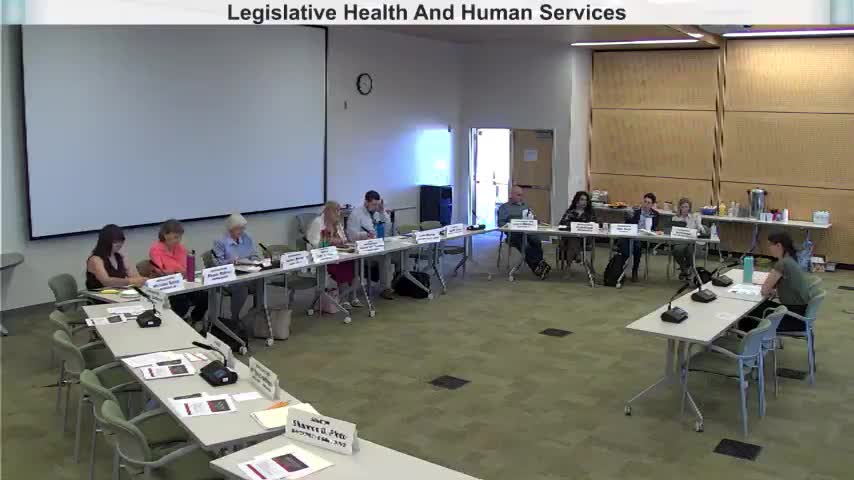
Good morning: Melanie Sontak, a research assistant professor at the University of New Mexico’s Center for Social Policy, presented results from a small qualitative study the center conducted on medical billing, coding and claims in New Mexico. The study, commissioned by the Legislative Council Service and funded with GROW dollars, interviewed 31 health‑care workers (28 in focus groups and three by interview) from a mix of hospitals and smaller clinics across multiple counties.
The research sought to measure how much time staff spend at each step of the revenue cycle, what staffing and infrastructure are available, how practices vary by payer, and how the current system affects patient care and clinician well‑being. The study found substantial administrative burden across the revenue cycle and repeated examples of prior authorization, claim denials and frequent coding or formulary updates that remove time from patient care.
Why it matters: the committee heard that New Mexico clinicians already operate under tight capacity and that the added administrative tasks — especially for prior authorization and appeals — contribute to clinician burnout, delays in care and financial strain for facilities serving high shares of Medicaid patients.
Study methods and scope Sontak told the committee the research was qualitative and limited in scale: 31 total participants working in billing, coding, claims and clinical roles were recruited from urban and rural facilities in Bernalillo, Chavez, Doña Ana, Los Alamos, Sandoval, San Juan, San Miguel and Santa Fe counties. Participants included clinicians, billing/claims professionals and administrators with routine billing responsibilities. The presenter cautioned the focus‑group approach documents experience and perceptions rather than producing statewide statistical estimates.
Main findings - Time burden: clinicians reported about 3–4 hours per week spent on billing and insurance tasks (Sontak called this likely an underestimate). Nurses reported prior authorization work consuming roughly 2 hours a day in many clinics; some staff said they had spent up to 4 hours a day for multiple days straight trying to secure prior authorization. Prior authorization timelines varied; participants described typical turnarounds of 7–14 business days when a request passes on first submission, and noted some cases take months when modifications or appeals are required.
- During and after encounters: clinicians described documentation demands that shrink face‑to‑face time. One focus‑group clinician said a 30‑minute encounter often left 10–15 minutes for documentation. Billing staff also reported “backtracking” to correct denials tied to claims as old as nine to 12 months — and in some examples, up to two years — which requires substantial staff time to reconcile.
- Coding and rule churn: participants listed the International Classification of Diseases (ICD), Healthcare Common Procedure Coding System (HCPCS), Current Procedural Terminology (CPT) and payers’ formularies as multiple, frequently updated rule sets they must follow. Sontak said HCPCS, CPT and formulary updates are commonly annual but can effectively change more frequently, increasing training and implementation burden.
- Payer differences and reimbursement pressure: while frustrations were reported across public and private payers, participants singled out low Medicaid reimbursement as a financial strain for safety‑net providers. One study participant estimated Medicaid reimburses as little as 25% of billed charges in some cases (example given: a $40,000 claim yielding $10,000 reimbursement).
- Staffing and infrastructure: almost all participants said billing and coding departments lack adequate staffing or training to manage workloads effectively. High turnover among billers and coders was reported; respondents said credential programs do not always cover key practical tasks such as navigating denials and appeals. Participants described outsourcing billing as commonly disappointing, while early AI tools had mixed but sometimes positive reception.
- Rural impact and access: rural respondents described network gaps such as no in‑network lab nearby, forcing patients to pay out of pocket or travel long distances. Participants said rural clinics with high Medicaid populations are especially vulnerable to low reimbursement and workforce drain.
Examples quoted from participants - A focus‑group clinician said, “Clinical decision‑making is driven by insurance formulary, not individualized patient care.” - Sontak summarized: clinicians and billers “spend a large amount of time on billing and insurance related tasks that interfere with time spent with patients.”
Discussion and next steps raised in committee Committee members and the presenter debated scope and next steps. Several legislators asked for additional, larger studies and for follow‑up briefings with insurers and the Legislative Finance Committee. Sontak and committee members agreed to share the final report with staff (the presenter said she would provide the completed report to the committee’s staffer, Xander) and to consider broader studies on algorithmic denials, malpractice and financing models.
What this study does not show Sontak emphasized the study documents workers’ experiences rather than proving causal relationships or estimating statewide prevalence. The committee heard repeatedly that larger, quantitative, and payer‑side data would be needed to quantify how much each factor (CMS rules, individual insurer practices, formulary decisions) contributes to delays or denials.
Bottom line The UNM Center for Social Policy’s focused study presented qualitative evidence that prior authorization, claim denials, frequent coding and formulary changes, and staffing shortages combine to consume clinician and billing staff time, contribute to burnout and complicate access to specialized care — with rural providers especially exposed to access and financial risk. Committee members suggested follow‑up with payers, larger studies, and targeted policy work on prior authorization and algorithmic denials.