
Health Care Authority warns federal reconciliation bill will cut Medicaid and SNAP funding, increase paperwork and threaten rural hospitals
Get AI-powered insights, summaries, and transcripts
Subscribe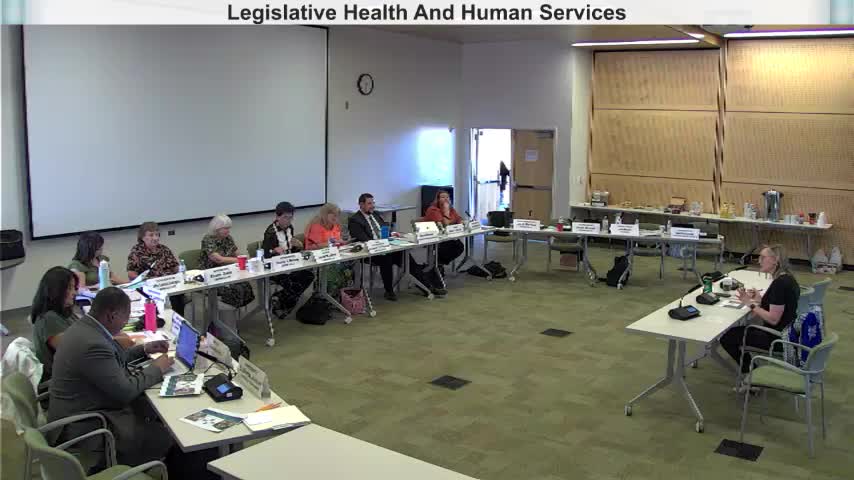
Summary
The Health Care Authority told lawmakers federal changes will impose work requirements, more frequent eligibility checks, reductions to provider payments and SNAP benefit formula resets that could cause coverage loss, benefit cuts and fiscal pressure on New Mexico safety‑net providers.
Carrie Armijo, cabinet secretary of the Health Care Authority, told a legislative committee that provisions in the federal reconciliation bill and anticipated CMS rules will substantially affect New Mexico’s Medicaid and SNAP programs and could begin to take effect in late 2025 and 2026.
Armijo said the state serves roughly 848,966 New Mexicans through HCA programs and that changes to Medicaid and SNAP “are going to affect every New Mexican.” She warned that New Mexico ranks among the highest in projected job losses from reductions to Medicaid and SNAP funding and said that the Health Care Authority is preparing staffing, IT and budget requests to respond.
Key changes the agency described include: community or work‑engagement requirements for some adults (scheduled to start Dec. 31, 2026 as presented), more frequent Medicaid eligibility checks for most adults (moving from annual to six‑month renewals), and a reduction in retroactive Medicaid coverage to one month (effective Jan. 1, 2027 as stated). Armijo also said CMS may act administratively to reduce certain enhanced provider payments toward 100 percent of Medicare in future years and that provider‑tax‑funded supplemental payments are set to phase down starting in fiscal 2028.
On SNAP, Armijo described a new federal requirement that states share a portion of SNAP benefit costs if their payment‑error rate exceeds federal thresholds; she said New Mexico’s payment error rate was near 15 percent and that states with error rates above 10 percent would face a cost share that could be substantial. The reconciliation bill will also shift more of SNAP administrative cost to states (state share rising toward 75 percent), and Armijo said the maximum SNAP allotment formula will reset this October, producing a lower maximum monthly benefit.
The agency provided several projected impacts: Armijo said nearly 89,000 New Mexicans could lose Medicaid coverage over time, that roughly 254,000 would face increased paperwork or administrative burdens to retain coverage, and that 42,000 could face changes tied to immigration status. On SNAP, she said about 459,000 New Mexicans receive benefits today; she estimated 16,000 could lose SNAP due to immigration status changes this October, 55,000 could be subject to new work requirements, and 20,000 could lose SNAP benefits outright under new eligibility rules. Armijo also told the committee the HCA expects a $47 million state cost to administer SNAP under the new federal funding formula and that the agency will include that request in its FY27 budget submission.
Armijo warned of second‑order effects on providers and the market: higher premiums in the private market, lower Medicaid leverage to purchase services and possible closures of rural hospitals. She said the state is already watching potential hospital risks and that the Health Care Authority is preparing to apply for rural health transformation funds provided in the federal package.
Committee members pressed about implementation and mitigation. Senator Charlie asked what HCA will do to help people reenroll with increased paperwork; Armijo said the agency plans to request additional FTE for eligibility staff, invest in call centers and customer‑facing portals, seek data interfaces to reduce manual reporting, and coordinate with the Department of Workforce Solutions to minimize burden for people who are working or in training. Armijo emphasized that federal guidance from CMS is still pending in many areas and that state planning must proceed before final rules arrive.
The agency also addressed SNAP payment errors and why New Mexico’s rate rose: Armijo said pandemic flexibilities—including waived interviews and waived interim reporting to avoid gaps in benefit delivery during COVID—and workforce churn and the Medicaid unwinding contributed to higher measured error rates. She said HCA has a remediation plan underway to reduce the error rate but noted the state sits close to the threshold that could trigger significant federal cost sharing.
Armijo told the committee that the HCA sees near‑term technical needs for FY26—eligibility system changes, call center capacity, portal improvements and additional staff—and that legislative engagement should begin early so the state can meet fast federal deadlines.
Ending note: agency officials said they will continue outreach to hospitals, FQHCs, tribes, schools and other stakeholders to try to mitigate coverage losses, preserve marketplace subsidies where possible and use federal rural health transformation funds to shore up at‑risk providers.