
Audit: New Mexico public health offices treated few MAT patients; DOH agrees to centralize outreach and set targets
Get AI-powered insights, summaries, and transcripts
Subscribe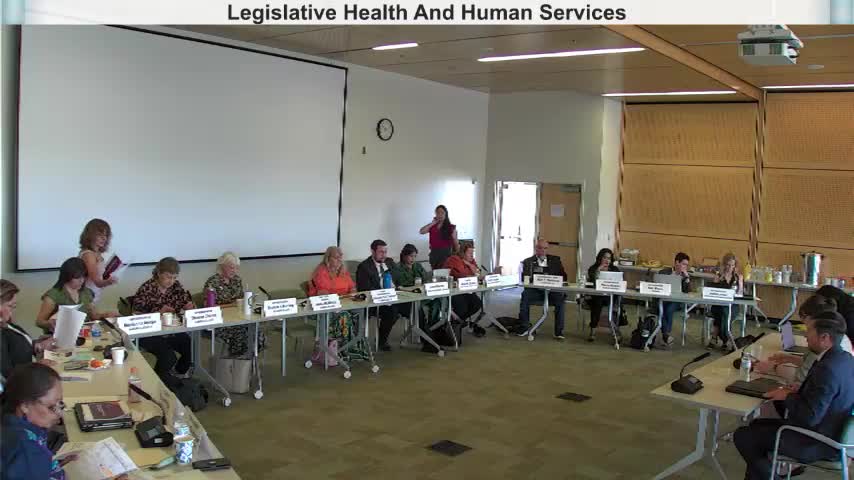
Summary
A Legislative Finance Committee report presented to the Legislative Health & Human Services committee found that New Mexico public‑health offices treated 324 MAT patients in the first year after expansion while state estimates indicate about 9,130 people need but are not receiving MAT.
A Legislative Finance Committee presentation to the Legislative Health & Human Services committee concluded that New Mexico’s expanded provision of medication‑assisted treatment (MAT) through public health offices has reached relatively few patients so far and needs stronger coordination, outreach and performance targets.
John Valdez and Maggie Klug, program evaluators at LFC, briefed the committee in Gallup. They reported that the Health Care Authority estimates roughly 9,130 individuals need MAT but are not receiving it and that, in the first year after DOH expanded MAT to public health offices (May 2024 onward), public health offices treated 324 patients in total—321 for opioid use disorder and 3 for alcohol use disorder.
“DOH has treated just 324 individuals in public health offices,” Valdez said, citing LFC analysis that public health offices accounted for only about 2–3% of Medicaid‑paid MAT claims in 2024. LFC found treatment was concentrated in southern New Mexico: Las Cruces and Otero County public health offices provided about 75% of public‑health‑office MAT encounters, in part because Las Cruces has operated a MAT program since 2007.
LFC identified multiple barriers: limited local staffing models (most sites use an existing nurse and clerk; Las Cruces has dedicated MAT staff), inconsistent outreach and marketing, fragmented oversight inside DOH and limited local behavioral‑health therapy options for MAT patients. More than half of public‑health‑office MAT visits occurred via telemedicine, with clerks and nurses facilitating virtual physician consults.
Key LFC findings and recommendations included: - DOH treated far fewer patients in public health offices than estimated unmet need (324 treated vs. ~9,130 estimated need). - Public‑health‑office MAT lacked centralized program leadership inside DOH and had no outcome measures tied to the expansion; LFC recommended creation of a state coordinator, centralized marketing, and performance targets for FY27 through the Accountability in Government act. - LFC recommended DOH explore low‑cost coordination tactics (local coalitions such as Las Cruces’s “Opioid Plus 360”) and consider offering MAT from mobile health units to reach rural patients; LFC noted regulatory and operational hurdles for mobile dispensing, including a class E clinic license from the state Board of Pharmacy and DEA registration for narcotic treatment programs.
DOH Cabinet Secretary Gina DeBlasi told the committee the department generally agrees with LFC’s recommendations and described ongoing actions: expanding telehealth capacity, creating an uninsured access program for MAT, piloting dispensing and delivery of MAT through some public‑health offices, training staff and planning outreach through health promotion teams.
“We agree with the recommendations,” DeBlasi said. “The Department of Health is really the safety net provider within its communities…we don’t believe communities really understand what services are provided in public health offices.” She said DOH is working to centralize program management, hire an expansion coordinator and develop an implementation plan tied to FY27 performance targets.
During questions, legislators pressed several operational points. Representative Lundstrom called the low alcohol‑use‑disorder treatment count “completely unacceptable.” Committee members asked about tribal outreach; DeBlasi said the department has hired a tribal opioid response coordinator and is developing contracts to reach tribal members. Lawmakers also asked about juvenile MAT, corrections, pharmacy constraints and the potential to stock medications on mobile units.
LFC and DOH discussed funding: LFC’s report noted DOH received $7,280,000 per year since FY24 from a mix of general fund and opioid‑settlement revenues to support MAT expansion. Secretary DeBlasi said the department is evaluating opioid‑settlement and other funds to support long‑acting injectables and a pilot to dispense MAT from public‑health offices; she said DOH is considering a statewide outreach budget and plans to include performance metrics in the FY27 submission.
LFC recommended that if DOH, LFC and DFA set targets for FY27 and targets are not met, the Legislature should consider redirecting funding to other effective MAT options. The department has begun collecting new measures and conducting regional surveys; DeBlasi said DOH will submit an implementation plan as part of its FY27 budget request and is exploring pilots for dispensing and mobile provision of MAT.
The committee’s Q&A underscored cross‑agency needs: more referrals from SBIRT screening (screening rates have fallen since 2020), clearer coordination with the Health Care Authority and managed‑care organizations, better partnerships with local providers and nonprofits (including outreach to organizations that serve the unhoused), and stronger continuity of care for people released from correctional settings.