
Opioid settlement funds used for 'Fresh Start' rental aid and expanding MOUD telehealth, agency says
Get AI-powered insights, summaries, and transcripts
Subscribe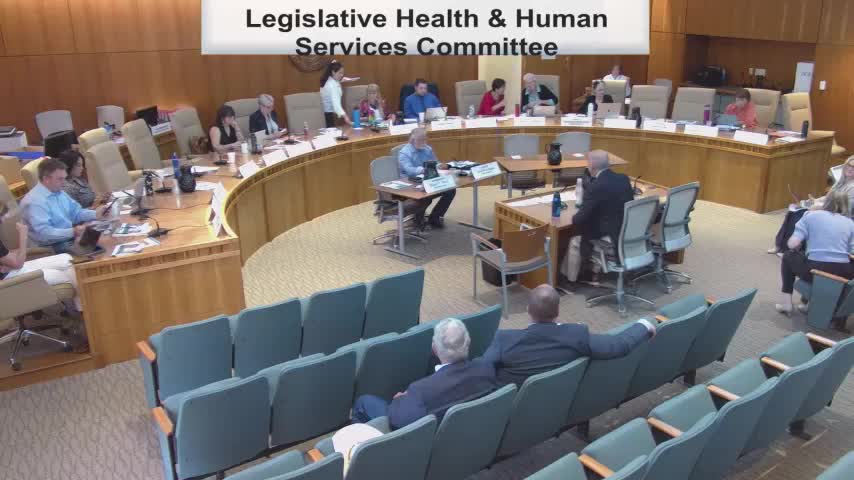
Summary
Behavioral Health Services described a 'Fresh Start' rental assistance program funded by opioid settlement dollars and a telehealth MOUD rollout to public health offices; officials reported dozens of providers, hundreds of clients served and plans to scale regionally.
The Health Care Authority’s Behavioral Health Services Division on Tuesday outlined how opioid settlement dollars are being used in New Mexico for rental assistance, stipends and expanded medication‑assisted treatment via telehealth.
Nick Lucas, director of Behavioral Health Services, said the agency launched a Fresh Start Rental Assistance pilot in FY24 and expanded funding in FY25 to reach more people with opioid use disorder who are homeless or precariously housed. “Depending on the rent and what their eligibility is, between six and nine months of rental assistance or $10,000—whichever comes first,” Lucas said, adding the program also provides a stipend of up to $1,000 for essential household items.
Program scope and numbers - The Fresh Start program received $1.2 million in FY24 and $1.8 million in FY25, Lucas said. The program has served roughly 340 unduplicated clients (the agency noted that a client could be a household member) and provides rental payments and small stipends. - The Health Care Authority reported nine contracted providers delivering Fresh Start services across 13 counties. The agency said providers include local nonprofit organizations and that it coordinates with existing veteran housing programs (VASH) when applicable. - The agency reported it is shifting to a voucher‑style approach in some housing programs to improve allocation and re‑use funds in counties where providers are underutilizing awards.
MOUD telehealth expansion - The agency also used an approximately $1.0 million allocation to expand medication for opioid use disorder (MOUD) through telehealth at public health offices. Lucas said the investment supported clinical training (led in part by a New Mexico clinician) and helped set up e‑prescribing capacity; the public‑health telehealth work reached most counties. Lucas noted public health offices across the state can now refer or begin MOUD treatment and link patients to ongoing care. - Lucas said early in the work, George Washington University research showed gaps in patient and clinician awareness—61% of Americans did not know primary care physicians can prescribe addiction treatment—and the state has focused on training primary‑care and other clinicians to prescribe MOUD.
Why it matters: Lucas and committee members emphasized that housing stability plus access to MOUD and recovery supports reduce emergency department use, improve economic outcomes and help people re‑engage with work and community life. The agency’s economic‑impact modeling estimated that FY25 spending on supportive housing programs generated roughly $16.45 million in economic impact and supported about 108 jobs statewide.
Oversight and next steps Lucas said providers submit quarterly reports and that the Health Care Authority performs audits; the agency had placed one provider on a corrective action plan for administrative issues. Committee members asked whether tribal providers and counties were included; Lucas said the program is open to tribal providers and noted outreach through Native American advisory groups but said no tribal‑specific provider was active in the Fresh Start program at the time of the presentation.
Nut graf: The Health Care Authority told lawmakers the opioid settlement dollars are being channeled into short‑term rental assistance and telehealth MOUD expansion with measurable local economic and service impacts, while officials noted continued outreach needs—especially to tribal communities and rural counties—and emphasized the programs are time‑limited and may need other funding to be sustained.
What legislators asked for: lawmakers requested age and demographic breakdowns, details on provider audits and accountability for how stipends and rental assistance are spent. Lucas said the program generally fronts funds to providers, who submit receipts and quarterly reports; the Health Care Authority then reimburses providers and can reallocate unused vouchers to other counties.