
New Mexico Highlands officials describe social work training, Native-focused institute and statewide workforce supports
Get AI-powered insights, summaries, and transcripts
Subscribe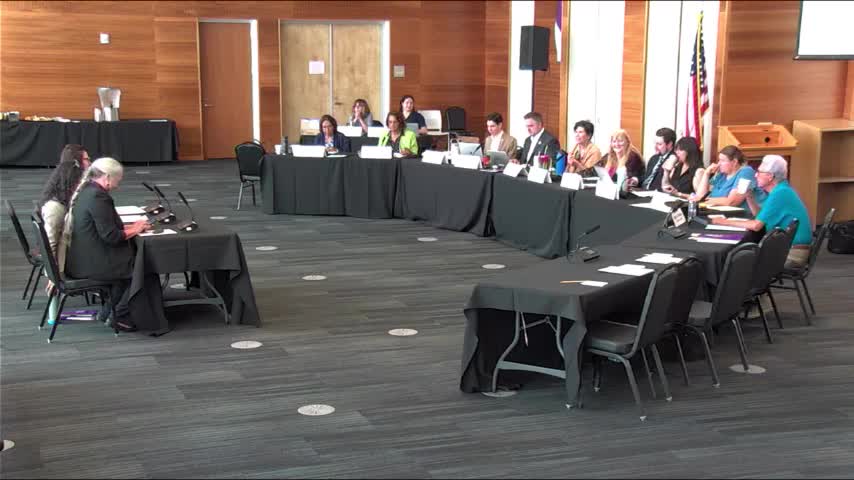
Summary
Leaders from New Mexico Highlands University told the Legislative Health and Human Services Committee on the Las Vegas campus that the Facundo Valdez School of Social Work and the university's Center for Excellence in Social Work expanded training, continuing education and tribal-focused programming in fiscal 2025 and are preparing new online and doctoral degree pathways.
Leaders from New Mexico Highlands University told the Legislative Health and Human Services Committee on the Las Vegas campus that the Facundo Valdez School of Social Work and the university's Center for Excellence in Social Work expanded training, continuing education and tribal-focused programming in fiscal 2025 and are preparing new online and doctoral degree pathways.
The presentation summarized why the school and center say their work matters to New Mexico: they train people to provide behavioral-health and child-welfare services across rural and tribal communities and to lift licensure and workforce retention over time.
"We place special emphasis on serving Hispanic Latino students, Native American students, and learners from rural communities," Anna Nelson, dean of the Facundo Valdez School of Social Work, told the committee. Nelson said Highlands served 522 students across its programs in the most recent academic year.
Nelson and Valerie Valles Pedrosa, interim director of the Center for Excellence in Social Work, described several programs and outcomes from fiscal year 2025. The Native American Social Work Studies Institute, or NASWSI, produced a new course titled Introduction to Social Work Practice with Tribal Communities, delivered four trainings on Native American child well-being to 71 participants and issued cultural continuing-education units, the presenters said. Valles Pedrosa said NASWSI is guided by tribal resolutions from the Pueblo Council of Governors and the Navajo Nation.
The center reported issuing 2,904 continuing education credits in fiscal 2025, of which 1,289 were cultural CEUs required in New Mexico, and said it engaged 1,270 community participants through professional development. Valles Pedrosa said the center's CYFD INSPIRE program, funded by the U.S. Department of Labor, enrolled 134 CYFD workers, awarded 45 certificates and delivered 720 continuing-education hours to strengthen child-protective-services practice.
The school highlighted a statewide growing-our-own initiative sometimes referenced in the presentation as Sui/Semillas programming that the presenters said reached more than 1,100 prospective students and supported advisement and retention for more than 500 students through community "platicas" (career talks). The school also reported an endowed scholarship fund valued at $538,000 and $20,000 prepared for distribution in 2025.
On licensure supports, Nelson and Valles Pedrosa described a free ASWB licensure-prep course launched in April 2025; they said 259 people were enrolled and 24 had completed a practice test with an average PRAS score of 90%. Nelson acknowledged persistent equity concerns around the Association of Social Work Boards national exam and told legislators that Highlands and the center have convened listening sessions across the state about testing and interstate licensure compacts.
The presenters also said the school is preparing an online BSW program and is on track to propose New Mexico's first Doctor of Social Work Practice program, with a potential 2027 target. They described ongoing research products, including a 2025 Social Work Students of New Mexico survey and policy/practice briefs that the center produces for state use.
Committee members asked detailed questions about licensure pass rates, cultural continuing education, tribal placements and the source and durability of grants and stipends. The presenters described a mix of state legislative funding, Department of Labor grants and other awards, and said they are seeking sustainability when federal funding is time-limited.
Nelson and Valles Pedrosa said many of the center's programs are explicitly designed to improve access to culturally grounded practice and to grow New Mexico's behavioral-health workforce, but they cautioned that funding uncertainty and the need for paid practicum placements remain barriers.
The presentation materials and the speakers' remarks are available in the committee record; presenters invited follow-up questions and offered to provide specific partner lists and financial-detail breakdowns to committee members on request.