
Early childhood spending nears $900 million; LFC reports sustained pre-K gains but warns growth will slow
Get AI-powered insights, summaries, and transcripts
Subscribe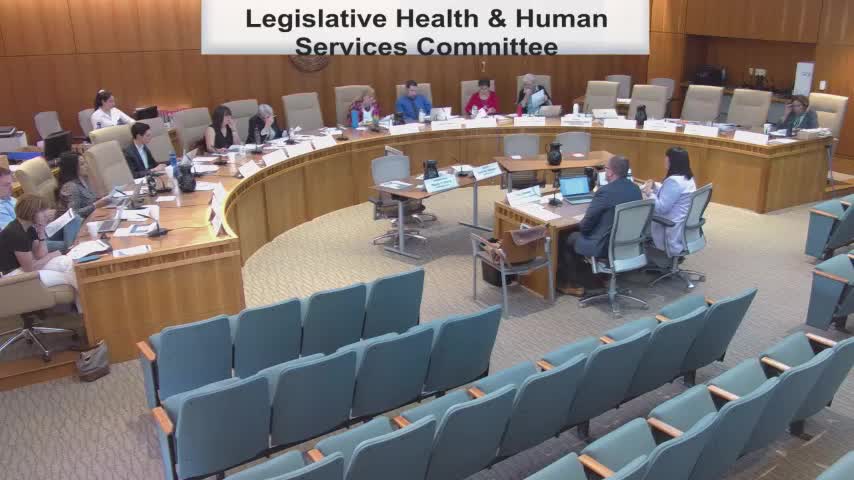
Summary
Kelly Kluntz, Legislative Finance Committee analyst for the Early Childhood Education and Care Department, summarized post-session funding and recent evaluation findings for the Legislative Health & Human Services committee.
Kelly Kluntz, Legislative Finance Committee analyst for the Early Childhood Education and Care Department, summarized post‑session funding and recent evaluation findings for the Legislative Health & Human Services committee.
"Now that, totals almost $900,000,000 — I will say I have been the analyst for this department and in this area since we were spending about $125,000,000 on these programs, and now we're very short of a billion dollars," Kluntz said, describing how revenue sources have expanded in recent years and how the department’s budget is structured.
Key points from the briefing
- Funding and sources: Kluntz said the agency now receives a mix of revenues, including distributions from the Land Grant Permanent Fund, federal childcare assistance, and a smaller share of unrestricted state general fund. LFC cited overall early childhood-related revenue approaching $900 million.
- Prekindergarten evaluation: LFC released an update to its prekindergarten evaluation that, Kluntz said, shows "some really impressive results" — sustained gains in math and reading for pre‑K participants, reductions in special-education designation and higher rates of high-school graduation and college attendance for participants identified as at risk.
- Program scale and access: Kluntz said expansion of income eligibility for child-care assistance to 400% of the federal poverty level increased monthly participation from roughly 20,000 children to about 33,000–34,000 children.
- Trust-fund changes: The committee was told that legislation reallocated some future distributions from the early childhood education fund to the Medicaid trust fund and the behavioral health trust fund. Kluntz warned that means future growth from the early childhood trust fund will be limited compared with recent years.
Why this matters: LFC staff urged the committee to continue focusing on implementation fidelity and quality measures. Kluntz said that while investments are large and evaluation results for pre‑K are encouraging, population-level rankings lag because data are reported with delays and because broad population change requires sustained service delivery over multiple years.
Committee requests and next steps
- LFC will provide the committee with the prekindergarten evaluation and with ongoing performance measures for major early childhood programs, including home visiting, family infant-toddler services and child-care assistance.
- Committee members asked that LFC and agency staff track continuing quality metrics so that the Legislature can evaluate whether the large investments are producing durable, statewide improvements.
Ending
Lawmakers heard LFC’s assessment that early childhood investments have expanded service capacity and show promising program-level outcomes, but staff cautioned that sustaining and scaling quality implementation will determine whether those investments change population-level measures over time.