
Health Care Authority outlines DD waiver gains and ongoing provider-rate, staffing shortfalls
Get AI-powered insights, summaries, and transcripts
Subscribe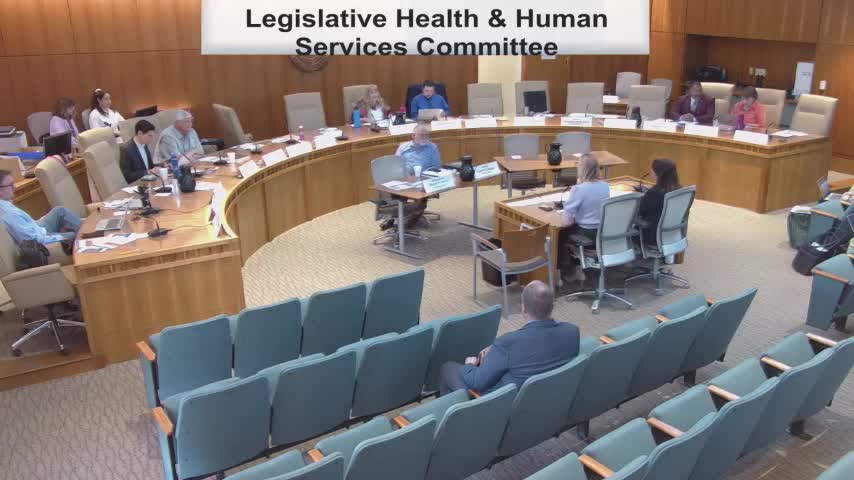
Summary
The New Mexico Health Care Authority told the Legislative Health & Human Services Committee that recent rate increases and service changes cleared a long DD-waiver waitlist, expanded safety checks and telemedicine options, but officials warned of budget shortfalls and uneven provider capacity across counties.
The New Mexico Health Care Authority on Tuesday told the Legislative Health & Human Services Committee that recent provider rate increases and program changes cleared a long Developmental Disabilities (DD) waiver waitlist and expanded oversight, but officials cautioned funding and workforce gaps remain.
Cabinet Secretary Carrie Armijo told the committee that the state’s DD waivers now serve 8,147 New Mexicans with intellectual and developmental disabilities and that the agency implemented an average rate increase of about 16% across services in fiscal 2025. “The average rate increase across all services was over 16%,” Armijo said, adding the Health Care Authority implemented a 5.32% cost-of-living adjustment and chose not to reduce any rates recommended by the rate study.
The rate changes were implemented after House Bill 395 established a biannual cost‑study process to recommend reimbursement rates, Armijo said. The first rate study under HB395 was completed for FY24; the Health Care Authority implemented that study’s recommendations in FY25 after federal approval. Armijo said the agency has contracted Health Management Associates to perform the FY26 rate study, which kicked off in June and is scheduled to conclude in November 2025.
Why it matters: committee members pressed the agency on whether rate increases are reaching direct support professionals and whether reimbursement levels are sufficient to recruit and retain staff. Jennifer Rodriguez, director of the Developmental Disabilities Supports Division (DDSD), described program changes that have expanded in‑home monitoring and supports and said the agency is tracking staffing and wage data for direct support professionals as required by HB395.
Key program changes and numbers - DDSD reported eliminating a 13‑plus year DD waiver waitlist and enrolling more than 3,500 people in the last three years, Rodriguez said. She credited quarterly provider meetings and administrative shifts after DDSD moved from the Department of Health to the Health Care Authority. - DDSD created a new bureau for individual safety and advocacy that launched in April 2024; that bureau triggered 248 investigations in its first year, Rodriguez said. Of those, 41 were substantiated, 177 unsubstantiated and 30 remained pending. - The agency has completed more than 31,000 face‑to‑face “health and wellness” visits to waiver recipients; DDSD staff are prioritizing higher‑risk cases and have deployed more than 100 staff to conduct these visits. - StationMD, a 24/7 telemedicine service specialized for people with intellectual and developmental disabilities, is available to waiver participants to reduce emergency department visits.
Budget and implementation details - Armijo said the Health Care Authority’s FY26 executive request sought $28.0 million in general fund to sustain rate increases; the final FY26 appropriation in House Bill 2 totaled $26.2 million. The agency reported having spent roughly $30.0 million in general fund to support FY25 rate increases to date and estimated total computable expenditures tied to the FY25 increases around $110.0 million. - Armijo and committee members noted the agency is projecting a shortfall: a $13.0 million projected shortfall was discussed later in questioning. - The rate‑study process includes market salary research, provider cost reports and time studies, and federal rules require a rate review every five years; New Mexico’s cadence under HB395 is more frequent (biannual studies with implementation phases).
Questions from legislators and remaining concerns Lawmakers repeatedly asked how much of rate increases will reach direct support professionals, with Representative Eleanor Chavez and others noting local employers sometimes pay more for lower‑responsibility work. Armijo said the federal rule requiring a percentage of funds be passed to direct caregivers (discussed by legislators) is not fully in effect and enforcement varies; she said the agency will provide whatever data it can but that current federal and state rules limit direct oversight of employer pay decisions.
Senator Block pressed on oversight and training when family members are hired as paid caregivers; Rodriguez said family caregivers must complete a comprehensive training curriculum and that case management includes monthly face‑to‑face contacts to monitor services.
Nut graf: Agency officials described meaningful recent progress—eliminating the long DD waitlist and expanding safety oversight and telemedicine access—but also told legislators the improvements have produced higher utilization and costs and that the state faces uneven provider capacity, ongoing vacancies and a projected budget gap that could limit future increases.
What’s next: The Health Care Authority is running a FY26 rate study (contracted to HMA) meant to conclude in November 2025; any FY27 budget request will reflect recommendations from that study and available federal/state revenue. Legislators urged adding an inflation or CPI adjustment to make rate recommendations more timely and to track how much of rate increases are paid to direct support workers.