
Behavioral health reform law creates trust fund and regional planning; funding focused on capacity building
Get AI-powered insights, summaries, and transcripts
Subscribe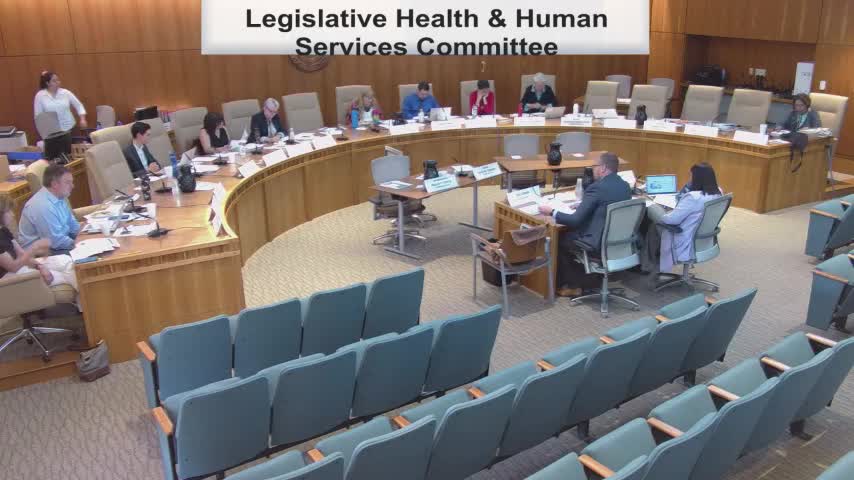
Summary
Committee learned that the Legislature enacted the Behavioral Health Reform and Investment Act and created a behavioral health trust fund, and that session appropriations included targeted nonrecurring funding for regional plans, transitional facilities, certified community behavioral health clinics and mobile crisis teams.
The Legislative Finance Committee told the Legislative Health & Human Services committee that the Legislature enacted the Behavioral Health Reform and Investment Act (SB3) and created a behavioral health trust fund this session.
"On behavioral health alone, the legislature appropriated about $350,400,000 in nonrecurring appropriations to the authority, enacted the Behavioral Health Reform and Investment Act, and created a new behavioral health trust fund," Eric Chignee said as he summarized the Health Care Authority appropriation table.
Highlights from the nonrecurring appropriations and implementation work described at the briefing include:
- $50,000,000 for behavioral health priorities identified through regional plans under SB3.
- $28,000,000 for transitional behavioral health facilities and certified community behavioral health clinics (CCBHCs). Chignee said the Health Care Authority had already stood up several CCBHCs and that more were planned.
- $11,500,000 for regional mobile crisis and recovery response teams.
- $36,000,000 in startup funding to build capacity for housing providers serving people experiencing homelessness.
Why this matters: LFC staff emphasized that much of the one-time funding is intended to build provider capacity so those entities can bill Medicaid on a recurring basis later. The law also replaced the prior behavioral health purchasing collaborative with an executive committee to oversee planning and funding distribution; the Administrative Office of the Courts was assigned SIM (service integration mapping) work to help regions identify gaps for people who intersect with the criminal justice system.
Committee questions and implementation issues
- Timing of trust-fund distributions: legislators asked when the behavioral health trust fund will be mature enough to support distributions; LFC staff said more work is needed this interim to project fund growth and timing.
- Local planning and allocation: SB3 requires local and regional planning and reporting; LFC said the executive committee met in the first week after session and regional plans will drive applications for many of the appropriations.
- Performance and sustainment: multiple members asked for metrics to ensure capacity investments lead to sustainable, recurring Medicaid billing rather than short-term pilots.
Ending
The committee received a high-level accounting of the session’s behavioral health investments and directed staff and agencies to produce more-detailed implementation timelines and performance measures during the interim so the Legislature can monitor whether capacity-building funds translate into lasting capacity and improved outcomes.