
Legislative Health & Human Services committee reviews 2024 endorsements, highlights $100M behavioral health trust fund and child-welfare concerns
Get AI-powered insights, summaries, and transcripts
Subscribe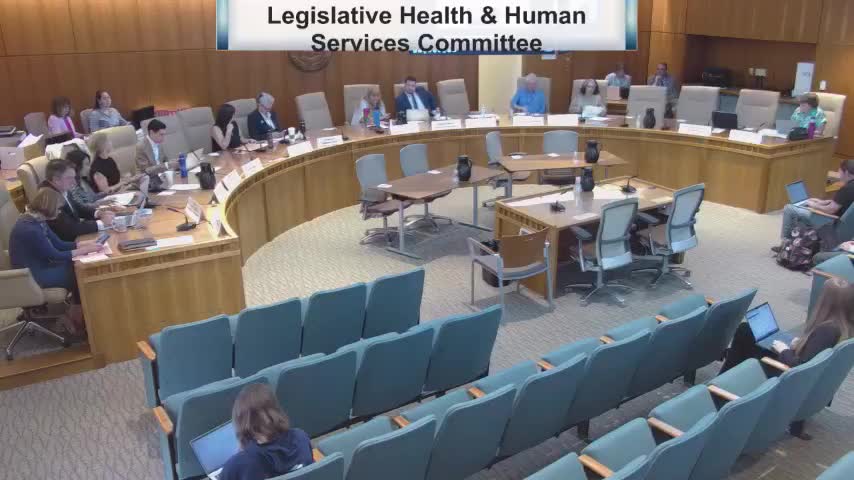
Summary
Staff reviewed 2024 interim endorsements by the Legislative Health & Human Services Committee, noting which bills passed, which stalled, and next steps for implementation and oversight—including a $100 million behavioral health trust fund and ongoing child-welfare reform discussions.
The Legislative Health & Human Services Committee on Thursday reviewed the bills it endorsed during the 2024 interim and discussed implementation priorities, including a $100 million behavioral health trust fund and continuing concerns about child-welfare leadership and staffing.
Xander Dawson, lead staff attorney for the committee, told members that 29 pieces of legislation were considered for endorsement during the interim and that the committee endorsed 27 of them: "Twenty-five bills and two joint resolutions were endorsed," he said. Dawson said 24 of the endorsed items were introduced during the regular session; eight endorsed bills passed and were signed by the governor, one was vetoed, and 16 did not pass or were not signed.
Why it matters: committee members said several endorsed measures carry budgetary and implementation consequences for state agencies and local providers, and several unsuccessful bills leave outstanding policy questions about access to care, supports for direct care workers and child-welfare governance.
Key bills and outcomes reported by staff
- Senate Bill 1: Committee staff said the measure created a behavioral health trust fund and program fund and directed $100,000,000 from the general fund into that trust. Staff and members noted the bill is linked to companion measures (staff described program and appropriations components as connected to SB2 and SB3) and that Administrative Office of the Courts (AOC) implementation plans will be presented to the committee. "You will get to hear more about how that works," staff said.
- House Bill 54: Would require all New Mexico schools to have automated external defibrillators (AEDs) and response plans for campus cardiac events.
- House Bill 56: Directs the Health Care Authority (HCA) to seek a Medicaid waiver to achieve parity in reimbursement rates for licensed birth centers and staff so those providers are paid at parity with hospital birth professionals.
- House Bill 66: Amends the workers' compensation statute to raise certain caps, including discovery-cost and attorney-fee limits, phased in over time.
- House Bill 117: Expanded which clinicians may certify deaths; staff said the change allows physician assistants to certify deaths and reduces unnecessary referrals to the Office of the Medical Investigator (OMI) where a decedent had a recent clinician visit.
- House Bill 149 (supported decision-making): Staff said the core supported decision‑making language was attached to Senate Bill 535 and enacted into law.
- House Bill 171: Permits detox facilities to stock medications for withdrawal management.
- Senate Bill 122: Allows certain entities to receive and redistribute donated prescription drugs.
Bills that failed or stalled
Committee staff listed a number of endorsed proposals that did not pass. Examples discussed: - House Bill 40 ("Traveling With Dignity"), which would have required accessible adult changing stations in publicly funded buildings, passed relevant committees but did not reach the House floor; a tourism grant program is now funding installations in some locations, staff said. - House Bill 55, which would have set a minimum fee schedule for reimbursement of personal care services and required at least 70% of the reimbursement to go to direct-care workers, stalled in appropriations. - House Bill 57, which would have provided indigent victims of domestic violence a right to legal representation in related proceedings, was not heard; staff said the state Supreme Court convened a task force to study legal-service gaps for victims. - House Bill 77, requiring HCA to develop SNAP outreach plans, passed committees but was vetoed by the governor.
Child-welfare and workforce concerns
Several members used the recap to raise child-welfare and workforce issues. Senator Antoinette Sedillo Lopez said recent infant deaths and high vacancy rates in child-welfare positions underscore the need for reform and experienced social‑work leadership. "I think there's a direct correlation between the increase in maltreatment in New Mexico and the fact that our kids are not being seen by trained social workers," she said, and she reiterated plans to press for legislation that would change the governance structure of the Children, Youth and Families Department (CYFD). Staff had reported that a proposed constitutional amendment to create a CYFD oversight commission did not pass.
Senator Sadia Lopez asked the committee to schedule another presentation on wages and the economics of home- and community-based direct-care work, saying those workers "are the backbone" of services and deserve adequate compensation.
Next steps and oversight
Committee members and staff outlined immediate follow-ups: AOC representatives will brief the committee on SB1 implementation and program design later the same day; the Legislative Finance Committee (LFC) will present more detailed child-welfare outcomes at a separate session; and a task force studying legal-service gaps for victims was expected to report by Oct. 1, staff said.
Committee chair Representative Liz Thompson closed the item and invited questions; several members pressed staff for more detail on funding flows, implementation guardrails, and metrics AOC will use to report back. Members also discussed trying to coordinate interim schedules sooner so members can plan travel.
Ending: The committee did not take new formal votes during Thursday's recap; members asked staff for follow-up briefings on SB1 program design, direct-care wages, and child‑welfare reports.