
Administrative Office of the Courts outlines regional rollout for Senate Bill 3 behavioral health reforms
Get AI-powered insights, summaries, and transcripts
Subscribe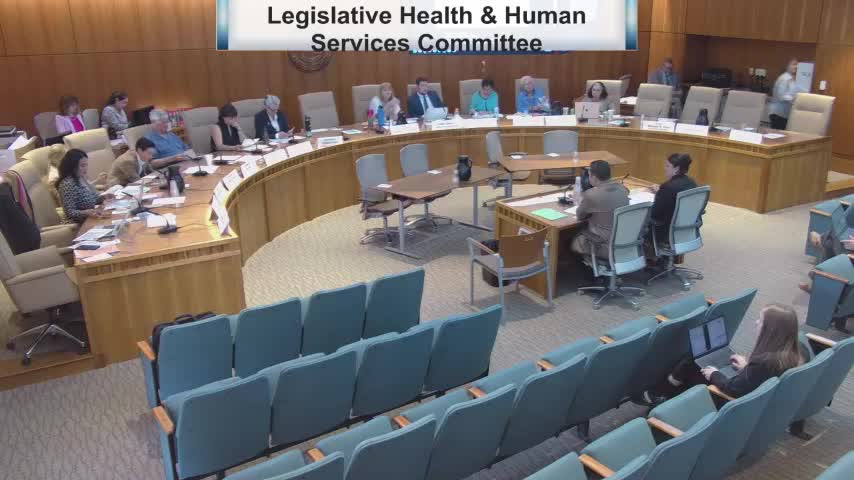
Summary
AOC and partners described sequential intercept mapping, regional planning and an AOC facilitation role under Senate Bill 3. The Behavioral Health Executive Committee met, approved regions based on judicial districts, and appointed expert members; stakeholders urged broad inclusion beyond justice-involved populations.
Carl Ryfsek, director of the Administrative Office of the Courts (AOC), told the committee that AOC27s role under Senate Bill 3 is narrowly defined and focuses on sequential intercept mapping (SIM) and facilitating locally driven regional plans. "The AOC's duties under the act involve sequential intercept mapping for the whole state," Ryfsek said, and he described the AOC27s facilitation role and that regional plans must contain no more than five goals before they are forwarded to the Behavioral Health Executive Committee for approval.
The AOC reported that the Behavioral Health Executive Committee met for its first session two business days after the statute's effective date and adopted behavioral health regions patterned on judicial districts. Ryfsek said he appointed three experts to the executive committee: Dr. Stacy Cox, Dr. Violet Cloud and former state senator Jerry Ortiz y Pino, to ensure representation with rural, tribal and legislative experience.
Implementation details and timeline: Esperanza Lucero, AOC staff leading implementation, said AOC is working with UNM Health Sciences Center to produce a combined adult and child/adolescent SIM that will incorporate social determinants of health. Lucero said the AOC surveyed stakeholders (including chief judges, tribal leadership and local collaboratives) and that most responses supported using judicial districts for regions. AOC plans to offer refreshes for counties that previously completed SIM and expects to complete regional plans statewide by July 2026.
Committee concerns and clarifications: Several members asked how the initiative would avoid tunnel vision on justice-involved populations. Lucero and Ryfsek said the statute requires SIM but also includes an intercept 0 for prevention and that the AOC and executive committee intend a broader mapping that includes non-justice-involved needs, child and family services, veterans and tribal priorities. Members asked about funding mechanisms, procurement and oversight; Ryfsek said funding strategy and procurement will be developed by the executive committee and that AOC expects to request recurring appropriations and additional staff in future budget cycles.
Decisions and next steps: The Behavioral Health Executive Committee adopted regions, opened public comment at its inaugural meeting and scheduled another meeting for Aug. 5. AOC requested that partner agencies and local stakeholders participate in regional mapping exercises and said it would provide a community readiness assessment and use participatory methods to help regions select five priorities for their regional plan. The executive committee will review regional plans for approval and set funding strategies and reporting requirements.
Ending: Members emphasized the need for transparency, accessible procurement for smaller organizations, clear accountability in each region and annual, evidence-based recommendations to the legislature; AOC and partners agreed to return with further details, including funding breakdowns.