Get Full Government Meeting Transcripts, Videos, & Alerts Forever!
Get email alerts on the Budget And Finance topic
No spam. Unsubscribe anytime.
School committee members warn of $9.3M ‘cliff,’ urge early planning for FY27
Summary
Board members said the district is relying on about $9.3 million in one-time funds for FY26 and warned the rainy-day balance could fall to levels they called unsustainable; members proposed immediate joint planning with city officials and the superintendent to identify savings or structural options.
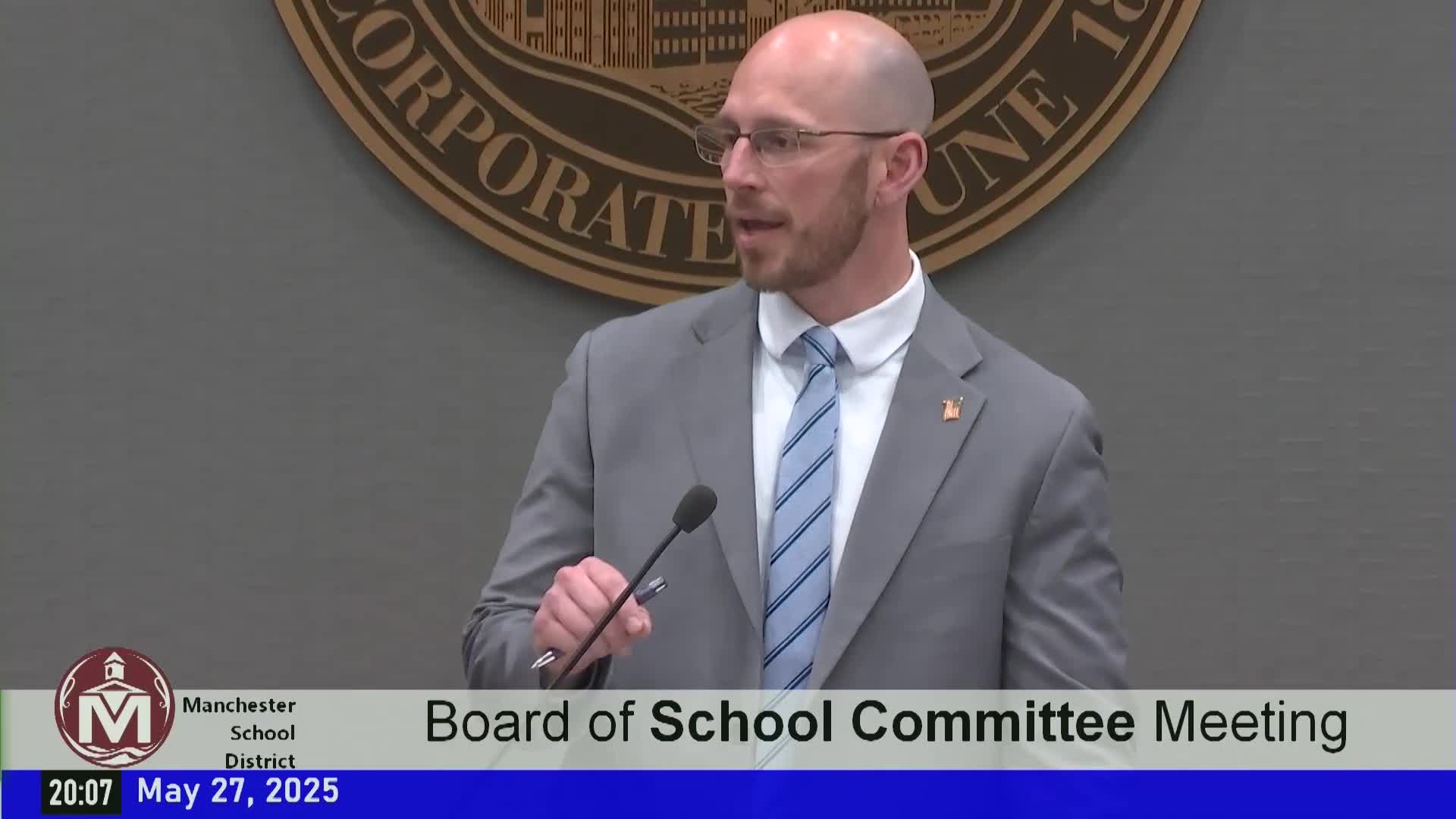
Several school committee members warned May 27 that the Manchester School District is using significant one-time (“rainy day”) funds in the current budget and urged immediate planning for next year to avoid a funding “cliff.”
Committee member Baines outlined numbers the administration confirmed in the meeting: approximately $9.3 million of one-time revenues are being used in fiscal 2026, and the district’s general rainy-day balance is projected at about $15.5 million going into the next fiscal year. Baines said continued use of one-time funds at the same level would leave the district with an unsustainably low reserve.
Board members discussed various cost and structural options, including a review of school consolidations or closures, reexamining program locations (the Manchester School of Technology and its state-funded components were raised in the discussion) and other cost-savings measures. Several members emphasized the need for community engagement before any major structural decisions and asked for detailed cost estimates tied to any scenario (for example, what savings — and community impacts — would follow the consolidation of high school programs).
Administration staff said final construction pricing for the district’s building projects (MEP pricing) was arriving and, according to committee members who had seen the reports, the MEPs were “on time and most importantly, on or under budget.” That update was described as positive for the capital side of the district’s work, but committee members said it did not resolve the operating-budget challenge.
Committee members asked the mayor and administration to meet quickly with the finance committee and superintendent to begin a series of planning meetings on FY27. Potter and others said alternatives to closing schools — including revenue options and program adjustments — should be considered, but several speakers acknowledged closing a building would have both financial and community consequences and must not be treated as the only solution.
No formal vote to change policy or close a school was taken. Members asked administration to prepare detailed budget options, including cost estimates and the implications for students, staff and facilities ahead of the next budget season.