
Santa Fe official urges more shelter beds, non‑congregate housing and outreach in city plan
Get AI-powered insights, summaries, and transcripts
Subscribe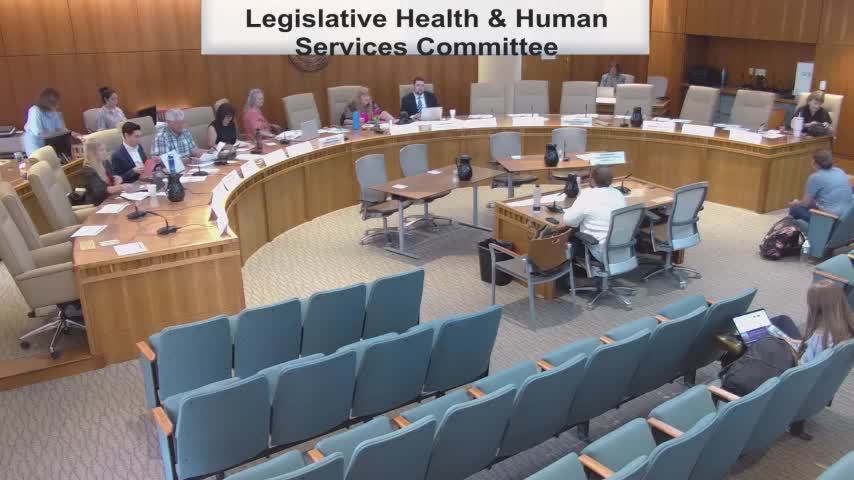
Summary
Henry Hammond Paul, Santa Fe’s director of community health and safety, told the Legislative Health & Human Services Committee the city faces a critical bed shortage and is pursuing non‑congregate shelter, tiny‑home micro‑communities and a paid street‑outreach contract to reduce street homelessness and support families.
Henry Hammond Paul, director of Community Health and Safety for the city of Santa Fe, told the Legislative Health & Human Services Committee that the city is confronting a shortage of shelter capacity and is pursuing emergency measures to reduce street homelessness. "Our by‑name list is about 400 individuals," Paul said, adding that the city currently has about 280 shelter beds. "If you want fewer people on the streets, you gotta have beds to put them in."
Paul said the city’s data show the point‑in‑time count underestimates need and cited a New Mexico Department of Health analysis that suggests the true number of people experiencing homelessness in Santa Fe could be several times higher. "We actually have probably closer to around 1,600 unhoused individuals in Santa Fe," he said, describing that 280 beds are small compared with estimated need.
The city’s plan, launched in October 2024, includes six broad objectives: safety, security and stability; expanding non‑congregate shelter options; improving outreach and navigation; improving shelter system quality; creating daytime services; and strengthening coordination, data and policy. Paul said the city is moving away from traditional congregate shelters toward non‑congregate models that offer residents locked personal units and places to store belongings.
He described three recent steps the city has taken. First, a four‑year contract valued at $8,000,000 will fund street outreach teams to engage people as they enter homelessness. Second, the city is changing operators at a long‑used low‑barrier shelter to transition away from congregate models. Third, the city plans at least one micro‑community of tiny homes on city land — "we're gonna deploy about 30 to 50 tiny homes" — targeted initially for families with children.
Paul described a pilot tiny‑home site in Santa Fe with 10 units that he said has moved 72 percent of residents into permanent housing or provided them a voucher, compared with a stated national average of 10–15 percent for many congregate shelters. On outreach, Paul said the city has contracted with a national nonprofit to hire roughly 40 local outreach workers; he said the selected organization, Urban Alchemy, hires people with lived experience and that the group’s national staffing is largely formerly incarcerated individuals. Paul said the city’s Urban Alchemy contract is about $1,500,000 and that the prior operator of one shelter ran on volunteers with an operating budget the city estimated at about $1,600,000.
Committee members asked about supportive housing and workforce issues. Paul said the emergency plan focuses on immediate actions over an 18‑month window and does not replace long‑term investments such as permanent supportive housing and affordable housing supply. He said the city estimates a need for roughly 1,500 additional units of permanent supportive housing and currently has only a small fraction of that supply. On hiring, Paul said the outreach contractor has begun recruiting locally, reported that offers were made to 16 of the first 40 candidates, and that the firm’s model intentionally hires people with prior incarceration and homelessness experience as a jobs program tied to outreach work.
Paul made clear the plan relies on partnerships and funding beyond the city. He said Santa Fe is providing city‑owned land and city capital and operating support for the first micro‑community but asked for counties, the state and private philanthropy to join the effort. "This is a regional challenge," Paul said. "We need cities and counties to play well together."
Ending: Paul told the committee the city will continue to add beds and services rather than reduce existing capacity and asked for broader collaboration and resources to scale the approach; he paused for committee questions after the presentation.