Get Full Government Meeting Transcripts, Videos, & Alerts Forever!
Get email alerts on the Water Desalination Santa Teresa topic
No spam. Unsubscribe anytime.
County and city officials say desalination, water rights and sewer upgrades are essential before housing and industrial expansion
Summary
Officials told the committee a desalination or brackish-water treatment solution, clarified water rights and targeted wastewater upgrades will be required to sustain planned housing and industrial growth around Sunland Park and Santa Teresa; RFI and engineering work are under way but capacity and cost estimates are not yet final.
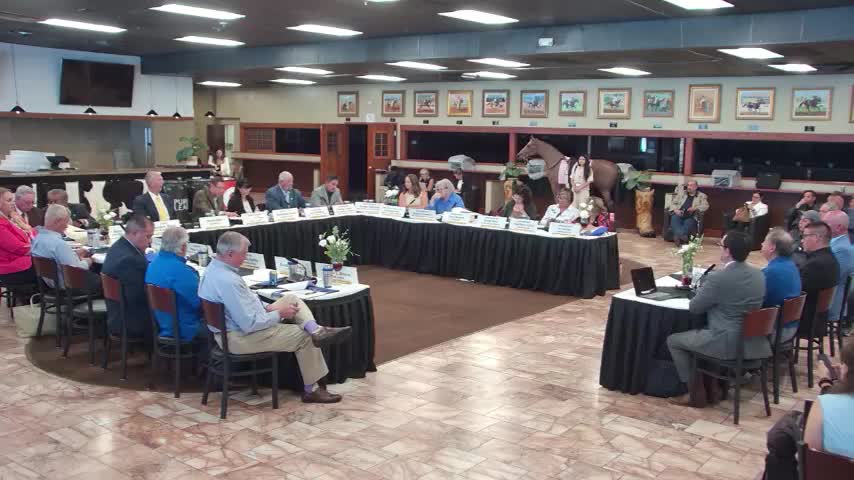
Dona Ana County and Sunland Park officials told the Legislative Finance Committee during a field hearing that water supply and wastewater capacity are the principal constraints to doubling residential development and sustaining industrial growth in the Santa Teresa area.
The most immediate work, officials said, is an open request for information (RFI) for potential desalination or brackish-water treatment partners. "We have a current RFI out on the street right now. It will be closing within a week or so," Jonathan Macias, assistant county manager for Dona Ana County, told the committee. The county and its engineering partners are evaluating brackish desalination options and have engaged Wilson and Company for engineering analysis.
Why it matters: Presenters and local officials repeatedly cautioned the committee that water is the limiting factor for both housing and industry. Sunland Park and county speakers provided early figures: the city currently owns about 3,600 acre-feet per year within its service area and a hypothetical 11,000-dwelling-unit residential development would need roughly 1,500–1,800 acre-feet per year.
What officials told the committee: City and county presenters said available municipal water rights are not fully used today but that new large developments and industrial demand would require supplemental sources and treatment. The county's RFI is intended to attract global operators to evaluate brackish desalination that could supply industrial customers, the port of entry and residential growth. City officials noted some groundwater in the area contains arsenic that affects treatment choices.
Process, uncertainties and next steps: Speakers said Wilson and Company and other consultants are producing engineering needs, capacity and cost analyses; those technical studies must be completed before precise gallons-per-day capacities or cost estimates can be provided. "Those numbers are yet not known," Jonathan Macias told the committee when asked for a rough capacity and cost estimate; he said the county is matching potential corporate interest to expected industrial water demand before producing final figures.
Ending: Officials asked the committee to consider timing and funding approaches for water and wastewater projects and to coordinate state resources with county and municipal plans so projects can move from RFI and design into funded construction if partners are identified.