
State review finds higher participation in New Mexico's universal school meals but meal-quality goals behind schedule
Get AI-powered insights, summaries, and transcripts
Subscribe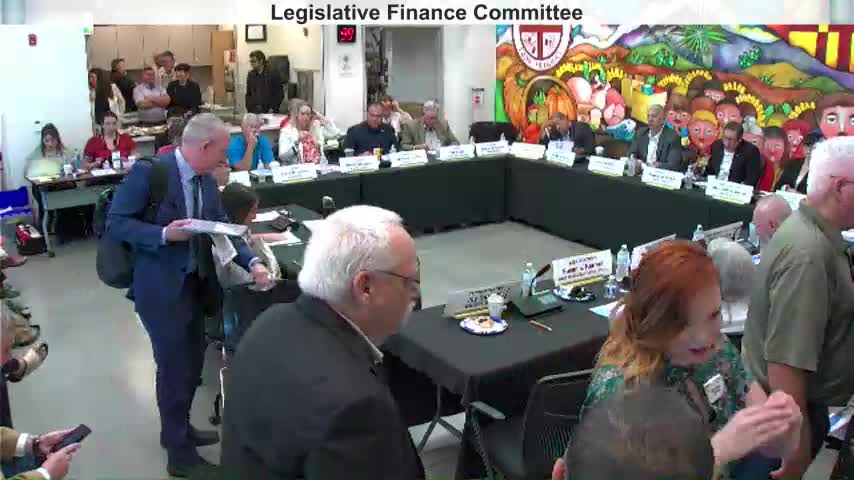
Summary
A Legislative Finance Committee evaluation presented in Las Cruces found participation rose after New Mexico implemented universal free school meals, but monitoring and resources to meet the law's meal-quality standards'including scratch cooking, local sourcing and food-waste tracking'are not yet fully in place.
A Legislative Finance Committee evaluation presented at a southern New Mexico hearing found that New Mexico's Healthy Universal School Meals law increased student participation but that many districts have not yet met the new meal-quality requirements. The report also warns that program costs rose faster than participation and that smaller districts and charters face infrastructure and staffing challenges.
The LFC evaluators said the state began free meals for all public school students in fall 2023 after the Legislature unanimously passed the Healthy Universal School Meals law. "Participation in school meals has increased," said Dr. Ryan Tolman, a program evaluator with the LFC, citing an 8.5 percentage-point rise in lunch participation and an 8.3-point rise in breakfast between school years 2022''23 and 2023''24. Those gains, Tolman said, were largest among students who previously did not qualify for free or reduced-price meals.
The LFC report also documented rising program costs: total school food service spending increased about 20.3% between school year 2022''23 and 2023''24, and per-student per-day food-service spending is roughly $4.61, the presentation said. The state's direct investment in the program rose from about $206 million in SY23 to about $247 million in SY24, according to LFC figures included in the evaluation.
Why it matters: New Mexico's law includes strict quality provisions 'requirements for scratch cooking, use of New Mexico-grown products and reduced food waste 'that make the state's program among the most ambitious in the country. The LFC said implementation gaps in tracking, kitchen capacity and staffing could frustrate those goals unless addressed.
Key findings and evidence
- Monitoring gaps: LFC found that the Public Education Department (PED) had not yet been tracking compliance with the law's meal-quality provisions in a standardized way. Tolman said PED will begin monitoring in the coming full certification year.
- Scratch cooking and infrastructure: Under PED rules, at least 50% of weekly meal components (excluding milk) must be prepared from scratch. LFC's informal survey found many school food authorities are not yet meeting that threshold; PED officials said schools are increasing efforts and that the state allocated roughly $20 million for kitchen infrastructure grants but that less than a third of that money had been spent at the time of the report.
- Local sourcing: The law directs PED to encourage greater use of New Mexico-grown foods. LFC reported that tracked purchases via the New Mexico Grown program were only about 2% of total food budgets last school year, roughly half the national average, and that NM Grown is funded at about $1.7 million in the current year. PED said it has set aside $2 million from the Healthy Universal School Meals appropriation to continue New Mexico Grown activities this year and to increase the number of participating schools.
- Food waste and student voice: PED rules now require schools to track food waste; LFC noted only about 25% of schools reported tracking food waste at all and that there was not yet a statewide system for student and family feedback on meal quality. PED told the committee it will distribute a student-and-family survey statewide and is launching a chef symposium and technical assistance to support scratch cooking.
- Staffing: LFC and PED said staffing shortages and limited skill sets for scratch cooking are major barriers, particularly in rural districts and for many charter schools that contract with food-service management companies.
PED response and next steps
Greg Frostad, assistant secretary at PED, said the agency accepts many of the LFC recommendations and described the program as "one of the most important accomplishments of the last several years of the administration and the legislature." He said PED will push to maximize federal dollars, work with schools on community eligibility certification and implement monitoring in the program's first full certification year.
Laura Henry Hand, Deputy Director of PED's Student Success and Wellness Bureau, told the committee the agency has built a transitional timeline and is already providing trainings, menu reviews and a $20 million kitchen-infrastructure grant pool to support freshly prepared meals. "Most SFAs are eager and well on their way to meeting the freshly prepared requirements of the rule," she said, and PED plans to host a chef symposium and monthly technical-assistance sessions for food-service staff.
Questions from lawmakers
Committee members pressed the department on how long it takes to convert or build scratch kitchens, how to increase contracted vendors' compliance with quality standards, and whether the program's higher costs are driven mainly by adding breakfast or by rising food and staffing expenses. LFC noted that schools exceeded early budget estimates and needed supplemental appropriations in the program's first year.
What the LFC recommends
The LFC report lists recommendations including: a statewide performance-monitoring system that tracks compliance with quality provisions and aligns with the Accountability in Government Act; a standardized student-satisfaction survey; guidance and monitoring of SEG (state equalization guarantee) funds used by school food authorities (with attention to small districts and charters); expanded technical assistance and training for kitchen staff; and contract requirements for food-service management companies to meet the new quality expectations.
Ending note
PED acknowledged the report and said many of the recommendations are already scheduled for action in the coming year. LFC and PED officials said the 2025'26 certification window should give the state better data on which districts meet the law's quality standards and where additional investment is needed.