
Legislative Finance: $170M in higher‑education endowments have underdelivered on faculty hires, report finds
Get AI-powered insights, summaries, and transcripts
Subscribe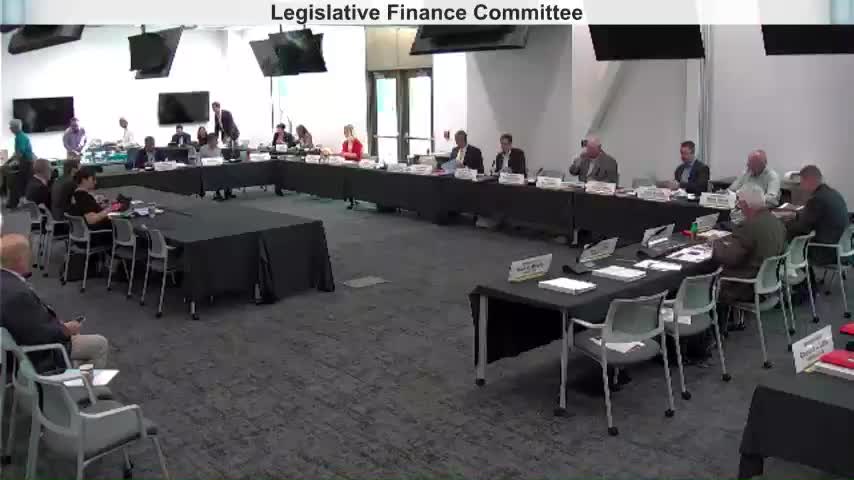
Summary
A Legislative Finance Committee evaluation found New Mexico’s $170 million in endowment appropriations for nursing, teacher education and social work have so far financed fewer faculty positions than intended, with implementation delays, uneven spending, and funds held in university foundations instead of faculty salaries.
The Legislative Finance Committee concluded Wednesday that $170 million the Legislature appropriated to create higher‑education endowments has produced “some bright spots” but so far has not delivered the program growth lawmakers expected.
The committee’s program evaluator, Clayton Lobaugh of the LFC, told legislators that the endowment appropriations were intended “to turn nonrecurring windfall money into long‑term investments” to help colleges hire faculty and expand enrollment in nursing, teacher education and social work. “This evaluation finds that while there are some bright spots and some progress has been made, the envisioned program growth from these appropriations has not yet materialized,” Lobaugh said.
Why it matters: Lawmakers set the endowments to address projected workforce gaps—LFC figures show the state would need to graduate and retain roughly 12,000 nurses, 11,000 teachers and 3,000 social workers over the next seven years. The endowments were meant to create sustainable, recurring earnings to pay faculty salaries and expand program capacity.
Key findings: LFC staff reported the FY23–FY25 appropriations should have been sufficient to support about 87 additional faculty positions based on expected investment returns and spending rules, but were supporting roughly 52 faculty in FY25. Colleges earned roughly $10.7 million in investment gains from FY23 endowment appropriations but reported spending only about $2.5 million of that on faculty salaries. LFC cited “delays and implementation issues” at the Higher Education Department (HED) and at some institutions, including HED staff turnover, as contributing factors.
Institutional examples: LFC highlighted several institutions that used endowment earnings to hire faculty and expand courses—UNM’s teacher education, Eastern New Mexico University’s social work program, and Central New Mexico Community College’s nursing program were listed as bright spots. By contrast, the report said some institutions held investment earnings in foundation accounts or applied endowment earnings to nonfaculty uses. LFC said NMSU and its Dona Ana branch received about $34 million in endowments that produced $6.4 million in gains; the report shows $1.2 million of those gains went to NMSU Foundation operations while roughly $795,000 was spent on faculty salaries. LFC also reported UNM nursing endowments earned about $1.4 million in FY25 but that the university did not spend those earnings on faculty salaries.
HED response: Stephanie Rodriguez, cabinet secretary of the New Mexico Higher Education Department, disputed parts of LFC’s timetable for awards and said HED has moved to address staffing and capacity issues. “We appreciate the time and effort that went into the Legislative Finance Committee’s independent analysis,” Rodriguez said, and described steps HED has taken to speed awards, increase staffing in financial and institutional divisions, and provide technical assistance to smaller institutions. Rodriguez said HED expects outstanding distributions (for example, roughly $5 million in FY24 social‑work funds) to be released to behavioral‑health entities and noted some institutions lack local banking or endowment infrastructure, which she said delayed spending.
Lawmakers pressed specifics: Several legislators asked whether the Legislature can withhold future funds or tighten budget language. Vice Chair Munoz and others cited cases where foundation accounts held earnings rather than paying faculty salaries. Rodriguez and HED staff said the agency will review foundation spending and consult legal counsel about whether funds can be reclaimed or future appropriations conditioned. LFC and committee members discussed asking the state auditor to review university foundations; the auditor has indicated plans to include higher‑education foundations in its FY26 audit plan.
Implementation risks and next steps: LFC recommended clearer coordination and monitoring to help institutions absorb large appropriations, better quality control on FTE and expenditure reporting, and renegotiation of fees foundations charge on state appropriations. HED said it will continue site visits, technical summits for business officers, and tighter guidance for FY26 awards; HED reported it had already circulated FY26 guidance to institutions and that LFC staff were looped into memos and award letters.
What remains unclear: LFC’s report documents amounts earned versus amounts spent and lists numerous institution‑level examples, but it does not prescribe a single statutory remedy. Several legislators said they will consider stronger language in the next HB2 to restrict use of endowment earnings for administrative or foundation operations and to require performance before future distributions. HED and LFC agreed to follow up with data and with institution‑specific inquiries; the committee signaled it may pursue legislative or audit actions if institutions cannot justify current spending patterns.