Get Full Government Meeting Transcripts, Videos, & Alerts Forever!
Get email alerts on the Santa Teresa Infrastructure topic
No spam. Unsubscribe anytime.
Santa Teresa industrial base draws new investment; report outlines water, road and drainage gaps
Summary
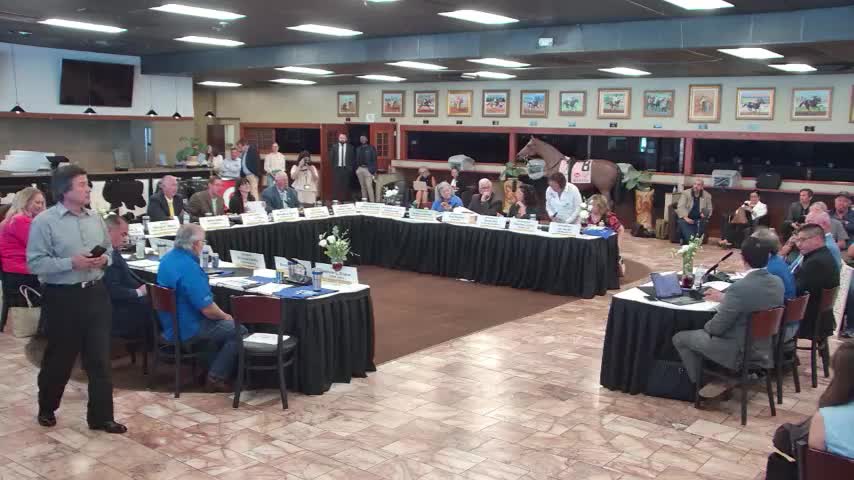
Local leaders and researchers told the Legislative Finance Committee during a field visit that Santa Teresa’s industrial parks and port of entry have driven billions in trade and thousands of jobs, but growth now depends on targeted investments in water, wastewater, roads and drainage plus faster site-ready infrastructure.
Sunland Park and regional economic development leaders told the New Mexico Legislative Finance Committee on a field visit that Santa Teresa’s industrial base has become a major exporter for the state, but continued expansion requires substantial infrastructure investments.
The Santa Teresa industrial area now supports roughly 7,000 jobs and accounted for the largest percentage increase in border cargo value last year among U.S.–Mexico crossing points, according to speakers who summarized a regional strategic infrastructure assessment and an updated economic-impact study. "We do about $2,000,000,000 a year in terms of revenue to the state's economy," said Jerry Pacheco, representing the Border Industrial Association and the New Mexico International Business Accelerator, during the presentation.
Why it matters: Committee members were shown a planning study that models two scenarios — a "halted" scenario in which infrastructure constraints stop growth, and a "continued growth" scenario that assumes investments in water, wastewater, transportation and drainage. Authors and local officials said the difference between those scenarios is measured in lost jobs and lost capital investment; the report identifies specific projects and annual funding needs to reach the higher-growth outcome.
Key findings and near-term projects: Presenters described a set of assets that make Santa Teresa competitive — an intermodal Union Pacific container facility, a jetport that recently added cargo capability, a port of entry with high-value trade, foreign-trade zone status, and multiple industrial parks. Joe Dela Rosa of the New Mexico Border Authority said the border-highway connector is about 90% designed and could reduce travel times from the airport to the industrial area from roughly 20 minutes to about eight minutes if constructed in early 2026.
Water and wastewater capacity and drainage emerged repeatedly as gating items. Dr. Kramer Whittington, who the panel identified as the report author, told the committee the economic model assumes continued employment growth at a compound annual rate observed since 2019 (cited as roughly 18.5% annually) and that that level of growth requires securing additional water and wastewater capacity and related infrastructure.
Missed opportunities and competition: Panelists said several large projects pursued site visits to Santa Teresa but located elsewhere, citing infrastructure constraints, lack of inventory, regulatory uncertainty and workforce considerations. Dela Rosa said the region lost an estimated 1,990 jobs and more than $2.7 billion in capital investment across eight projects the team tracked.
Local capacity and planned responses: County and city officials described public–private partnerships, spec building activity and recruitment of large manufacturers. Jerry Pacheco said spec developers are active and that Santa Teresa hosts hundreds of firms supplying electronics and automotive components. County and city officials and the Border Authority said they are coordinating a larger strategic plan and updating design work for roads and drainage to support additional industrial park construction.
Ending: Presenters left the committee with a request to align state investments and timing with the projects identified in the Santa Teresa strategic infrastructure assessment so that the region can capture near-term opportunities as other nearby crossings prepare for operational changes.