
LFC: New Mexico public health offices treated 324 people with MAT despite estimated 9,130 in need; DOH pledges new coordinator and outreach
Get AI-powered insights, summaries, and transcripts
Subscribe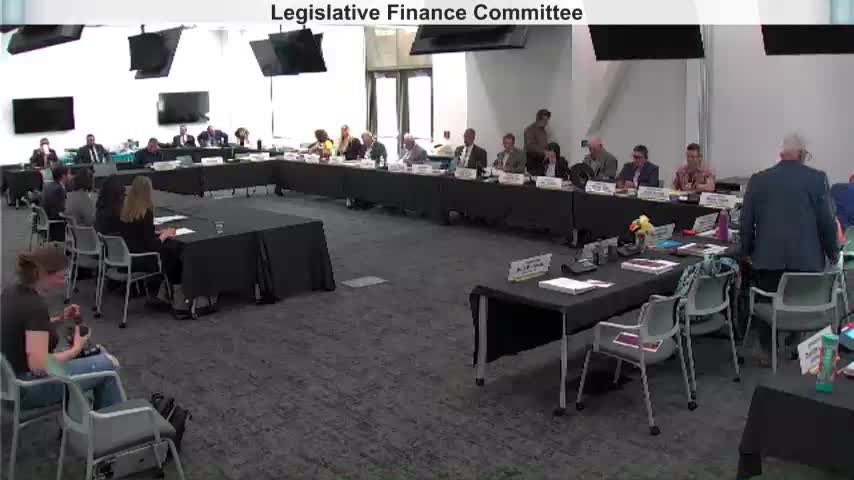
Summary
Dr. John Valdez, a program evaluator with the Legislative Finance Committee, presented an LFC evaluation finding that the New Mexico Department of Health treated 324 people with medication assisted treatment in its first year of expanded public-health-office services while the Health Care Authority estimates about 9,130 New Mexicans need MAT but are not receiving it.
Dr. John Valdez, a program evaluator with the Legislative Finance Committee, presented an LFC evaluation finding that the New Mexico Department of Health’s expansion of medication assisted treatment (MAT) into public health offices treated 324 people in its first year while the Health Care Authority (HCA) estimates about 9,130 New Mexicans need MAT but are not receiving it.
The study, released to the Legislative Finance Committee, assessed the Department of Health’s (DOH) rollout of MAT for opioid and alcohol use disorders in public health offices after the department expanded services in spring 2024. It found treatment concentrated in a few sites, extensive use of telemedicine, limited local outreach, fragmented program oversight, and gaps in outcome data collection.
The disparity between the number estimated to need treatment and the number served is the report’s central finding. LFC staff said 321 of the 324 people treated in public health offices were for opioid use disorder and three were for alcohol use disorder. The HCA estimate of unmet need cited in the evaluation is 9,130 people. LFC staff also reported that Las Cruces and Otero County public health offices accounted for roughly 75 percent of patients treated in the public-health-office program, and that about 60 percent of public-health-office MAT visits were billed to Medicaid. The DOH’s uninsured MOUD access program has helped 27 people since it began in October.
The evaluation recommended several changes to increase reach and measure results. Key recommendations included centralizing program leadership within DOH, hiring a dedicated coordinator, setting measurable performance targets for fiscal year 2027 through the Accountability and Government Act, developing an implementation plan to include outreach and marketing, expanding use of mobile health units for MAT where feasible, and improving referral networks to behavioral-health therapists.
LFC presenters described operational details that likely limit scale-up: most public health offices rely on an existing clerk and nurse for MAT visits (Las Cruces has dedicated staff), more than half of offices offering MAT did so exclusively via telemedicine, and DOH currently collects output measures (unique visits and patients) but not outcome measures tied to clinical improvement. The report also noted that DOH has received about $7,280,000 per year since FY24 from a mix of general fund and opioid settlement revenues to support MAT provision in public health offices.
In response, the Department of Health agreed with LFC’s recommendations and described steps already underway. Secretary (New Mexico Department of Health) told the committee the department is hiring “an MOUD expansion coordinator” to consolidate oversight. The department said it has begun a pilot to dispense medication directly at three public health offices in Dona Ana, Rio Arriba and Curry counties (dispensing requires additional Board of Pharmacy and DEA reviews and safety upgrades) and has bought five mobile health units that could be used for expanded outreach after licensing and security requirements are met. DOH also said it is developing surveys and an evaluation plan in the Southwest Region and plans to expand telehealth capacity, SBIRT training and marketing of services.
Committee members pressed DOH on specific populations and operational timelines. Legislators asked about prenatal MAT uptake, screening and referrals from corrections and detention facilities, juvenile treatment availability, and how the department will coordinate with regional health councils and the Health Care Authority. DOH officials said protocols allow juvenile treatment but could not provide immediate counts and committed to report back with more detailed timelines and referral statistics at the committee’s next convening.
The report described local coordination efforts the committee could build upon: Golden Opportunity, a coalition in the Albuquerque metro area that connects first responders to MAT services after an overdose; Opioid Plus 360, a Las Cruces-area stakeholder forum; and existing inpatient facilities run by DOH (Turquoise Lodge Hospital in Albuquerque and the New Mexico Rehabilitation Center in Roswell) that offer detox and MAT. LFC staff also highlighted an example from another state (a private provider operating licensed mobile MAT units) as a model for delivering medication without requiring patients to fill a separate pharmacy prescription.
The LFC report did not propose immediately cutting funding. Instead it recommended the Legislature reevaluate funding if DOH, LFC and the Department of Finance and Administration fail to set and meet performance targets for FY27. The committee asked DOH for a returned implementation plan and specific performance targets tied to the FY27 budget submission.
The evaluation contains multiple operational cautions: carrying controlled substances on mobile units would require a class E clinic license from the New Mexico Board of Pharmacy, DEA registration and nightly offloading procedures; security upgrades and Board of Pharmacy review are in process for the dispensing pilot; and DOH acknowledged gaps in outcome measurement for patients treated in public health offices. The department said it will pursue additional training for health promotion teams, pursue billing and revenue maximization where appropriate, and coordinate more closely with corrections to improve warm handoffs for people leaving incarceration.
The committee closed by thanking LFC staff and DOH leaders and asking for continued, rapid follow-up on implementation steps, performance targets, and outreach and screening plans ahead of the next meeting.