
Albuquerque officials point to technology and youth intervention as factors in lower violent‑crime rates; committee seeks follow‑up on outcomes
Get AI-powered insights, summaries, and transcripts
Subscribe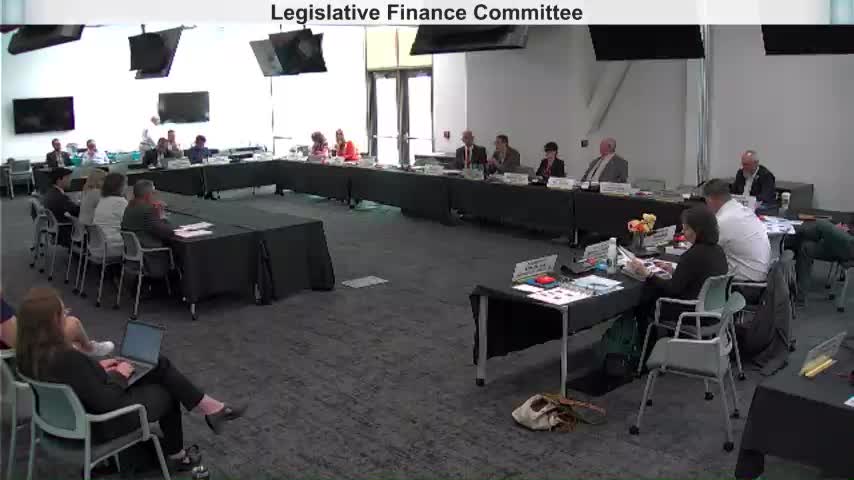
Summary
City and county officials credited investments in technology, license‑plate readers, shot‑spotter coverage and youth violence interventions with recent drops in shootings and homicides, but legislators pressed for clarity on enforcement outcomes and long‑term strategies.
Officials from Albuquerque and Bernalillo County told the Legislative Finance Committee that a mix of technology, targeted enforcement and youth intervention programs has contributed to declines in violent crime over the most recent year — but members asked where arrested suspects are going after apprehension and whether outcomes will be sustained.
Committee Chair Nathan Small opened the exchange by citing the committee crime update, saying shooting‑with‑injury incidents were down roughly 50 percent and homicides roughly 48 percent in the most recent quarter‑to‑quarter comparison. “Shooting with injuries down 50 percent, homicides down 48 percent,” he said while introducing the public‑safety briefing.
A city official described tools and tactics the municipality has used. “If you shoot someone in Albuquerque today, we have a 98% likelihood that we're going to find you and put you in jail,” the official told the committee, citing expanded shot‑spotter coverage, license‑plate reader networks, camera grants and a real‑time crime center that helps investigators link casings, vehicles and video across incidents.
Officials also pointed to non‑police responses as part of the safety mix. Albuquerque Community Safety (ACS), a civilian alternative‑response unit, was cited for more than 100,000 calls to date. The city said ACS and other alternative responders free officers for crime response and increase capacity to address behavioral‑health‑related calls.
Prevention and youth programs drew significant attention from legislators. The city described a school‑based violence intervention program that officials said produces an 80 percent non‑recidivism rate and an 80 percent high‑school graduation rate among participants. County officials said arrests at the Metropolitan Detention Center frequently involve people with substance‑use disorders and urged more long‑term recovery beds, drug‑court options and strategies to move people into services after arrest.
Why it matters: Legislators pressed for data linking arrests to outcomes and for assurances that enforcement and diversion pathways produce measurable reductions in repeat offending. Several members said businesses and residents still report feeling unsafe in some neighborhoods and asked for faster, more visible results.
Next steps: City officials asked legislators to continue supporting technology and alternative‑response funding and to help align state and local investments in diversion capacity, long‑term treatment and reentry services. Committee members requested follow‑up briefings focused on the disposition and long‑term outcomes of arrests and on coordination between enforcement and behavioral‑health systems.
Ending: City and county leaders said technology and intervention programs are part of a multi‑pronged strategy that also includes housing, behavioral health investments and economic development to reduce the conditions that feed violent crime.