
LFC: New Mexico election costs have risen sharply; report urges stronger oversight and procurement controls; Secretary of State disputes findings
Get AI-powered insights, summaries, and transcripts
Subscribe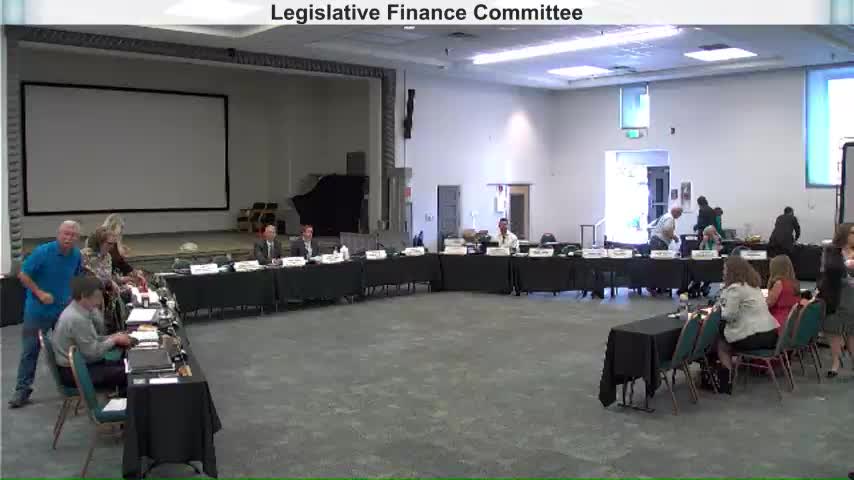
Summary
Legislative Finance Committee staff told lawmakers that state election costs have roughly tripled since 2021, the statewide election fund has run negative balances and county reimbursements are inconsistent; the Secretary of State pushed back, calling the LFC review rushed and disputing key characterizations.
At a Legislative Finance Committee hearing in Taos, Legislative Finance Committee (LFC) principal program evaluator Dr. Sarah Dinsis presented a staff evaluation showing that state election costs and state reimbursements to counties have grown substantially and that the Secretary of State’s office and counties need stronger oversight and clearer procurement and reimbursement rules.
The report said the amount the state paid for elections “has almost tripled over the last 4 years, from 5,200,000.0 for the 2021 regular local election to over 14,000,000 for the 2024 general election,” and that the statewide election fund “has frequently had negative cash balances.” The LFC memo, shown to the committee as part of the presentation, found the fund ran a negative $3,800,000 in October 2024 and fell to negative $7,600,000 after the November election. The report also noted that the state now pays for nearly 80% of election costs and that reimbursements to counties rose from about $3,700,000 in FY2018 to $11,700,000 in FY2024.
Why the LFC says it matters: as the state takes on more election spending, the report argues, it needs tighter vendor oversight, a formula-driven county reimbursement process and clearer definitions of reimbursable expenses so counties and the secretary of state do not repeatedly over- or under-request funds. The LFC recommended the Secretary of State work with the legislature and the Department of Finance and Administration (DFA) to develop annual cost projections for the statewide election fund, adopt a formula-based MOU process for county reimbursements, define reimbursable categories, and improve procurement and data collection.
Key findings and numbers cited during the presentation included: - Ballot-on-demand (BOD) systems and related contracts were identified as the state’s single most expensive contract, increasing from 2,900,000.0 for the 2018 general election to 6,600,000.0 for the 2024 general election. - An LFC estimate that counties operate more voting convenience centers than state statute requires, producing about $3,200,000 in additional state costs if the state reimbursed only the statutory minimum (one voting convenience center per 10 precincts). - MOU reimbursements varying widely by county, from about $1.40 per registered voter in McKinley County to $33.67 per registered voter in Harding County; 12 counties returned money and 13 counties sought additional funds after reconciliations for the 2024 primary. - Vendor services make up roughly 63% of state direct election expenditures; personnel made up about one-third. - Election administration per-registered-voter costs rose from $5.40 to $13.25 since 2016 and, by LFC’s calculations, cost per actual voter ranged from roughly $16 (2024 general) to $60 (2024 primary).
LFC staff urged the committee to press for: annual, formula-based MOU payments to counties; clearer guidance on reimbursable expenditures and training for county clerks; improved procurement practices including soliciting multiple vendors for election technology; and a centralized data repository for county election administration and expenditures. The report noted that the legislature provided $1,000,000 to develop a central repository during the last session.
Secretary of State response: Secretary Toulouse Oliver and staff contested several LFC conclusions during an extended response. The secretary said the office provided a written rebuttal included at the back of the report and told the committee it “strongly refutes a lot of the assertions” in the LFC staff review, calling the evaluation “a 2 month crash course” and describing the review timeline as compressed.
The Secretary of State disputed the implication that the office had voluntarily run the statewide election fund negative, saying legislation timing and DFA guidance produced the cash-flow events. Toulouse Oliver told the committee that DFA staff had advised the office to place certain costs on a card and to use FY25 appropriations to cover some FY24 primary costs, and said the change in the election-fund language in the enacted bill made the fund a pure reimbursement vehicle that could not be used until FY25. The secretary said this legislative timing—not office mismanagement—explains use of FY25 funds for FY24 costs.
The Secretary of State also defended procurement practices, arguing the national vendor market for election systems is small, certification is required before vendors can bid, and the state’s use of two BOD vendors reflected vendor capacity limits and county preference. Toulouse Oliver said, “we have a very limited pool of vendors to provide these services in the nation,” and that “neither has the capacity to cover the whole state” if the state were to rely on a single vendor.
On county discretion, the secretary argued that statute gives county clerks authority to add voting convenience centers beyond the 1-per-10-precinct statutory floor and that local conditions—rural geography, tribal communities and turnout—justify county-level decisions. Toulouse Oliver noted the office is working on updated precinct-to-voting-center calculations and on expanded county training and a 2023 rule that clarified some MOU elements.
Other points raised in the hearing and staff responses: - Cyber and in-kind federal support: LFC staff noted about $2,600,000 in in-kind cybersecurity support; the secretary warned of shrinking federal assistance from CISA and said additional state cybersecurity funding and a do-it (DoIT) environment migration are priorities. - Data and oversight gaps: LFC said the state could not provide some county-level expenditure data on request; the secretary said the office has started building a central election management repository and received a partial appropriation for it. - Same-day and automatic registration: staff outlined how same-day registration is processed and how the recently enacted automatic registration through the Motor Vehicle Division will work; the secretary described ongoing outreach and implementation steps.
Discussion vs. decision: much of the hearing was discussion and questioning about the report’s methods, numbers and recommendations. The Secretary of State repeatedly said many of the report’s recommendations align with work already underway in the Secretary’s office and that the LFC had undervalued on-the-ground electoral expertise. No new statute or formal policy change was adopted at the hearing; committee members asked for follow-up and for staff-to-staff collaboration during the interim.
Votes at a glance (committee action at end of meeting): the committee approved routine items by voice vote: May meeting minutes; two contracts (economic forecasting with Bieber and a budget/IT contract with Ralph Vincent); and the committee work plans.
The exchange highlighted a practical tension: LFC staff framed the issue as growing fiscal exposure and inconsistent county reimbursements that argue for clearer statewide processes, while the Secretary of State emphasized implementation complexities—certification and vendor capacity constraints, rural and tribal access needs, and funding timing set by the Legislature and DFA.
Ending: The LFC recommended clearer, formula-driven county reimbursements, stronger procurement oversight and a central data repository. The Secretary of State said the office is open to working with the committee and the LFC on many of those items but urged lawmakers to recognize operational limits, vendor-market realities and the timing set by past legislation.