
Albuquerque, Bernalillo County tell LFC they will use HB2 and local funds to scale housing, behavioral health and 'gateway' services
Get AI-powered insights, summaries, and transcripts
Subscribe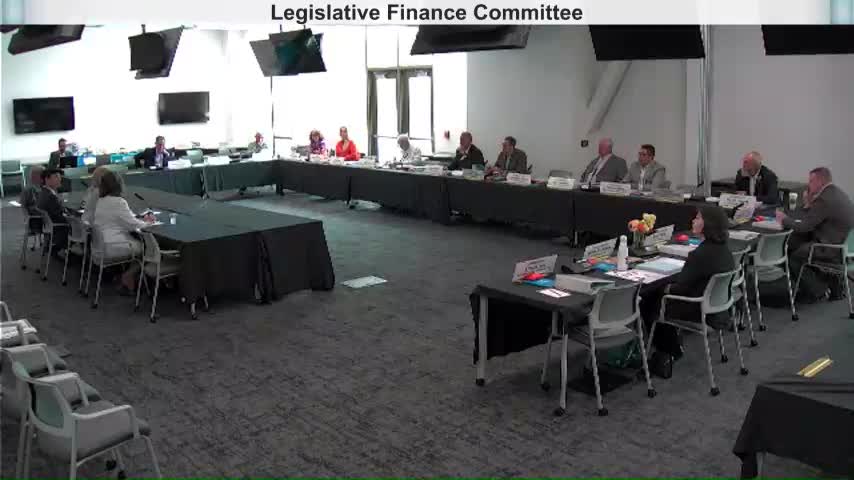
Summary
City and county officials briefed the Legislative Finance Committee on local investments and partnerships aimed at housing, behavioral health and supportive services, and highlighted need for rapid use of state HB2 funds and better capital‑outlay processes.
City and county officials told the Legislative Finance Committee on Thursday that recent state funding and local dollars have created opportunities to expand housing and behavioral‑health services — but urged faster implementation and coordinated use of resources.
Bernalillo County officials said the county and its partners prepared a project list designed to move money into “shovel ready” projects that the county estimates can place more than 2,000 people in affordable housing and house more than 1,000 people experiencing homelessness. “We understand that the governor's office intends to begin allocating funds this fiscal year. Our project list allows our county to move quickly and deliver that money to shovel ready projects,” Eric Leavis, a county official, told the committee.
The city said recent legislative support has funded gateway services, motel conversions, tiny‑home villages and workforce supports connected to Albuquerque’s continuum of care. A city official reported that Albuquerque’s gateway and integrated system will open additional pieces throughout the fall, and pointed to investments in a veterans integration center, hotel‑to‑housing conversions and transit‑connected developments.
Why it matters: Committee members pressed city and county presenters on execution. Both governments said they need to shift from many small capital outlay requests to larger, prioritized projects that can be delivered quickly, and they urged the Legislature to consider reforms to capital outlay processes so appropriations turn into constructed projects faster.
Funding and scale: County officials said the legislature provided roughly $110 million statewide for housing through HB2 and that Bernalillo County alone received nearly $26 million in local capital last session. County staff reported a behavioral‑health budget line for contracted services and operating costs of about $41,800,000 for the current fiscal year. The Middle Rio Grande Housing Collaborative has identified around $250 million in gap funding for shovel‑ready projects, county officials said.
Service models and wraparound supports: City and county presenters emphasized that transitional housing projects include case management and connections to medication‑assisted treatment, workforce navigation and other wraparound services. The city described the gateway recovery and family gateway models, and a tiny‑home recovery village that supports people in treatment while preparing permanent housing transitions.
Partnerships and implementation challenges: Both officials urged legislative partners to consider implementation risk and project readiness when allocating funds. County officials said they are revising their capital improvement ordinance to prioritize community‑driven, staff‑driven and data‑driven projects so money can be spent quickly and projects completed. “We are already looking to partner on future initiatives, but I want to let you know that it is my priority for the county to begin to shift our focus to doing fewer things with more resources so that we can complete projects more quickly,” Eric Leavis said.
Ending: City and county presenters asked for continued state partnership to scale housing and behavioral health services and to use a combination of state, county, local and federal funds to close large gap financing needs. They told the committee they will return with more detailed project lists and timelines as money becomes available.