
UNM tells LFC it can double physician training if state backs $600M School of Medicine replacement
Get AI-powered insights, summaries, and transcripts
Subscribe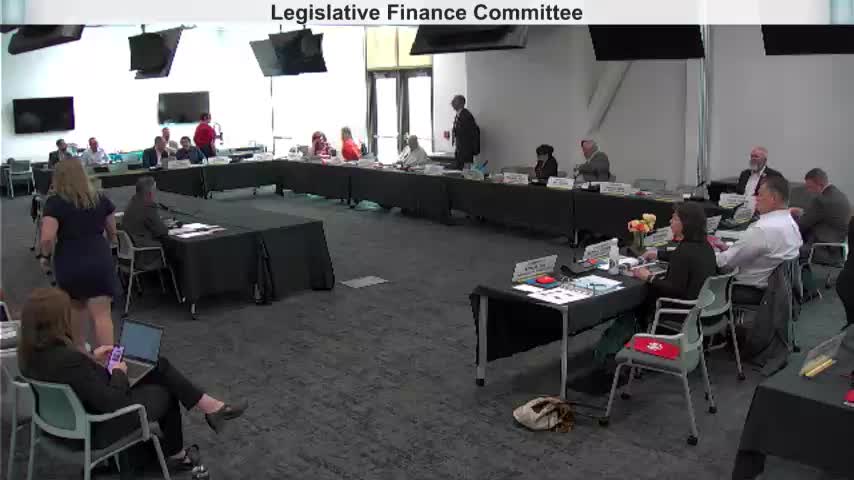
Summary
University of New Mexico officials told the Legislative Finance Committee they have state support and federal financing tools in place to expand clinical capacity and double the School of Medicine and health-professions training — but say a new $600 million medical-education building is required to do it.
University of New Mexico leaders told the Legislative Finance Committee in Albuquerque that a coordinated expansion of clinical capacity and a new medical‑education building would allow the school to roughly double its physician and allied‑health training over the next decade.
The university has secured a $30 million state appropriation for design work and is moving into the design phase for a combined School of Medicine replacement and associated facilities it now estimates will cost about $600 million. “The total cost of the school of medicine building at this point is about $600,000,000,” UNM Health Sciences Center Executive Vice President Michael Richards said during the committee presentation.
The proposal links clinical growth already underway — including a new critical care tower that UNM said will open later this year — with increased residency positions, faculty hires and training space the university says are necessary to address statewide shortages of physicians, nurses and other health professionals.
Why it matters: New Mexico’s medical workforce is concentrated in urban centers, and UNM is the state’s only academic medical center. UNM officials told legislators that expanding inpatient and outpatient capacity will both produce more clinical revenue to sustain expanded training and create the clinical sites (beds, clinics and faculty mentors) required by accreditation to train more learners.
Key facts and timeline: UNM said the clinical expansion and hospital tower create the patient volumes needed to support roughly 300–350 additional physicians in the system and roughly 250 additional graduate medical education (residency) slots on top of the current ~780 GME positions. The university presented a schedule that would put a new medical‑education building in place by about 2029 and the first full graduating class from the expanded program by the early 2030s.
UNM executives also highlighted immediate gains already achieved in allied programs: the recently completed College of Nursing and Population Health building is a 93,000‑square‑foot facility the university described as a $43,200,000 project that consolidated scattered programs and supports more than 1,000 learners. “The new College of Nursing and Public Health Excellence building was completed just this last fall. It's a 93,000 square foot facility…It was a $43,200,000 project,” Executive Vice President Teresa Costantidis told legislators.
How the plan would be paid for: Richards and staff said the business plan and pro forma show the project largely supported by a blend of clinical revenue growth, federal financing tools (including HUD‑backed loans used for prior projects) and state investments. The university’s Tripp Umbach economic-impact analysis included in the packet estimates the school‑of‑medicine component would increase annual economic output by roughly $230–$250 million and generate substantial tax value, but the university acknowledged a funding gap remains and that financing details must be finalized with legislative partners.
Retention and pipeline: UNM officials emphasized that most of the university’s medical graduates remain in state when they complete both undergraduate medical education (UME) and residency. Richards said the institution currently draws almost all of its medical‑school class from New Mexico applicants and that expanding seats must be paired with investments in K‑16 pipelines so the state produces enough applicants to fill additional slots.
Accreditation and physical plant: UNM officials said the existing Fitts Hall and adjacent medical‑school facilities are aged and no longer support contemporary, simulation‑driven medical education or modular research labs. The design phase now under way will refine equipment, simulation and research needs and use bid‑lot strategies aimed at reducing inflation exposure during construction, the university said.
What legislators asked: Committee members pressed for details about recurring costs, student housing and how many new residency positions would be guaranteed. Richards and Dean Patricia Finn said GME growth is central to retention — “if we have an opportunity for their residency in New Mexico, that’s what will drive retention” — and that some pathways and pipeline programs are already in place but will need expansion.
Next steps: UNM has begun contract negotiations with an architect/engineering team and expects the design contract to be executed imminently. The university asked the Legislative Finance Committee and other lawmakers to continue discussions about a financing package that could include state appropriations and targeted mechanisms developed during the 2025 session.
Ending: The university framed the proposal as both a workforce and economic development project. “This is not really about a building,” Richards told the committee. “This is about growing our educational programs, to support our science, to develop that workforce that the state of New Mexico needs.”