
Taos Ski Valley highlights hospital support, forest health work and microgrid plans to Legislative Finance Committee
Get AI-powered insights, summaries, and transcripts
Subscribe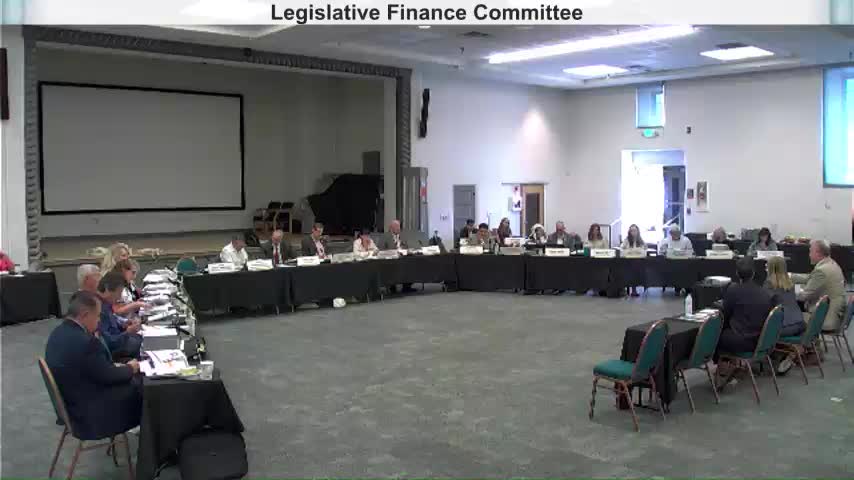
Summary
Taos Ski Valley leaders told the Legislative Finance Committee that state grants helped revive local air service and health care, and detailed investments in forest health, a sawmill supply chain and a microgrid battery to reduce wildfire and outage risks.
Chris Stagg, a representative of Taos Ski Valley, told the Legislative Finance Committee on the resort town’s home turf that recent state support has helped local health care and travel connections and is funding forest-health and energy projects.
Stagg said state grants have underwritten a new medical office building and air-service subsidies that expand summer flights from Taos to San Diego, Los Angeles, Austin, Dallas and, beginning this season, Denver via Contour Airlines. He added that air service ‘‘starts for the summertime tomorrow’’ and that the Denver connection allows passengers to ‘‘interline and connect with the world.’’
The resort operator also described multi‑million‑dollar investments in forest‑health work and wood‑value chains. Stagg said Taos Ski Valley and its ownership have spent about $5,000,000 in recent years on forest health and that roughly 3,000 acres in the Taos Ski Valley and Highway 150 corridor have been treated for thinning and fire mitigation. He said the ownership group helped develop a $60,000,000 sawmill in Blanca, Colorado, to process wood products produced by thinning projects in northern New Mexico.
Those forest projects are tied to the Rio Grande Water Fund, Stagg said, and he noted a planned tour of the work for committee members. ‘‘We’re 1 of the earlier signatures and big contributors to the Rio Grande Water Fund,’’ he said.
On energy resilience, Stagg said the resort has partnered with Kit Carson Electric to move distribution lines underground in parts of the community and plans a 5‑megawatt battery installation to provide six hours of backup power during fire‑related shutdowns or outages. He said Kit Carson already achieves high daytime solar penetration and that the battery and undergrounding are intended to reduce fire risk and provide local backup.
Stagg also described Taos Ski Valley’s efforts to reduce its carbon footprint in resort operations. He said the resort is certified B Corporation and carbon neutral, has purchased an electric snow grooming machine, converted snowmobiles to electric and installed mountain charging stations. He urged the legislature to help expand supply of hydrotreated vegetable oil (HVO or HVOD) refined locally by Sinclair in Artesia, saying it cuts carbon pollution by about 60 percent compared with conventional diesel ‘‘and we don’t have to modify our engines.’’
Why it matters: Taos Ski Valley is a major local employer and a node for tourism and emergency transport in northern New Mexico. State funding for facilities, airport connections and forest mitigation reduces economic and public‑safety risks that committee members are tasked with evaluating.
Stagg closed by thanking the committee for recent grant support and inviting members to visit the community and the resort’s projects later in the day.
(Reporting note: statements in this article are limited to remarks recorded in the committee transcript. Roles and titles are taken from the transcript introductions.)