
Planning board updates 'lot of record' definition, recognizes lots with prior principal structures
Get AI-powered insights, summaries, and transcripts
Subscribe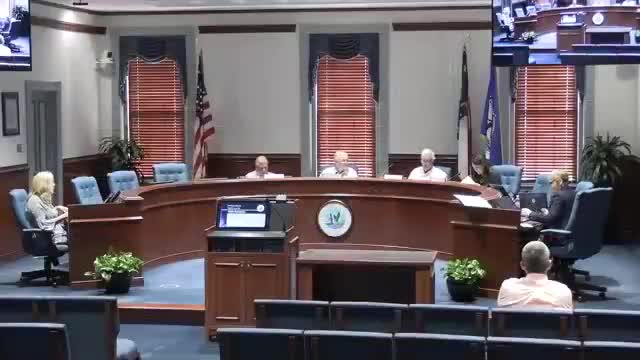
Summary
Currituck County Planning Board on Aug. 12 approved a text amendment revising the county—s lot-of-record definition: the benchmark date moves from Aug. 2, 1965, to April 2, 1989, and the ordinance will explicitly recognize lots with existing principal structures or where a principal structure was demolished with a permit.
Currituck County Planning Board on Aug. 12 approved a text amendment to the Unified Development Ordinance that revises the county—s "lot of record" definition and related nonconforming-lot provisions.
The amendment, PB 25-16, replaces the county—s 1965 benchmark date with April 2, 1989—the date the county adopted its first Unified Development Ordinance—and adds language recognizing lots that contain an existing principal structure or where a principal structure was demolished with a permit. Staff also added a clarifying sentence that a lot must be a lot of record prior to issuance of a zoning permit for a principal use.
Why it matters: The change is intended to reduce uncertainty and lengthy historical research for owners and staff when determining whether a parcel is a legal lot of record. For some property owners with lots created between 1965 and 1989, the amendment may allow them to obtain permits they could not secure under the county—s previous definition.
Planning staff said the county frequently researches older deeds and plats to determine lot status and that locating historical building permits can be difficult. As staff explained, “we—re researching properties that where we have applications pending to determine is this a legal lot of record,” and changing the benchmark to 1989 aligns the lot-of-record definition with the parent-parcel date used elsewhere in the UDO.
The amendment retains a range of pathways for legalizing lots: being part of an approved subdivision, being created before the benchmark date, having an existing principal structure (or a principal structure demolished with a permit), meeting subdivision/zoning rules at the time of creation, or meeting current subdivision standards. Staff added the principal-structure language so that a homeowner who previously had a permitted principal structure could rebuild without being blocked solely by lot-history research; a board member observed, “you should be able to rebuild it.”
Staff cautioned that the change does not alter other regulatory constraints. The amendment will not change setback requirements, coastal permitting or state Coastal Area Management Act (CAMA) requirements. Staff said those coastal and permitting standards remain independent of the lot-of-record determination.
Board members asked how many lots would be affected; staff said estimating a definitive count would take considerable research time and staff resources. Staff also noted that state statute already exempts certain 10-acre divisions from local subdivision review; that statutory exemption remains in effect.
Action: A board member moved to approve PB 25-16; the motion was seconded and passed by voice vote. The staff packet and the board—s recommendation found the amendment consistent with Imagine Currituck 2040 land-use goals.
What changed in practice: Lots established prior to April 2, 1989, or lots with an existing principal structure or a demolished principal structure with a permit will be eligible for recognition as lots of record without requiring the historical standard of Aug. 2, 1965. The ordinance will also explicitly require lots to be a lot of record before issuing zoning permits for principal uses.
Next steps: Staff will prepare the final ordinance text for the Board of Commissioners and apply the revised definition to permit review going forward. Staff noted that property owners seeking confirmation of lot status may still need to provide historic deeds, plats or evidence of prior permitted construction.
Ending note: The board emphasized the change is a clarification of historic practice and a procedural fix to reduce staff time spent researching older deeds; it does not change physical development standards or state-mandated coastal permitting rules.