
Board approves UDO change to allow up to five minor lots, new family‑lot rules and one flag lot exception
Get AI-powered insights, summaries, and transcripts
Subscribe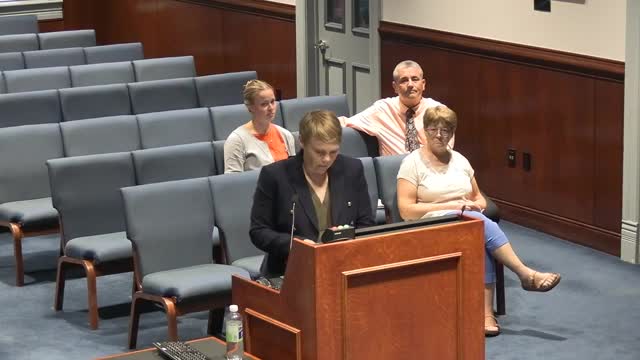
Summary
The commissioners approved a comprehensive Unified Development Ordinance amendment to expand the county’s minor subdivision rules from three to five lots, clarify family‑lot conveyance, allow one flag lot per parent parcel in a minor split and permit 40,000-square‑foot lots in some districts without county water.
The Currituck County Board of Commissioners approved an amendment to the Unified Development Ordinance that increases the maximum number of lots that may be created in a minor subdivision from three to five and adds several procedural and dimensional clarifications.
Under the amendments approved by the board, a minor subdivision will be defined as the division of land into five or fewer lots (excluding any residual lots greater than 10 acres that fall under the state exemption). The ordinance also formalizes a family‑subdivision variant that allows property owners to convey additional lots to relatives within two degrees of kinship and requires that an initial conveyance in a family subdivision be to a qualifying family member.
Key technical changes include: allowing certain minor lots to front state (DOT) roads while adding access control limits on major arterials and restricted‑access streets; requiring private access streets and easements that serve more than two lots to meet North Carolina fire‑code access and turnaround standards; permitting one flag lot per parent parcel in the minor subdivision process (with a minimum 20‑foot flag arm/frontage); and setting a minimum lot size of 40,000 square feet for minor and family subdivision lots in agricultural (AG) zoning and certain single‑family residential mainland (SFM) contexts without county water.
Staff told the board that private access easements created to serve family lots must be improved to county private‑access standards and that documentation of permanent, nonexclusive easements must be provided. The planning staff kept the 04/02/1989 parent‑parcel reset date in the ordinance language used to determine eligibility for minor subdivision status when applicable.
Commissioners asked whether the 40,000‑square‑foot standard was sufficient for well and septic service. Planning staff replied that 40,000 square feet is a longstanding local standard (sometimes called a “Currituck acre”) and that increasing the minimum would complicate small family subdivisions in parts of the county. The board also discussed school‑student generation rates; staff referenced the Tishler study factors and noted an elementary generation rate of 0.25 students per lot.
A member of the public, Beth Thomas of Jarvisburg, testified in favor of the changes, saying the amendments would help create housing opportunities in parts of the county where county water is not available.
A motion to approve the amendment passed at the meeting. The planning board and staff had recommended approval with the changes reflected in the ordinance language presented to the board.