Get Full Government Meeting Transcripts, Videos, & Alerts Forever!
Get email alerts on the Summer Programming topic
No spam. Unsubscribe anytime.
District reports expanded summer programming; tuition-bearing enrichment generated $35,805 in revenue
Summary
The district expanded summer offerings (Title I, extended school year, ESOL/empower programs, enrichment and credit recovery). Tuition-bearing enrichment produced $35,805 in revenue; administrators reported higher participation and an efficient credit-recovery model using an online platform.
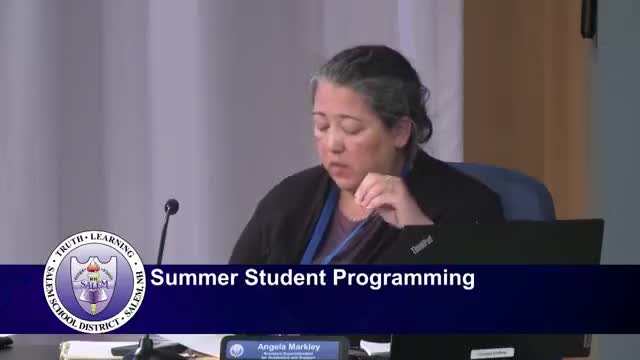
Assistant Superintendent Angela Markley and Debbie Payne summarized summer 2025 student programming. The district offered Title I literacy programs (K–4 mail-based book/activity series), kindergarten–grade 1 summer learning, extended school‑year (ESY) special‑education services, an Empower/Elevate program for McKinney‑Vento and ESOL students (grades 4–8), and high‑school credit recovery and enrichment.
The district housed preschool and elementary ESY at the preschool site for coordination and transportation efficiency. Participation rose by about 50 students year‑over‑year in tuition-bearing enrichment (327 participants this year), and 19 students completed credit‑recovery work using the Edmentum online platform; that model reduced staffing needs while allowing a wider set of course offerings. The adult-high-school diploma course had nine enrollees who earned credit.
Payne said tuition-bearing summer-enrichment revenue totaled $35,805; those receipts will be reported with other summer-school revenue in October for the tax-rate process. Some programs run at a deficit and are subsidized by stronger-enrollment offerings; instructors may receive incentive payments when enrollments exceed planned thresholds. Board members asked about instructor pay rates and program participation; administrators said many programs were fully staffed and that summer orientation participation suggests improved breakfast/lunch take-up in the coming year.
Why it matters: Expanded summer programming supports academic recovery and student stability for vulnerable populations while producing modest revenue; the district must track subsidies and instructor incentives to ensure long-term sustainability.