
Olympia School District presents first reading of 2025-26 budget as officials warn of multi‑year shortfalls and enrollment declines
Get AI-powered insights, summaries, and transcripts
Subscribe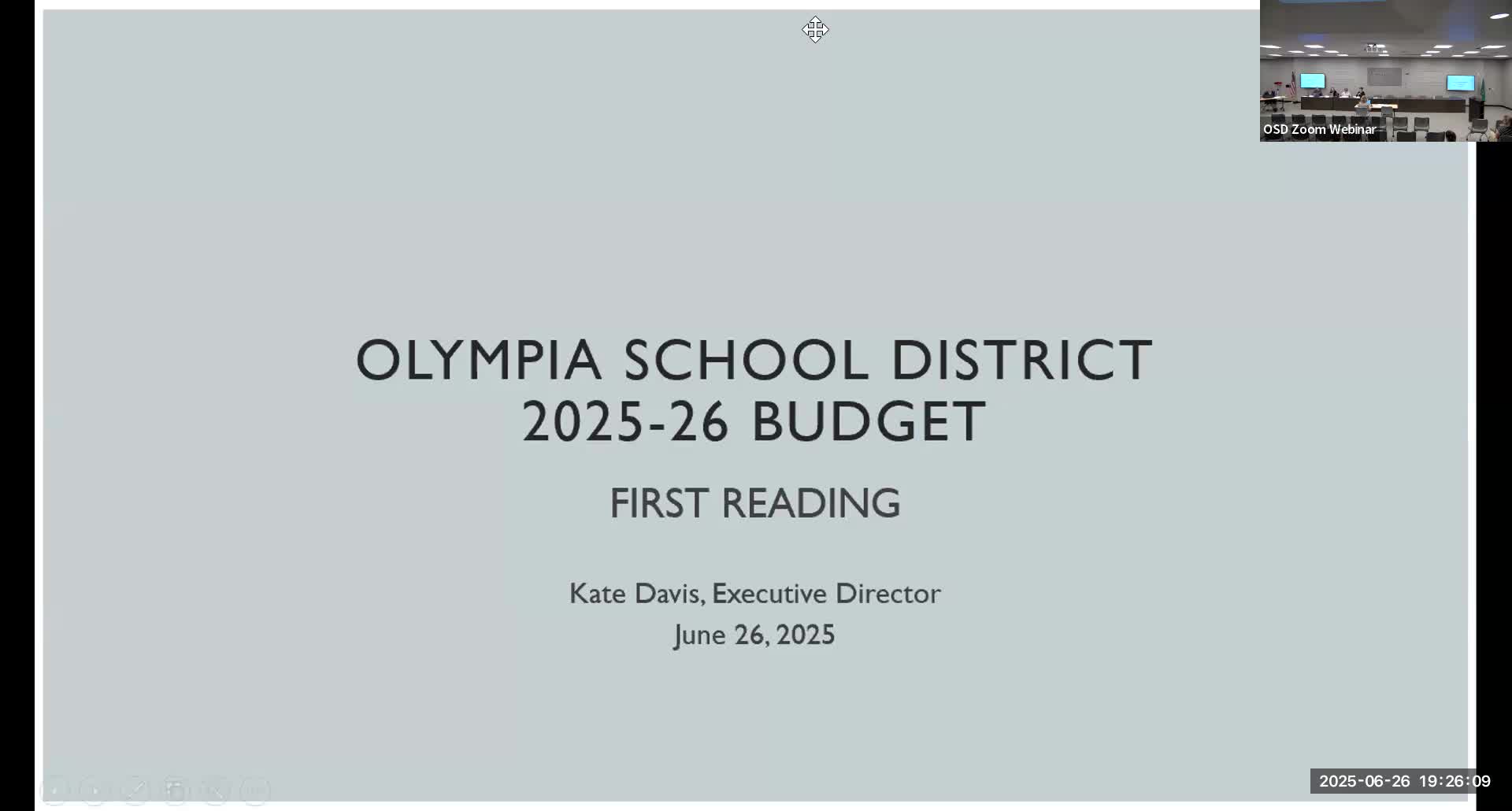
Summary
Executive Director Kate Davis presented the Olympia School District's first reading of the 2025-26 budget Thursday, saying the district expects a $7.5 million ending fund balance for the current year (about 4.3 percent) and projects it will fall to roughly 3.5 percent next year while expenditures exceed revenues in the near term.
Executive Director Kate Davis presented the Olympia School District's first reading of the 2025-26 budget Thursday, saying the district expects a $7.5 million ending fund balance for the current year (about 4.3 percent) and projects it will fall to roughly 3.5 percent next year while expenditures exceed revenues in the near term.
The presentation and subsequent board discussion laid out a multi‑year outlook showing a $2.6 million gap for the current year, roughly $900,000 for 2025-26 and larger shortfalls in later years that the district said will require cuts. Davis said the district's revenue mix is roughly 71 percent state funding, 17 percent local levy, 4 percent federal funds and 8 percent other revenues.
Davis told the board the district is projecting staffing of 1,117 full‑time equivalent positions in 2025-26, up from 1,098 in the prior budget and 1,082 actuals in 2023-24, driven largely by special education and new programs such as ECAP and transition to kindergarten. She said compensation accounts for about 83 percent of district expenditures and that inflationary adjustments funded by the state create additional district costs above the state allocation.
Why it matters: Board members and public speakers said the budget picture has direct implications for school operations and program delivery. Directors repeatedly returned to declining enrollment and birth rates, the composition and use of levy dollars, and the district's reliance on local funds to support special education and other services.
Key details from the presentation and discussion: - Ending fund balance: Executive Director Davis said an anticipated ending fund balance of $7,500,000 for the current year (4.3 percent) will support the next year but is projected to decline thereafter. - Multi‑year gaps: Davis presented projected revenue/expenditure gaps that grow in later years and said unspecified cuts are anticipated in the fall planning cycle to keep within the district's minimum fund balance policy. - Revenue mix: Davis said state funding is roughly 71 percent of the budget, levy 17 percent, federal funds 4 percent and other revenues 8 percent. - Levy and local sub fund: The district expects 2025-26 levy collections of about $32.3 million and noted that state rules and a local sub fund plan govern allowable uses of levy revenue. - Special education: Davis and Superintendent Murphy said roughly $7 million of local levy dollars currently supplement special education beyond state and federal allocations; state legislative changes lifted the cap and increased the special education multiplier but did not fully cover district costs. - Federal funding risk: District leaders described a risk to some federal grant streams (titles such as Title I, Title III) and said OSPI and the state superintendent are monitoring possible federal actions; Davis and others said Title funding could be at risk and previously cited an estimate of up to $435,000 in reduced Title allocations under one scenario. - Enrollment trends: Superintendent Murphy and staff highlighted a sustained decline in kindergarten and elementary enrollment since 2019-20 (district elementary enrollment down more than 13 percent since the peak), noting lower birth rates and reduced "capture" (the share of local births who later enroll in district kindergarten) as drivers. - Program specifics: The district said transition to kindergarten is capped at 32 FTE per state policy; forest revenue estimate of $400,000 was included but timing is uncertain; capital projects reimbursements affect general fund budgeting because payroll cannot be run out of the capital fund in the district's accounting setup.
Public comment and board questions: Members of the public urged the board to avoid school closures and questioned whether closures would deliver expected savings. Community speakers and parents said small neighborhood schools foster student relationships and questioned the transparency of any closure process. Ben Higgins, a public commenter, presented calculations he said showed a single elementary closure would save about $1,030,000 and argued many closures would be needed to reach certain fund balance targets; board members and staff said that figure aligns with the district's high‑level economy‑of‑scale modeling but cautioned closures have tradeoffs and do not eliminate fractional staffing in all areas.
Board direction and next steps: Davis said cuts for future years have not been specified and are typically developed in the fall; she asked directors to submit proposed budget amendments by the next week for the second reading. The district scheduled the second reading and adoption vote for July 8, and public comment on the budget will continue at that meeting.
Votes at a glance: The June 26 meeting included routine votes earlier in the agenda (approval of minutes and consent agenda). The first reading of the budget is informational and not a vote; final adoption is set for July 8.
Ending: District leaders said they will return with more detailed staffing comparisons, levy‑use breakdowns, and scenarios for board consideration at upcoming meetings. Several directors said they want a longer public process and evidence‑based staffing analysis before major structural decisions are made.