Get Full Government Meeting Transcripts, Videos, & Alerts Forever!
Get email alerts on the Public Comments topic
No spam. Unsubscribe anytime.
Parents and community members criticize district resource allocation and policy delays during public comment
Summary
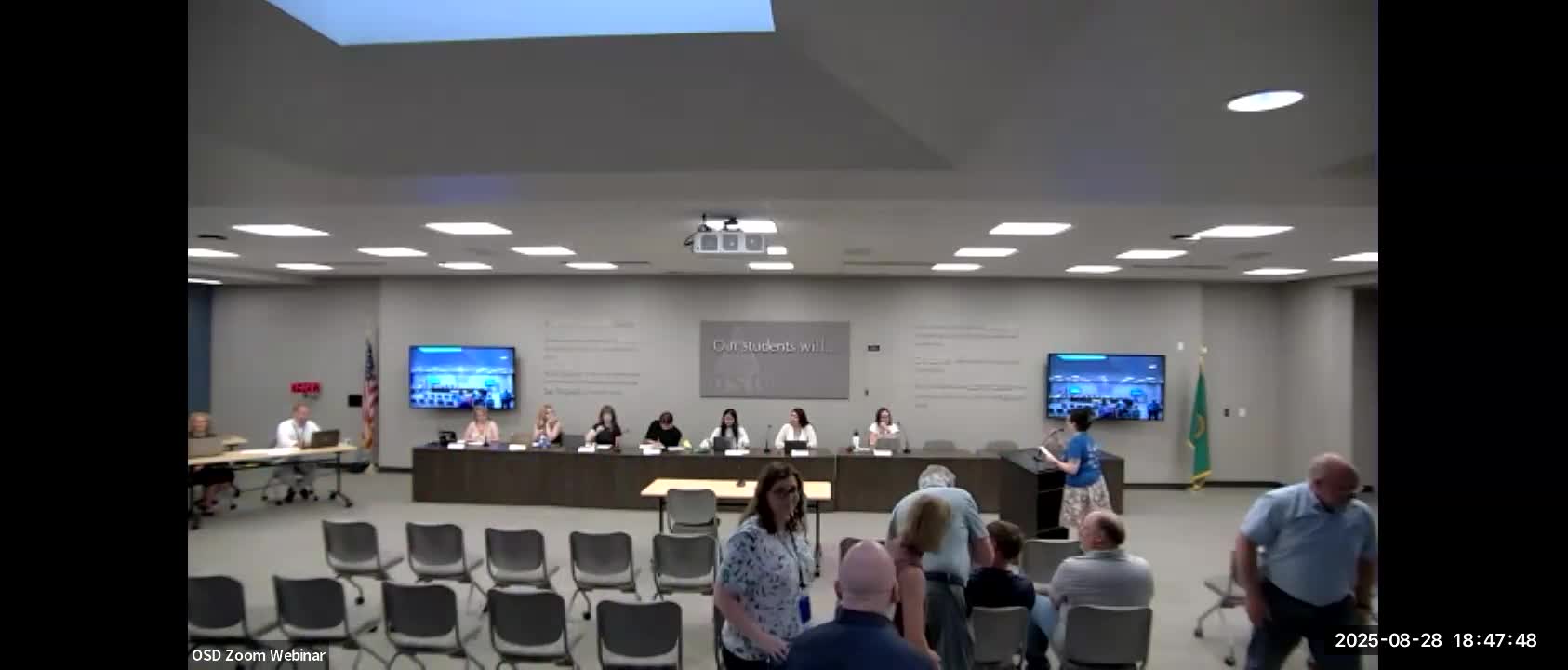
Three members of the public told the board at the August meeting they are concerned about staffing allocations, central administration compensation, transparency on policy approvals and timing for transfers and wait lists. Speakers urged the board to prioritize classroom resources and to explain delayed policy reviews.
Three public commenters at the August Olympia School District board meeting urged greater transparency on budget and staffing decisions and questioned the timing and process of policy approvals.
Erica Larry, who identified herself as an OSD parent and Southeast resident, focused on how the district allocates building-level staff and whether preschool and transitional kindergarten enrollments are counted in site allocations. She criticized fractional principal allocations at schools she named and said the equity allocation in the budget book (she referenced page 63) lacked clear data on how sites were chosen. “When we urged the public to advocate for K through 12 funding, we assumed positive intent by the board and superintendent,” Larry said. “You should be questioning every piece of data provided by superintendent Murphy, and there should be no guardrails to meeting all of our students and this community where they are at.”
Colette Paulson, an OSD parent, said the community consistently prioritizes classroom resources and criticized what she described as a pattern of approving central‑office raises before securing a balanced budget. “This community has consistently shown its generosity and its commitment to public education, but you're treating that generosity like a blank check for bloated administrative salaries,” Paulson said. She urged the board to “show up for” students and to align budget decisions with community priorities.
Mike Taylor, another commenter, focused on board process and a year‑long delay he said occurred in approving what he called an “essential policy regarding suicide.” He asked the board to explain why the policy did not receive a second reading for more than a year after a first reading in September 2023 and raised related concerns about a separate policy (he referenced “Policy 43.11 regarding police and schools”) and the board’s responsiveness to public questions. Taylor said he had asked the board repeatedly for an explanation. “All I ask is that someone tell me honestly why the policy took over a year to approve,” he said.
Board members did not take action on the public comments during the meeting but noted the concerns. Director Hillary referenced prior policy review work around inter‑district transfers and said staff should clarify whether procedures need updating. Several directors asked staff to gather information on transfer and wait‑list communication and to consider placing OSEQ (an interdistrict special‑education group) and other community requests on a future agenda for a fuller discussion.
No formal board votes or changes to policy were made during the public-comment period; directors said staff would follow up on procedural clarifications and work-session scheduling.