Get Full Government Meeting Transcripts, Videos, & Alerts Forever!
Get email alerts on the Finance Audit topic
No spam. Unsubscribe anytime.
City of Wildwood audit: clean opinion, one implementation timing adjustment for new GASB rule
Summary
Independent auditors issued a clean (unmodified) opinion on the City of Wildwood's 2024 financial statements and its single-audit of federal grants, but reported a one-time, immaterial timing adjustment tied to implementation of GASB 101 for compensated absences.
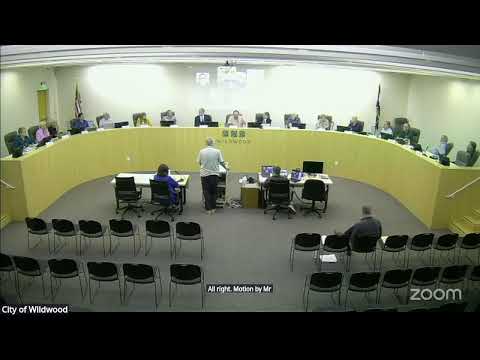
Brandy Lawyer, audit partner with Reuben Brown, told the City of Wildwood council the auditors issued a clean, unmodified opinion on the city's financial statements for the year ending Dec. 31, 2024, and reported no findings.
The auditors also issued a draft single-audit report covering federal grant activity (the city's state local fiscal recovery funds) and reported no findings on that review. Lawyer said the single-audit draft was prepared the same day and the final filing with the federal clearinghouse was expected soon.
Why it matters: A clean opinion indicates the auditors found the financial statements fairly presented in all material respects under the applicable accounting framework. The single-audit result means the auditors did not identify problems in the federal grant tested, reducing immediate compliance risk for that grant.
Lawyer told the council the audit package includes three deliverables: the comprehensive annual financial report (the large printed document councilmembers held), a viewpoints/required communications document, and the single-audit report. She said, "you did receive a clean, unmodified opinion on the audit this year. There are no findings or any conditions that we need to discuss tonight." (Brandy Lawyer)
New accounting standard implementation: compensated absences (GASB 101)
The primary technical item the auditors highlighted was the required implementation of GASB 101, which changes how governments record employee leave. Prior practice often recorded only amounts that could be cashed out; GASB 101 requires reporting leave earned and attributable to work already performed even if not currently payable. Lawyer explained the city had to include previously unreported sick leave as a liability and that the city and auditors agreed the opening-year effect was not material. She said the implementation produced an uncorrected misstatement of about $270,000 that was run through the 2024 financial statements rather than restating 2023 balances.
As Lawyer explained, the city had two acceptable approaches: restate the prior-year balances or recognize the cumulative effect in the current year if the amount is not material. "We agreed that the amount's not material, and so we ran that number through 2024," she said. The auditors noted this is expected to be a one-time implementation issue and not a repeat item for next year.
Key supporting details
- Audited period: financial statements for fiscal year ended Dec. 31, 2024 (auditor communications were filed by June 30). - Single audit: the auditors selected the state local fiscal recovery funds for testing because the city exceeded the $750,000 single-audit threshold; the draft had no findings. - Sensitive disclosures the auditors asked council to review: Management's Discussion and Analysis (front of the CAFR) and footnotes on deposits and investments, long-term liabilities, and commitments and contingencies.
Council response and next steps
Councilmembers asked clarifying questions about fund-balance ratios and how the city compares to peers; the auditors offered to obtain comparison data on other municipalities. The finance officer and staff were thanked for work preparing the CAFR.
The auditors will file the final single-audit documents with the federal clearinghouse and will present the finalized CAFR materials as required.