Get Full Government Meeting Transcripts, Videos, & Alerts Forever!
Get email alerts on the Tax Incentives Policy topic
No spam. Unsubscribe anytime.
Wildwood committee backs formal framework for tax-incentive requests, recommends city council adopt policy
Summary
The Economic Development Committee voted to recommend a discretionary tax-incentive framework to guide future requests such as Chapter 100 and special improvement districts, adding scoring criteria and a fiscal threshold to clarify eligibility and reduce ad hoc decisions.
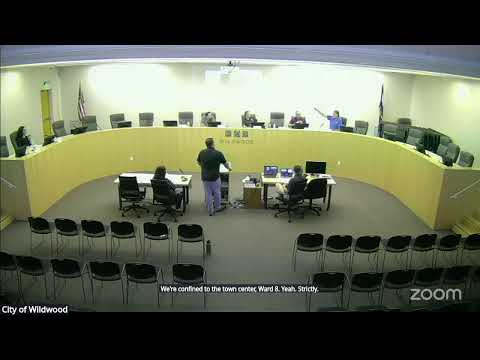
The Wildwood Economic Development Committee on July 22 voted to recommend that the City Council adopt a discretionary tax-incentive policy framework intended to standardize how the city reviews requests for public financing and tax-exemption tools.
Committee members said the framework, presented by staff and discussed at length, sets a scoring rubric and minimum fiscal thresholds to evaluate requests including Chapter 100 tax incentives and special-improvement-district (SID) proposals.
The committee’s action matters because several incentive requests have prompted debate about who benefits and how much revenue local taxing districts might lose. The draft framework aims to move decisions from ad hoc judgment to a transparent, replicable process and to require more documentation from applicants.
Committee discussion focused on two linked goals: ensuring a public benefit from any incentive and limiting unintended fiscal harms to overlapping taxing districts. “If we aren't putting out a framework ahead of time to help people understand, this is what this should look like,” said Council member Farmer, who spoke repeatedly during the discussion. Farmer added that a formal rubric would let the city quantify whether a proposed project truly needs incentives or is feasible without them.
Key elements in the draft framework discussed by the committee include: - Public-benefit criteria. Projects would need to meet at least three categories from a defined list such as town-center activation, infill redevelopment, sales- or use-tax generation, net new municipal revenue, job creation (a 20-full-time-job threshold was discussed), meaningful public-use donations (a minimum 3,000-square-foot or 5 percent-of-site threshold was cited), and housing diversity or workforce housing. - Fiscal-impact expectation. The document uses a baseline fiscal goal of roughly $250,000 in direct municipal revenue per year (approximately $2,500,000 over 10 years) as a sample threshold for projects to meet or exceed before long-term incentives would be considered; staff said estimates would require third-party pro forma analyses. - Third-party review. Applicants may be asked to provide independent fiscal-impact or pro forma reports so the city can evaluate projected municipal returns and the distributional effects on other taxing districts.
Committee members also raised concerns about precedent and fairness. Some speakers stressed that Wildwood can choose whether and how to use Chapter 100 tools; others warned that neighboring jurisdictions already use similar incentives and that refusal could shift development to other cities.
The committee voted to recommend that the City Council adopt the policy framework and to incorporate it into the city’s existing procedures for incentive review. The motion passed with majority support.
Next steps: staff said the recommendation will be forwarded to the City Council for consideration; the committee also proposed scheduled reviews of the policy to assess performance and changes over time.
Context: The framework was presented amid an ongoing local Chapter 100 request and public debate about the approach’s fiscal impacts on the Rockwood School District and other overlapping taxing entities. Several committee members asked for strengthened conflict-of-interest guidance and clearer documentation requirements for developers asking for discretionary city assistance.