Get Full Government Meeting Transcripts, Videos, & Alerts Forever!
Get email alerts on the Office Building Acquisition Parking topic
No spam. Unsubscribe anytime.
Chesterfield officials present proposed $17.03 million purchase of office building to add parking and protect Central Park
Summary
City officials outlined a plan to acquire a nearby commercial office building and its surface parking to add public parking, preserve adjacent parkland and provide long‑term space capacity. Staff presented financing options, appraisals and risks during a public presentation; no formal council vote was recorded at the meeting.
City of Chesterfield officials on Monday presented a proposal to buy a nearby commercial office building and parking for $17.03 million to address a persistent parking shortfall near Central Park, provide space for city operations and help preserve green space as downtown development proceeds.
City Administrator Matt Geisel delivered the presentation and detailed the city’s due diligence, appraisals and financing scenarios. He told residents he “doesn’t get a vote in this process,” and said the acquisition, if approved by council, would create additional staff work for city operations.
The presentation framed the acquisition as one of several options to address demand from recent and planned development in Downtown Chesterfield and the Wild Horse Village project. Staff said the city needs roughly 500 additional public parking spaces to meet near‑term demand; the building under discussion includes 422 structured and surface parking spaces adjacent to a roughly 96,000‑square‑foot office building, per staff figures.
Why it matters: Downtown Chesterfield is growing under a regional tax‑increment financing (TIF) plan and new developments are expected to increase demand for police, parks and other municipal services. Staff said acquiring an existing revenue‑generating building could reduce the city’s need to build new garages on parkland and could produce net operating revenue that the city could set aside for facility needs.
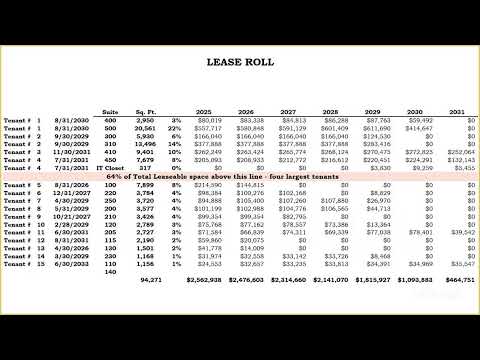
Key numbers and financing • Proposed purchase price: $17.03 million (contract terms include a 45‑day due‑diligence period). • Proposed down payment: $4.0 million (staff reported $1.5 million from the parks fund reserve and $2.5 million from the general fund reserve). • Proposed financing: staff described an approximate financing need of about $13.05 million; issuance costs for bonds and fees were estimated at roughly $200,000. • Operating projections (from appraisals/pro forma supplied to staff): effective gross income about $2.5 million; operating expenses about $1.14 million (the appraisal line items include roughly $450,000 in property taxes that staff said the city would not pay if it owned the building); resulting net operating income about $1.8 million. • Debt service scenarios: staff presented earlier feasibility figures that produced estimated annual maximum debt service in the $1.17 million to $1.30 million range, yielding a projected net positive cash flow in the $500,000–$660,000 range under current leases. • Vacancy sensitivity: staff said the building could fall to roughly 51% occupied before debt service would push the asset to break‑even under the conservative debt scenario used in the presentation.
Appraisals and value drivers Staff presented two commercial appraisals with materially different opinions of value. One appraisal produced a value near $18.9 million (later revised in an addendum to about $17.06 million); a second independent appraisal came in around $14.5 million. Staff explained the primary technical difference was the cap rate assumed (roughly 7.25% in one appraisal versus about 9% in the other), and that small changes in cap rate assumptions can materially change value under the income approach used for commercial assets.
TIF, related development and parking alternatives Staff emphasized the city’s regional TIF plan (approximately $353 million in captured TIF capacity as described in the presentation) was not being used to purchase the property at this stage, though staff recommended preserving the right to seek reimbursement from TIF later if council approves acquisition and subsequent public uses are established. Staff also described a development agreement with Wild Horse Village that, as written, would require the developer to construct structured parking containing at least 300 spaces for public use and be reimbursed up to $25 million by the TIF if completed by 12/31/2026; staff said they believe that deadline is unlikely to be met without changes to the development agreement.
Staff compared six potential garage sites that had been studied previously (YMCA, adjacent three‑acre parcel, Wild Horse Village site, parcel north of the pool, existing aquatics lot, and the office property itself). Construction‑only estimates presented during the meeting included a $6.0 million April 2025 estimate to replicate the 422‑space garage adjacent to the office building if the site were prepared; other two‑level garage concepts on nearby three‑acre parcels were shown in the $12–$15 million range depending on topography and land acquisition costs.
Legal and tax issues City staff said they obtained legal opinions, including TIF‑and‑tax counsel, that municipal ownership of commercially operated property is legally permissible in Missouri and that taxability is driven by ownership and the presence (or absence) of a taxable “bonus value” in leases. Staff cited a controlling administrative example (Midcoast Aviation v. St. Louis County assessor context) and said the city’s appraiser and outside counsel viewed the building’s leases as market‑rate leases with no obvious bonus value that would create a tax liability. Staff also noted the city would retain options to obtain further legal and appraisal analysis if council proceeds.
Additional park and facility context The presentation placed the acquisition alongside other capital decisions: an aging aquatic center estimated as a roughly $20 million project if rebuilt (staff said the pool is expected to close in 2027–28 if no replacement is funded and a new pool could reopen in 2028 under an accelerated schedule), the Central Park eight‑acre expansion, and planned public infrastructure tied to Downtown Chesterfield. Staff argued that acquiring an income‑producing asset adjacent to the park could address parking needs with less impact on parkland than building a new garage on green space.
Public questions and next steps After the presentation staff collected written questions and read them aloud. Staff said they will post the presentation and will follow up on written questions not answered that evening. No formal council decision or vote occurred during the meeting; staff repeatedly said any purchase would require council authorization and additional financing approvals. Mayor Dan Herder and staff asked residents to submit questions and invited further public engagement before council’s final decision.
Quotes from the meeting “I don’t get a vote in this process,” City Administrator Matt Geisel said, describing his role in preparing and presenting the analysis while noting the acquisition would increase staff workload if council directs the city to proceed.
Ending City staff recommended council consider the acquisition as one potential way to meet parking and space needs created by downtown development and the Wild Horse Village project, while noting legal, appraisal and financing risks and the need for council approval. The presentation closed with staff inviting additional written questions and promising to post the materials and return answers, and with no motion or vote recorded at the public meeting.