Get Full Government Meeting Transcripts, Videos, & Alerts Forever!
Get email alerts on the Procurement topic
No spam. Unsubscribe anytime.
Board denies protest of RFP for engineering/design services at Mile Post 8.4, directs staff to proceed while exploring resolicitation options
Summary
Columbia County denied a protest to its engineering/design services RFP for 830 Road (Mile Post 8.4) and directed staff to prepare a final order while exploring expedited resolicitation and procurement refinements to address cost and fairness concerns.
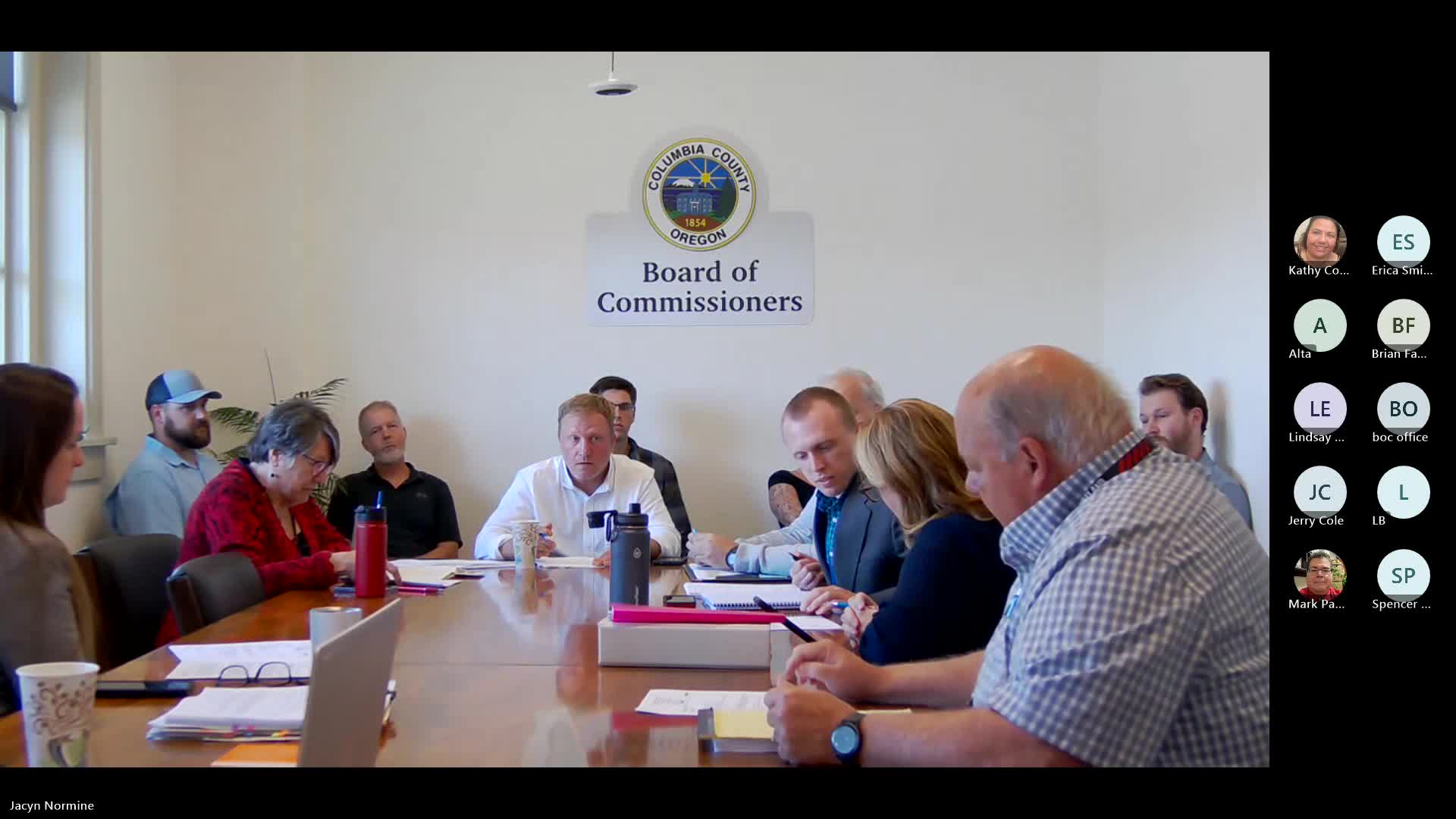
Columbia County commissioners on Aug. 27 denied a formal protest of the county’s notice of intent to award for engineering and design services for 830 Road at Mile Post 8.4 and directed staff to prepare a final order, while also instructing staff to explore refinements to the procurement and, if necessary, a brief resolicitation.
Why it matters: the dispute raised questions about fairness in the county’s procurement process for design professionals, the county’s ability to control project costs and the project timeline tied to an external grant. Commissioners acknowledged potential legal constraints and tradeoffs that affect the county’s road funds and project schedule.
Background and timeline: staff said the county issued a notice of intent to award on Aug. 12. The protest letter from a respondent (identified in the record as Lower Columbia [Engineering/firm], timely submitted Aug. 15) was denied by staff on Aug. 19; the protestor elevated the matter to the board on Aug. 25. Staff supplied the board with the protest, the staff denial and a memorandum from Mike Russell dated Aug. 26 addressing issues raised by the protester.
County counsel explained procurement rules for design professionals prevent the county from considering price until after selection, a statutory framework that constrains the county’s ability to weigh price in choosing a designer. Commissioners raised concerns that providing a 30% design in the solicitation may have advantaged one firm (the record references David Evans) and could have discouraged other proposers. Several commissioners also questioned whether selected engineering fees were above local market rates and noted the project included a grant of roughly $200,000 while proposed engineering costs were about $340,000, leaving local road funds to cover the difference if negotiations concluded at that level.
Legal and timeline risks were central to discussion. Staff said the county is discussing an extension of a related grant with the Oregon Department of Fish and Wildlife (ODFW); the state indicated it could extend the grant to June 2026 but no farther. Commissioners noted a resolicitation could add about four months to procurement, risking grant eligibility.
Motion and outcome: a commissioner moved to deny the protest and direct staff to prepare the final order; after discussion and expressions of reluctance by some commissioners about cost exposure and legal risk, the board ultimately voted in favor of denying the protest and moving forward while directing staff to consider a brief resolicitation or procurement revisions to address concerns raised. The board further directed staff to pursue the most expedited path consistent with legal requirements and to return with options including a potential short resolicitation and use of an alternative RFP format that can weigh price (a process that may assign up to 15% of the final score to price if a statement of work is included).
Next steps: staff was directed to prepare the final order on the protest denial, explore legal options and prepare materials for either negotiation with the selected proposer or a rapid resolicitation that adjusts the RFP to address the board’s concerns. The board also asked staff to schedule a work session to develop a statement of work and consider procurement alternatives that would permit price to be a factor in the evaluation.