Get Full Government Meeting Transcripts, Videos, & Alerts Forever!
Get email alerts on the Capital Projects topic
No spam. Unsubscribe anytime.
County approves final completion, closes out courthouse renovation; contract finished about $268,000 over original price
Summary
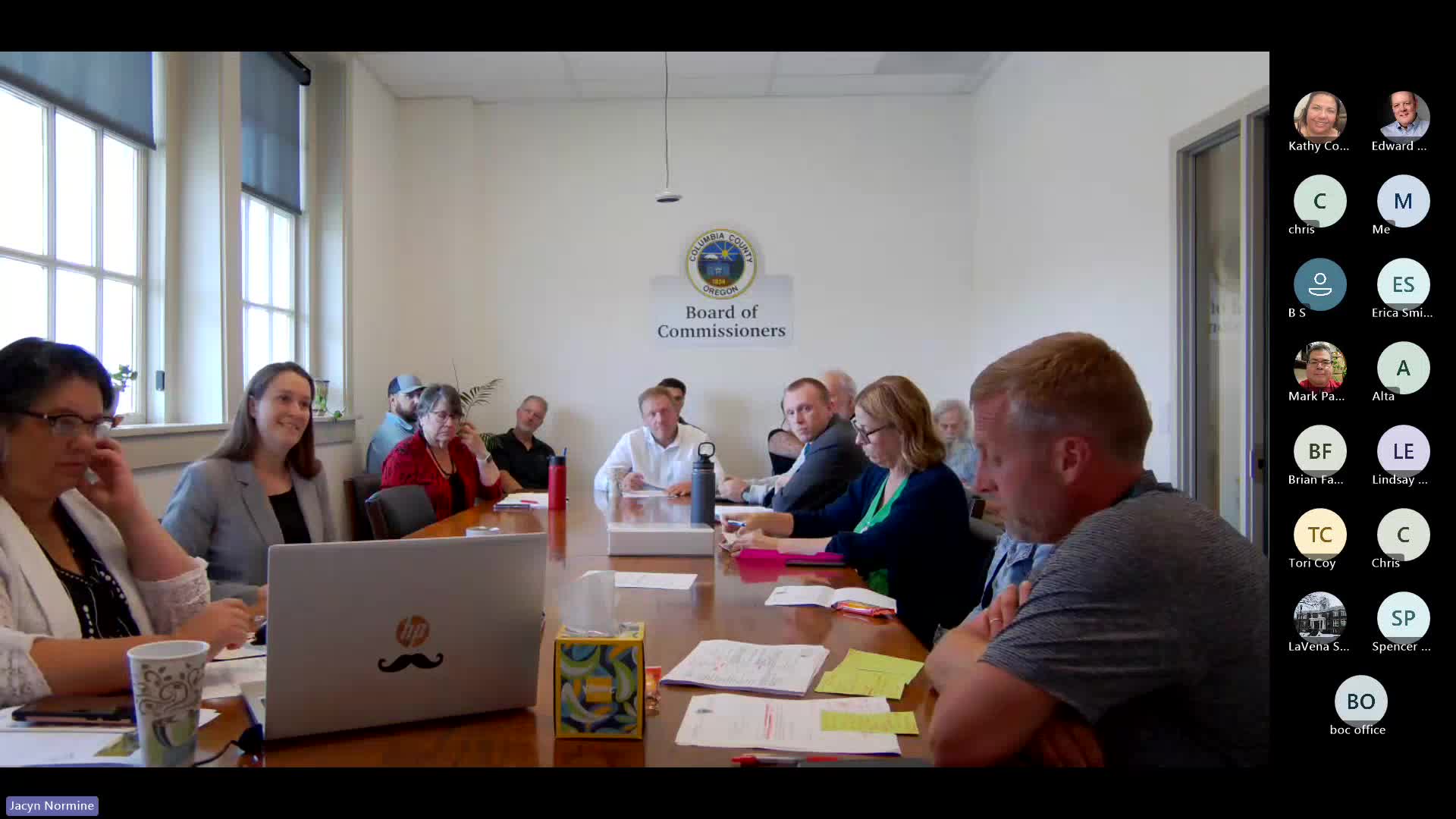
Columbia County commissioners on Aug. 27 authorized a certificate of final completion and directed the chair to sign closeout documents allowing final payment to contractor Kirby Nagelhout for the old courthouse renovation.
Columbia County commissioners on Aug. 27 authorized a certificate of final completion and directed the chair to sign the closeout documents for the old courthouse renovation, allowing final payment to contractor Kirby Nagelhout. Riley Baker, identified in the meeting as the county's general services director, presented the closeout packet and requested approval.
Why it matters: final acceptance closes the county's construction obligation for the courthouse bell tower and elevator work and allows payment from last year’s budget, avoiding an amended current-year budget, county staff said.
Baker told commissioners the original contract with Kirby Nagelhout was $2,009,754 and the finished contract was $2,277,786, an increase the agenda packet described as roughly 13% over the original amount. Baker said about $220,000 of the increase was tied to change order 6, which he attributed to permitting delays and the cost of decommissioning a diesel tank on the site. "We received a notice of request for final payment and the final invoice from Kirby Nagelhout," Baker said.
A county staff member who worked on the closeout pointed commissioners to a checklist in the contract and recommended approval of the certificate of final completion. That staff member also said budget staff confirmed the cost could be charged against the previous fiscal year, meaning the county could pay the invoice without an amended current-year budget.
During discussion commissioners questioned why costs rose and whether oversight or different procurement methods could limit future overruns. One commissioner said national averages for similar projects were higher and suggested project management and trade-offs in contract pricing affect final cost; Baker cautioned that on historic projects some unknown conditions—such as the diesel tank location—may not be fully known until demolition work begins. Baker said county staff saved money on some electrical and plumbing work by doing it in-house.
The board moved and seconded approval of the certificate, authorized the chair to sign and voted in favor. The motion passed by voice vote; the public record as read in open session indicates the board approved final completion and authorized execution of the closing documents.
What the action does not do: the approval accepted the contractor's final invoice and closed the contract; it was not a re-opening of contract terms or a finding of fault. Commissioners recorded differing views in the record about design choices and contract format, but no additional remedial action or formal findings were adopted at the meeting.
Next steps: the county will execute the certificate of final completion and process the final payment using the prior fiscal year budget appropriation, per staff guidance.