
Council adopts limited revisions to encampment policy and directs wider review within six months
Get AI-powered insights, summaries, and transcripts
Subscribe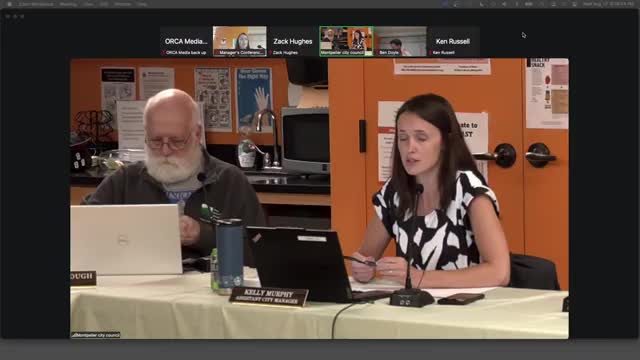
Summary
The council approved staff‑proposed, non‑substantive edits to the city’s encampment response policy to match current practice and capacity, removed a proposed statement deeming all parks "high sensitivity" areas, and directed a community‑partner review and fuller rewrite with a six‑month deadline.
The Montpelier City Council approved a set of staff‑proposed, principally administrative amendments to the city’s homeless encampment response policy but deleted a proposed sentence that would have labeled all city parks as “high sensitivity” areas. The council also directed a comprehensive policy review with community partners and set a six‑month deadline for returning with a revised policy.
Why it matters: Council action clarified how staff will provide notice, log encampments and manage property, and it aligned storage timelines and operational steps to current departmental capacity. At the same time, councilors and community members insisted the policy be reworked in collaboration with outreach providers, nonprofits and residents so it clearly balances public‑safety, health and the needs of people experiencing homelessness.
Staff summary and rationale: Acting City Manager Kelly Murphy described the amendments as efforts to make the written policy consistent with current practice and staff capacity. Changes include naming the city manager’s office as central for coordinating responses (rather than only the police department), updating the incident form and storage timelines (shortening a proposed storage hold to 30 days because staff lack capacity for 90‑day storage), and clarifying which departments are involved in cleanups and public‑safety triage. Murphy said staff did not intend the edits to be substantive rewrite but to codify how the city is currently operating.
Public comment and council debate were extensive. Multiple service providers and members of the Montpelier Homelessness Task Force asked council to slow changes and to engage the task force and outreach providers in a broader rewrite because providers already operate street outreach, have ongoing relationships with people who camp, and can advise on what will minimize harm. Several residents and nearby neighbors described public‑safety and sanitation problems at Confluence Park and on the Cross Vermont Trail; some urged stricter enforcement of existing ordinances. Participants also requested clarification about the policy’s definition of “high sensitivity” areas and how those designations are applied and appealed.
A specific edit drew sharp reaction: staff had proposed that “all city parks are deemed high sensitivity areas and camping is prohibited.” Council member Carrie moved to remove that sentence; the amendment to delete the line passed. Councilors emphasized that enforcement must be consistent with the policy council actually adopts, and that any substantive rewrite should be collaborative with the Homelessness Task Force, Good Samaritan Haven, Another Way, Washington County Mental Health and other partners.
Council action and next steps: The council approved the staff edits (non‑substantive clarifications that align practice and capacity), with the explicit deletion of the “all parks are high sensitivity” phrasing. Council directed staff to work with a small council subcommittee (members volunteered) and the Homelessness Task Force to carry out a broader, collaborative policy review and return with a revised draft within six months. Staff will also continue targeted cleanups at identified hotspots, log incidents consistently, and use the updated incident/response form.
Ending: The council took a two‑track approach: adopt limited, operational edits now so staff can enforce a policy that matches current practice, and require a community‑partnered, substantive rewrite to be completed within six months.