
Committee reviews civil and appellate housekeeping: scheduling orders, filings and notary‑replacement declarations
Get AI-powered insights, summaries, and transcripts
Subscribe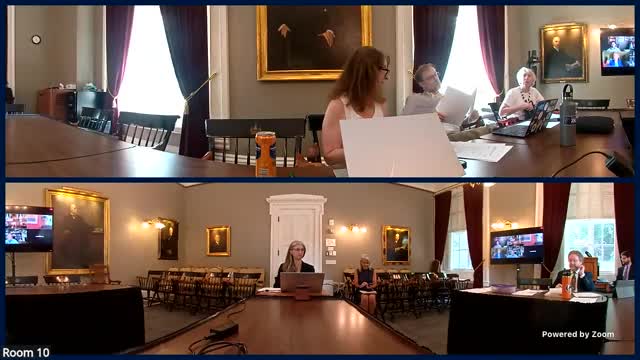
Summary
Civil and appellate rules committees reviewed a package of procedural changes — including allowing scheduling orders by stipulation and requiring preliminary‑injunction motions as separate filings — aimed at reducing clerical delays and improving caseflow.
Members of the Civil and Appellate Rules committees presented a package of procedural and housekeeping amendments intended to clarify filing deadlines and streamline case processing. Emily Wetherold, Deputy Clerk of the Supreme Court, summarized changes to Civil Rule 16.2 and Rule 26(f) that let parties stipulate to a scheduling order without a required status‑conference, and that explicitly permit adding the discovery‑close date and other matters to scheduling orders. The committee’s stated purpose is to reduce unnecessary status conferences and rely on parties’ stipulations to shorten scheduling delays. On preliminary injunctions, the Civil Rules Committee proposed amending Civil Rule 65 to require any request for a preliminary injunction to be filed as a separate motion rather than being embedded in the complaint. Supporters said separate filing better ensures court staff and judges recognize the filing promptly; committee staff noted pro se litigants would not be forced to e‑file and could file paper motions or seek clerks’ help. The committee also described moving the statute‑authorized declaration‑in‑lieu‑of‑notary provision into Rule 43 (affirmation, oath, or declaration) and updating Rule 56 to confirm declarations may support or oppose summary‑judgment motions; the change implemented a permanent move of a measure first adopted during the pandemic. Other housekeeping items included: permanentizing a Civil Rule adopted to comply with the CARES Act (removing an earlier sunset), fixing appellate printed‑case filing deadlines so the printed case is due with the appellant’s principal brief, minor appellate cross‑reference updates, and environmental‑court housekeeping that adds a requirement to notify the applicant when a notice of appeal is filed. Presenters characterized most of these changes as noncontroversial and efficiency‑focused. Committee members discussed pro se impacts and broader court efficiency efforts; presenters said the judiciary has a change‑advisory board and court‑user groups that examine administrative improvements and coordinate with rules committees. The committee suggested continuing outreach to court users and to national rule‑making bodies to identify best practices for speeding rule processing.