
City approves Citigo route redesign after public hearing; OCCK says low-use stops removed, accessibility concerns raised
Get AI-powered insights, summaries, and transcripts
Subscribe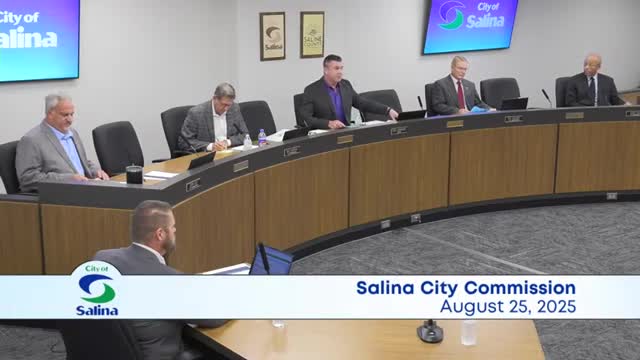
Summary
The Salina City Commission approved proposed route changes to the CityGo (Citigo) public transit system 5-0 after a public hearing where OCCK staff explained low-ridership justification for removed stops and members of the public raised accessibility and jail-transport concerns.
The Salina City Commission voted 5-0 on Aug. 25 to approve a redesign of CityGo routes presented by OCCK staff that retains most stops, adds new stops and removes a limited number of very low-ridership stops. Ron Marsh, director of public works for the city, introduced the item and said staff rode routes with OCCK to review the proposed changes before the hearing. Trail Grinter, director of transportation at OCCK, said ridership patterns and changes in travel demand over nearly 20 years required the redesign and that the agency relied on historical ridership data to evaluate stops. "The stops that are being removed had less than 1 rider a day over the last 5 years," Grinter said, explaining how OCCK identified removals and tradeoffs to preserve service while improving efficiency. Grinter said the redesign will add stops (marked as green dots on OCCK materials), make the purple route bi-directional to cut travel time, and adjust downtown coverage so other routes continue to serve the core. OCCK staff said they met with neighborhood representatives where routing raised concerns (for example on Gypsum/Iowa) and identified alternate, safer turnaround locations in coordination with local property owners. Members of the public raised accessibility issues and asked that visually impaired riders be included in planning. Thomas Baskell, who identified himself as a regular rider, said removal of a stop at Eleventh and Crawford would affect his independent travel; OCCK said paratransit and curb-to-curb options can be used and that staff would follow up with individualized accommodations. Sharon Luca, a visually impaired rider, asked about accessible schedule formats and beeper devices at poles; Grinter said OCCK will provide online accessible maps and pursue Braille/map translations where feasible. Another public commenter, Brent Martin, asked for better service to and from the Salina jail and noted late-night gaps; OCCK acknowledged the issue and noted current service hours, and commissioners heard requests to consider connections to reentry services and mission providers. After public comment and discussion, Mayor Linkowitz moved to approve the route changes as presented; the motion was seconded and passed unanimously. The commission’s vote will allow OCCK and city staff to implement the new routing, with OCCK continuing to work with affected neighbors and accessibility advocates on individual accommodations and with plans to expand service capacity next summer if ridership supports it.