
Salina commission adopts 2026 budget, approves fee increases including sanitation and water rates
Get AI-powered insights, summaries, and transcripts
Subscribe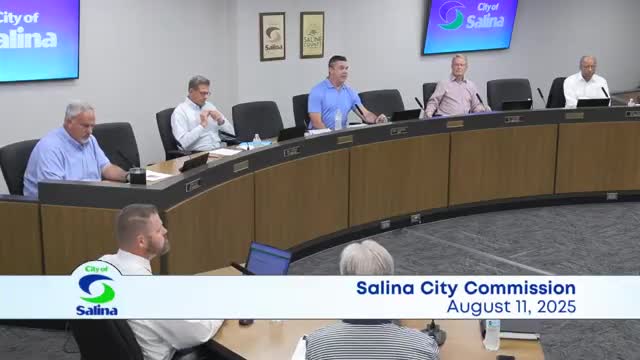
Summary
The Salina City Commission held a public hearing and voted 5-0 to adopt the 2026 annual budget and a comprehensive fee schedule that raises sanitation and utility rates; staff said the budget uses a revenue-neutral mill rate with a one-mill general fund increase to cover operating costs.
The Salina City Commission on Aug. 11 held a public hearing and unanimously adopted the 2026 annual budget and a 2026 comprehensive fee schedule after staff and several residents spoke during public comment. Debbie Pack, the city’s director of finance, told the commission state statute requires a formal public hearing on the proposed budget and staff posted notice on July 29 and in the city 311 system on July 30, 2025.
Pack said the 2026 proposed budget — excluding interfund transfers and cash reserves — totals $155,959,033 in expenditures, up from $151,892,094 in 2025. Staff used a revenue-neutral rate of 28.568 mills to prepare the budget, a reduction of 0.849 mills from the current levy of 29.417, but the commission kept the general fund levy one mill above the calculated revenue-neutral rate to cover operating costs.
The comprehensive fee schedule adopted by resolution includes a sanitation monthly service fee increase to $21.25 (about a 7.6% rise), a $1 increase in cart fees, and a 5% increase in water and wastewater consumption and monthly rates. Pack said the annual budget provides authority to spend city funds and noted transfers and reserves are excluded from year-to-year comparisons because they can distort apples-to-apples comparisons.
During the hearing several residents urged frugality and questioned how much of property tax bills are city-collected; others praised the city’s fiscal position and growth. Interim City Manager Jacob Wood and commissioners noted the budget process began in April, included study sessions in June and July, and aimed to prioritize employee pay increases while limiting other operational increases.
Mayor Linkowitz moved to approve Ordinance No. 25-11253, adopting and appropriating the 2026 annual budget; the motion passed on a roll-call vote, 5-0. The commission subsequently approved Resolution No. 25-83002 adopting the 2026 comprehensive fee schedule, 5-0.
The budget documents and fee schedule were reviewed in prior study sessions, and staff said the budget includes a plan for spending authority while preserving reserves. Pack and other staff answered commissioner questions about which user fees are governed by separate ordinances (recreational facility fees were identified as governed by a separate ordinance or resolution).
Public comment included representatives from nonprofit and faith communities asking the commission to continue support for homelessness services; commissioners responded describing the city’s regional pull factor and the role of sales tax revenue and reserves in funding city services. The commission closed the public hearing before taking final votes.