
Topeka staff outline utility-lien process and numbers ahead of Sept. 9 ordinance vote
Get AI-powered insights, summaries, and transcripts
Sign Up Free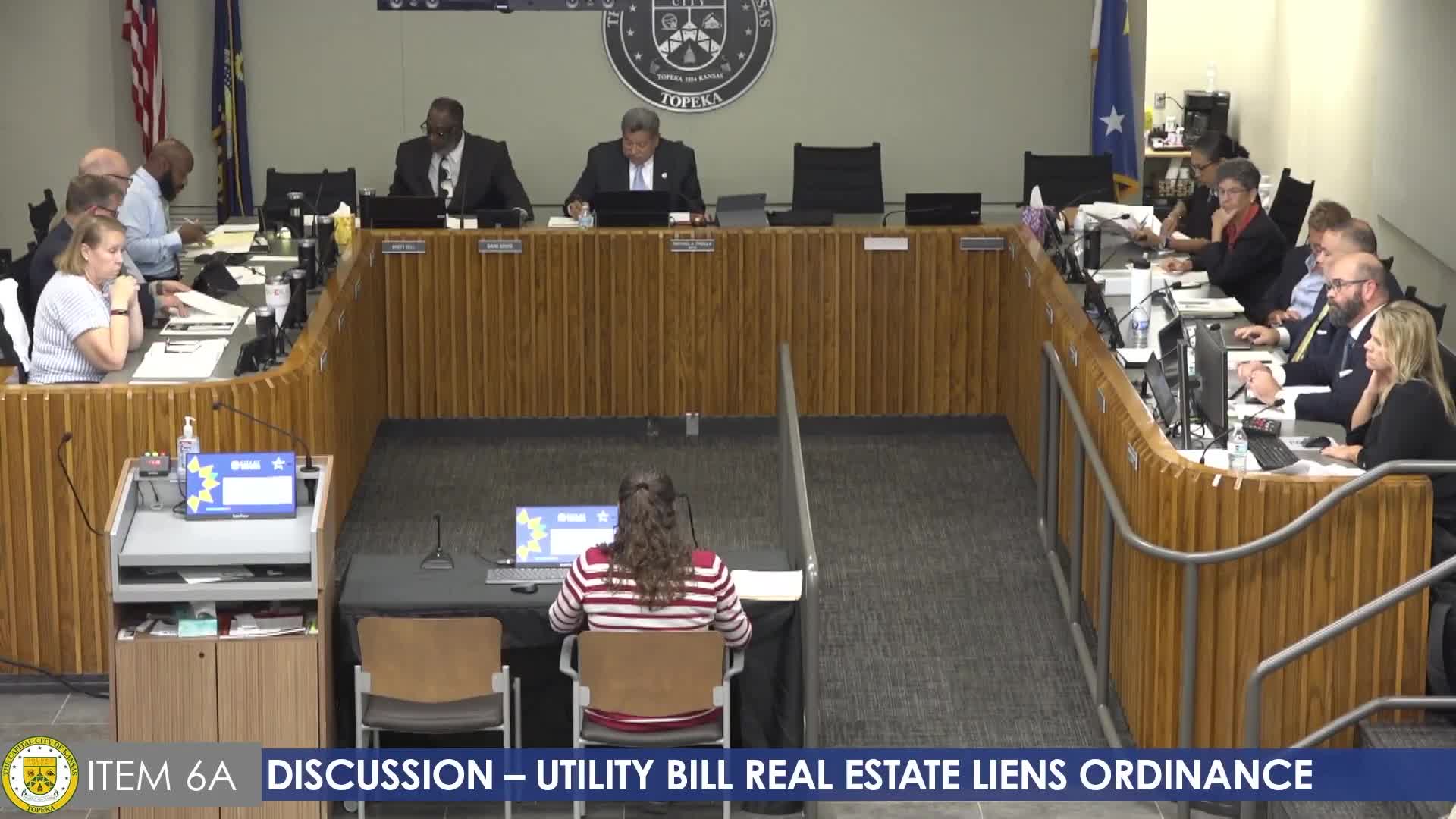
Summary
Utilities staff reported 146 delinquent accounts with a combined balance just under $112,000 and said the city will present a final list to the county by Oct. 1; staff said 96 accounts remained unpaid as of the day of the meeting and that a lien can be used only when the account holder is also the property owner of record.
A utilities department staff member identified in the meeting as Nicole briefed the governing body on Sept. 2 about the city’s annual utility-lien ordinance process and this year’s delinquent-account numbers, saying the item is an annual, active-account process that will come back to the council for formal action.
Why it matters: The lien process converts unpaid utility bills into a tax-assessment-style lien on property so the county can collect delinquent amounts on the tax roll. Staff said a lien is the most effective collection tool available when service-disconnection is not feasible (for example, when the customer receives wastewater or stormwater service but no water service).
Details presented: Nicole said the utilities department mailed notices to 146 property owners in July. The total outstanding balance for those accounts was “just under $112,000.” She said 89 accounts (61%) had previously been included on a similar lien ordinance and staff had attempted personal contact with the remaining 57 customers receiving the notice for the first time. As of noon the day of the meeting, 96 accounts remained unpaid, with a balance “just over $87,000.”
Geographic and service breakdown: Nicole said 94 of the 146 letters were for customers outside the city limits (all wastewater customers), and 52 were inside city limits (44 stormwater and 8 fire line accounts). She explained that a lien can be used only when the utility account holder is also the property owner on county records.
Process and schedule: Staff said state law permits the city to institute liens for unpaid utility services and that the city will pass the ordinance in September so the county can receive a final list by its Oct. 1 deadline and add delinquent amounts to tax statements mailed in November. Nicole said staff will accept payments and update the final list through noon on Tuesday, Sept. 30 before sending it to the county.
Questions and comments: Councilwoman Karen Hiller asked whether the debts are paid when property owners pay taxes; Nicole replied the city collects about 98% of the assessed amounts and tax sale is rare. Public commenter (Mr.) Wentworth urged the city to consider alternatives to liens for rural customers and asked whether the city could work with the county or change ordinances rather than rely on liens; Nicole and council members acknowledged constraints when water service cannot be shut off and noted the lien is an effective method under current state law.
Next steps: The governing body will see a formal ordinance next week (Sept. 9) for consideration; staff will revise the final list up to Sept. 30 to reflect payments.
No formal vote occurred at the Sept. 2 meeting; staff requested direction and provided a schedule for the ordinance to meet the county deadline.