Get Full Government Meeting Transcripts, Videos, & Alerts Forever!
Get email alerts on the Operations topic
No spam. Unsubscribe anytime.
Operations report: port outlines recent and scheduled cargo shipments; navigation funding outlook uncertain
Summary
Port operations staff reported recent cargo volumes across terminals and upcoming ship schedules; navigation staff said federal funding remained uncertain pending Congress’s action and a possible continuing resolution.
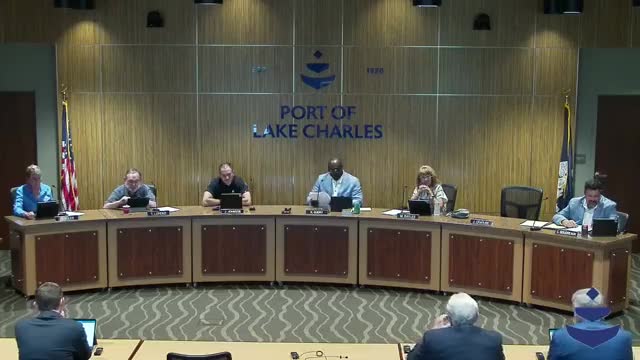
At the Aug. 28 meeting the Lake Charles Harbor and Terminal District’s operations and navigation staff summarized recent cargo movements and scheduled shipments, and discussed the uncertain outlook for federal funding. Operations staff reported activity at City Docks and multiple BT terminals. Recent movements at City Docks included nine barges of alumino hydrate (about 42,000 tons), two ships of cement (about 75,000 tons), piling and aggregates (about 28,000 tons), a lumber shipment (about 5,300 tons), a liquid shipment (about 5,000 tons), and another cargo transfer of about 11,000 tons. Upcoming schedules included two more cement ships, two piling and aggregate ships totaling about 110,000 tons, and a hydrate ship of about 22,000 tons. At BT-1, staff reported three barges and one ship of calcined product (about 13,000 tons), five ships and one barge totaling about 240,000 tons, and a retail shipment of about 17,000 tons. Future schedules included additional coke shipments and other cargos outlined in the operations report. Staff also reported rice barges and scheduled limestone shipments in the coming weeks. Separately, navigation staff updated the board on a federal funding request and said no action had occurred in the last month because Congress was in recess. The navigation presenter told the board the Picard group expects a rush to finalize spending by Sept. 30 but cautioned that a year-long continuing resolution remained possible; staff said they were standing by and would monitor developments after the congressional return from recess. Why it matters: Cargo volumes and scheduled ship calls indicate terminal utilization and revenue drivers; federal funding decisions could affect dredging, navigation projects or other port priorities that rely on federal appropriations. Details and limitations: The operations presentation provided approximate tonnage figures and schedules; the transcript records staff summaries but does not include detailed manifests, commercial contracts, or formal federal funding applications. The navigation update did not identify specific appropriation line items or dollar amounts.