
Council approves city no-trespass ordinance for city-owned property
Get AI-powered insights, summaries, and transcripts
Subscribe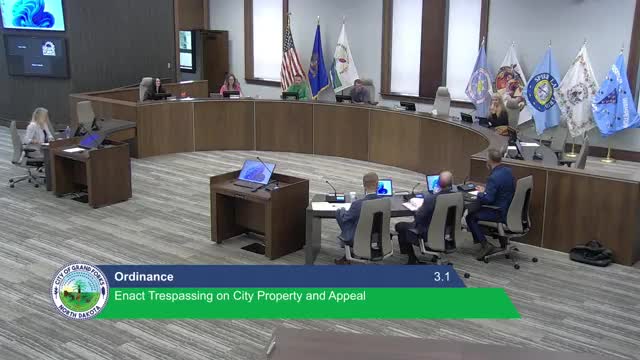
Summary
The Grand Forks City Council’s Committee of the Whole approved an ordinance allowing written no-trespass orders on city-owned property, with criminal penalties and an appeal process, after members discussed service and legal standards.
The Grand Forks City Council Committee of the Whole on Aug. 11 approved an ordinance authorizing written no-trespass orders for city-owned property, including parks and public facilities, and establishing criminal penalties for violations. The ordinance allows an individual to be issued a written notice banning them from specified city property for up to one year; violating the order can result in a Class B misdemeanor punishable by up to $1,500 fine and/or 30 days in jail, and recipients have an opportunity to appeal the order. The measure matters because it expands the city’s tools for addressing perceived nuisances on city property while city staff must balance enforcement with constitutional protections, officials said. Council members and city staff discussed the standards for issuing notices, how service should be documented, and safeguards for First Amendment and due-process concerns. "It's a less than a criminal standard, to receive the trespass," said a city staff member involved in drafting the ordinance. Councilmember Berg asked whether recipients would have an opportunity to appeal; staff confirmed they would. Council members also asked whether sidewalk and street incidents are covered; Councilmember Burke clarified they are not and encouraged residents to call law enforcement for incidents on streets or sidewalks. Members discussed how an officer should document service if a person refuses to accept a written notice. A city staff speaker said law enforcement reports showing that a copy was provided and refused would be the likely record; one councilmember asked that language addressing refusal be added to the ordinance to strengthen enforceability. After discussion, a motion to approve the ordinance was moved and seconded and carried unanimously in a voice vote. Committee Chair President Sandy called for the ayes, and the measure "carried unanimously," according to the meeting record. The ordinance text requires written notice and outlines penalties; staff emphasized the city will provide an appeal process and that officers should document service and refusals in incident reports. The ordinance explicitly recognizes First Amendment and due-process limits when applied to public property. The committee provided no additional policy direction at the meeting; next steps are final ordinance adoption and implementation by the city clerk and police department.