
EDIC hears report: incentive recipients report higher wages while net job gains fall after deduplication
Get AI-powered insights, summaries, and transcripts
Subscribe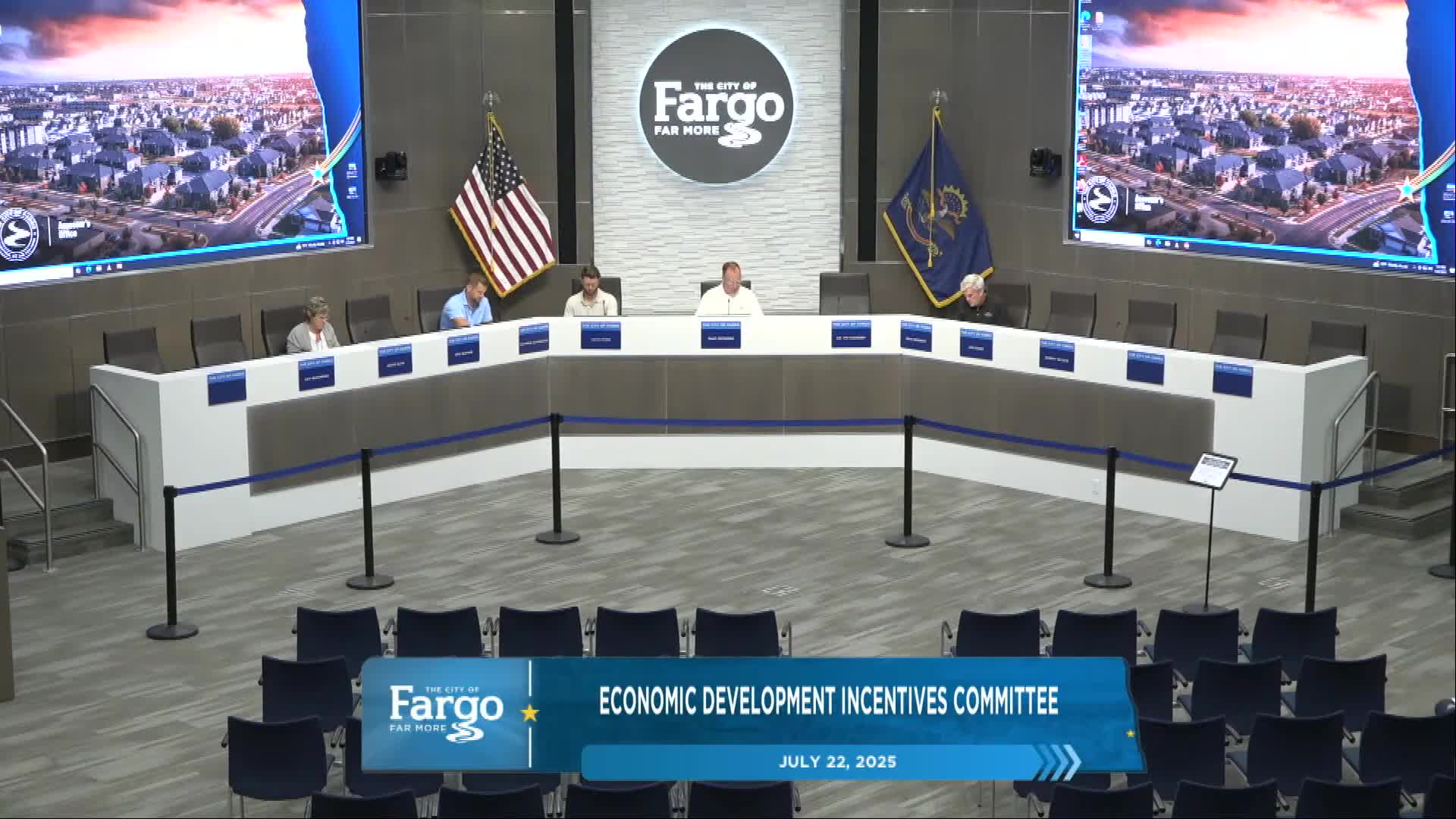
Summary
At its May 27 meeting the Economic Development Incentive Committee heard a presentation from the Greater Fargo‑Moorhead Economic Development Corporation summarizing performance of property‑tax incentive “pilot” agreements approved between 2016 and 2024.
At its May 27 meeting the Economic Development Incentive Committee heard a presentation from the Greater Fargo‑Moorhead Economic Development Corporation summarizing performance of property‑tax incentive “pilot” agreements approved between 2016 and 2024. The presenter said responses were received from 20 of 23 active pilot agreements and the data show reported payroll and wages exceed original commitments, while a normalized (deduplicated) job count is lower than the aggregate of the commitments.
The report, presented by Ryan Ascheim of the Greater Fargo‑Moorhead EDC, covered pilots issued from 2016 through 2024 and used an automated CRM to collect data from recipients. “We’re tracking, currently 23 active pilots,” Ascheim said, adding that the team received data from 20 of those 23 recipients. The responses the EDC received report a total of 3,154 jobs created or retained when counting each pilot entry as reported; after deduplication to avoid double‑counting companies with multiple pilots the normalized total of added or retained full‑time equivalents is 1,925.
The committee was shown wage and payroll figures tied to those responses. The average annual wage committed in the incentive applications was roughly $57,000; the reported current average wage across respondents was $77,328, about $20,200 higher than the commitments, the report states. The presentation also included an aggregate payroll estimate: using the raw (non‑deduplicated) submissions the reported payroll was about $240.6 million compared with $157.2 million in payroll implied by commitments; after deduplication the payroll estimate was $145.2 million, which still exceeded the deduplicated commitment total by about $21.9 million.
Jim Gilmore, who moderated the item for the committee, noted the report includes a spreadsheet breakout of individual pilots so members can dig into company‑level performance. Committee members pressed the presenters to clarify the difference between the “aggregate” numbers (which count each pilot submission) and the deduplicated figures (which count each company once). Ascheim explained the duplication arises when a company holds multiple incentive agreements and counts the same employees across those separate filings. One committee member asked whether the deduplicated figure meant the program had not met its stated target of 2,215 added jobs; Ascheim said the deduplicated 1,925 figure is the best current apples‑to‑apples measure of added or retained FTEs.
Committee discussion also highlighted non‑payroll economic effects the city staff provided for the report: the assessed value of the tracked properties increased from about $68.9 million pre‑incentive to about $282 million at present, a rise the presenter summarized as roughly a 309 percent increase. The presentation noted additional revenue effects, such as building‑permit fees and potential downstream spending by newly employed workers, but committee members did not attempt to quantify those impacts at the meeting.
No formal action was required on the tracking report. Committee members asked staff and the EDC to continue refining the dataset, to return a deduplicated comparison of commitments versus results, and to present the report to the city commission so the larger elected body can review the information.
The committee’s follow‑up requests included clearer deduplication in the commitments column, outreach to the three pilot recipients that did not respond, and continued annual data collection so future reports can show trends over time.