Get Full Government Meeting Transcripts, Videos, & Alerts Forever!
Get email alerts on the Charitable Gaming topic
No spam. Unsubscribe anytime.
Council narrows eligibility for charitable gaming sites, sets new compliance date
Summary
The City Council approved an ordinance requiring a majority of a charity's board and staff to reside in Grand Forks County to gain site authorization for charitable gaming; the ordinance includes an effective date for new qualifications and drew public comment from nonprofits and bar owners before passing 5–2.
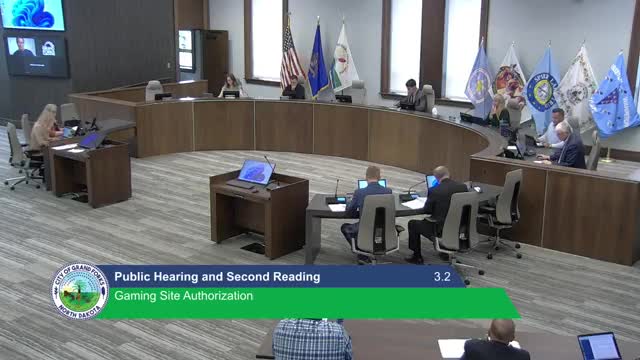
The Grand Forks City Council voted 5–2 on Sept. 2 to amend city rules for charitable gaming site authorizations, adding residency and local-staffing qualifications and setting a future effective date for the new eligibility standard. Vice President Weigel moved approval of the ordinance change; the council discussion and roll call followed a public hearing that included nonprofit and business speakers. The ordinance as revised sets the effective date for qualifications in the new subsection at July 1, 2027, and requires a specified percentage of employees and governing-board members to reside in Grand Forks County, city staff said. Mr. Gossett, a city staff member who advised the council on statutory limits, told the council that legislation passed in the last session allows governing bodies to include qualifications for site approval but does not permit the city to direct where an organization must spend its funds. "However, the statute didn't was not changed that you cannot direct where funds of an organization, would be expended," Mr. Gossett said. During public comment, Andrew Krausnick, who organizes local fundraisers, urged the council to allow an out-of-town nonprofit, Dare to Stand Out, to operate here while keeping 100% of net proceeds in Grand Forks. "He would keep a 100% of the net proceeds right in Grand Forks for these carts here," Krausnick said, describing efforts to fund adaptive golf carts. Judy Lewis, executive director of a Fargo–Moorhead community theater group, asked the council to extend the effective-date delay beyond 2027 so statewide nonprofits can continue to operate locally; she said about 60% of her organization's proceeds stay in Grand Forks. Bar owner Mike McMenemy and other business speakers questioned whether the ordinance would reduce the number of available sites and urged greater clarity on how the qualifications would be verified. City staff said applicants must submit an affidavit under penalty of perjury certifying they meet the residency and staffing percentages; misstatements could trigger revocation proceedings. Council members debated competing goals: keeping gaming proceeds in the local economy and allowing statewide nonprofits to operate here. The final roll-call recorded votes by name as called at the meeting (Bridal: yes; Ocelske: yes; Berg: no; Blonsky: yes; Bridal (duplicate entry in roll call record): yes; Veen: no; President Sandy: yes). The motion passed 5–2. Councilmembers said they will revisit implementation details as needed and monitor whether the change affects nonprofit access to sites before the new qualifications become effective.