
Zoning board continues hearing on 22 Pershing Ave use variance request from used‑car dealer
Get AI-powered insights, summaries, and transcripts
Subscribe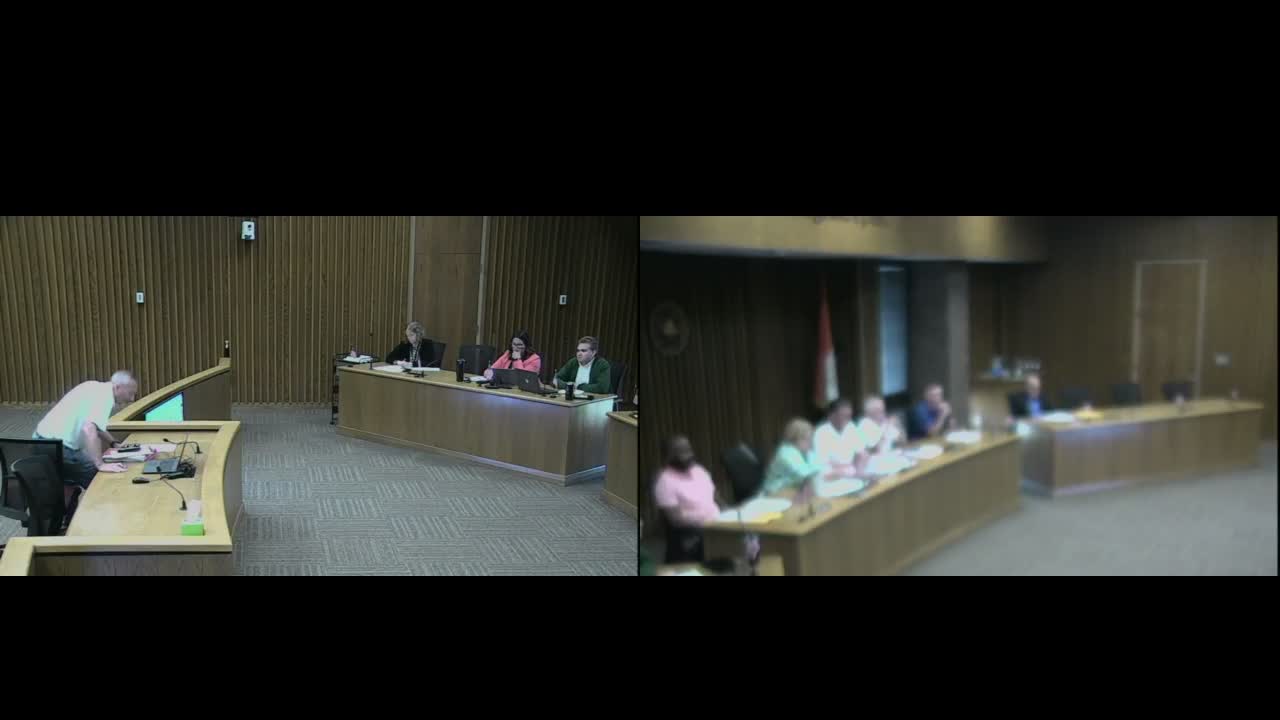
Summary
The owner of Kane Motors and his project manager sought a use variance to operate a used‑car lot at 22 Pershing Ave. The board asked for additional financial evidence and noted a recent rezoning to MU‑5 and a county negative recommendation; the public hearing was continued to the September meeting.
The City of Poughkeepsie Zoning Board of Appeals continued the public hearing on a use‑variance request to operate a used‑car lot at 22 Pershing Avenue after hearing testimony from the applicant and several questions from board members about financial proof and zoning history.
Frank Bridal, project manager for the property owner, said Bridal Real Estate purchased the site in 2013 and that site‑plan approval at that time required the tenant to obtain a certificate of occupancy. Bridal said that a tenant operated the property as a used‑car lot after the site plan was approved but that the tenant never obtained the required certificate of occupancy. Bridal told the board the owner submitted a contractor's estimate that converting the roughly 8,000‑square‑foot building to a permitted MU‑5 use would cost about $300,000.
Why it matters: the applicant is asking the administrative board for a use variance, which case law and board members noted requires that all statutory criteria be met; the city recently rezoned the area to MU‑5 and a county review issued a negative recommendation, raising the bar for approval.
Charlie Kane, who identified himself as owner of Kane Motors, told the board he purchased the property in January and said the property was advertised as commercially zoned when marketed. Kane said he intends to operate a low‑priced used‑car business serving local residents. Kane also provided photographs of prior site conditions and said he has been a long‑time local dealer.
Board members pressed the applicant for more detailed financial evidence to meet the “dollars and cents” prong of the use‑variance test, saying the letter submitted was conclusory and did not demonstrate that the building could not produce a reasonable return under permitted MU‑5 uses or be divided for multiple permitted uses. A board member noted the common council's recent rezoning to MU‑5 expressly limits the use being sought and that the county made a negative recommendation, which means the board would need a majority plus one to approve.
Action and next steps: the board, which did not vote on the variance, moved to continue the public hearing and the application to the September 9 Zoning Board of Appeals meeting so the applicant can submit additional financial documentation. Board members also suggested the applicant consider petitioning the common council for a zoning change if the applicant cannot meet the use‑variance standard.
Additional details: Bridal said the tenant had operated a used‑car lot on the site from about 2013 until roughly 2020, and that when the owner purchased the property in January the zoning had already been changed to MU‑5. Bridal and board members agreed competent financial evidence must include both conversion costs and estimated returns for plausible MU‑5 uses in order to satisfy the legal test for a use variance.