Get Full Government Meeting Transcripts, Videos, & Alerts Forever!
Get email alerts on the Special Events Policy topic
No spam. Unsubscribe anytime.
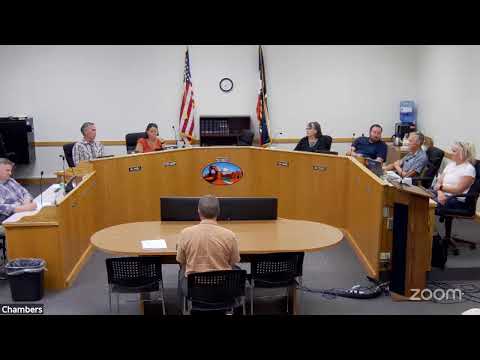
Commission debates larger-window special events policy but declines to adopt changes at meeting
Summary
Commissioners discussed expanding the advance notice window for high-impact special events to 18 months and changing quarterly review dates; after substantial discussion the item failed to pass and was sent back for redrafting and more staff input.
The Grand County Commission considered amendments to the county’s special events policy — including allowing organizers to apply up to 18 months in advance for high‑impact events and adjusting quarterly commission review dates — but a motion to adopt the proposed changes failed during the meeting.
Commissioner McCandless proposed changing the application window for high‑impact events to a six‑to‑18‑month range and aligning commission review dates accordingly. Supporters said a longer window would help legacy or large events secure planning and allow more time for county review; staff said the revisions would give special events staff and the commission more predictable review cycles. "We're giving event organizers a longer time frame to plan and advertise," one commissioner said.
Opponents and event staff raised practical concerns about matching application windows to commission deadlines and the logistical burden on the special-events coordinator. Commissioner Trish and others asked staff coordinator Jenny Beth to weigh in on workload impacts and to produce clearer, consistent table deadlines; staff agreed to redraft the ordinance language and to coordinate with the special-events coordinator. The motion to adopt the redline amendment failed on a roll call; commissioners directed staff to return a clarified draft at the next meeting after staff review and stakeholder input.
Commissioners also discussed legacy events and how to handle events that recur annually; several favored a separate legacy-review process but agreed that requires a separate, more detailed policy conversation. The commission asked staff to prepare revised language that sets clear application windows, aligns commission review dates, and clarifies the process for early review requests.