Get Full Government Meeting Transcripts, Videos, & Alerts Forever!
Get email alerts on the Rural Health Delivery topic
No spam. Unsubscribe anytime.
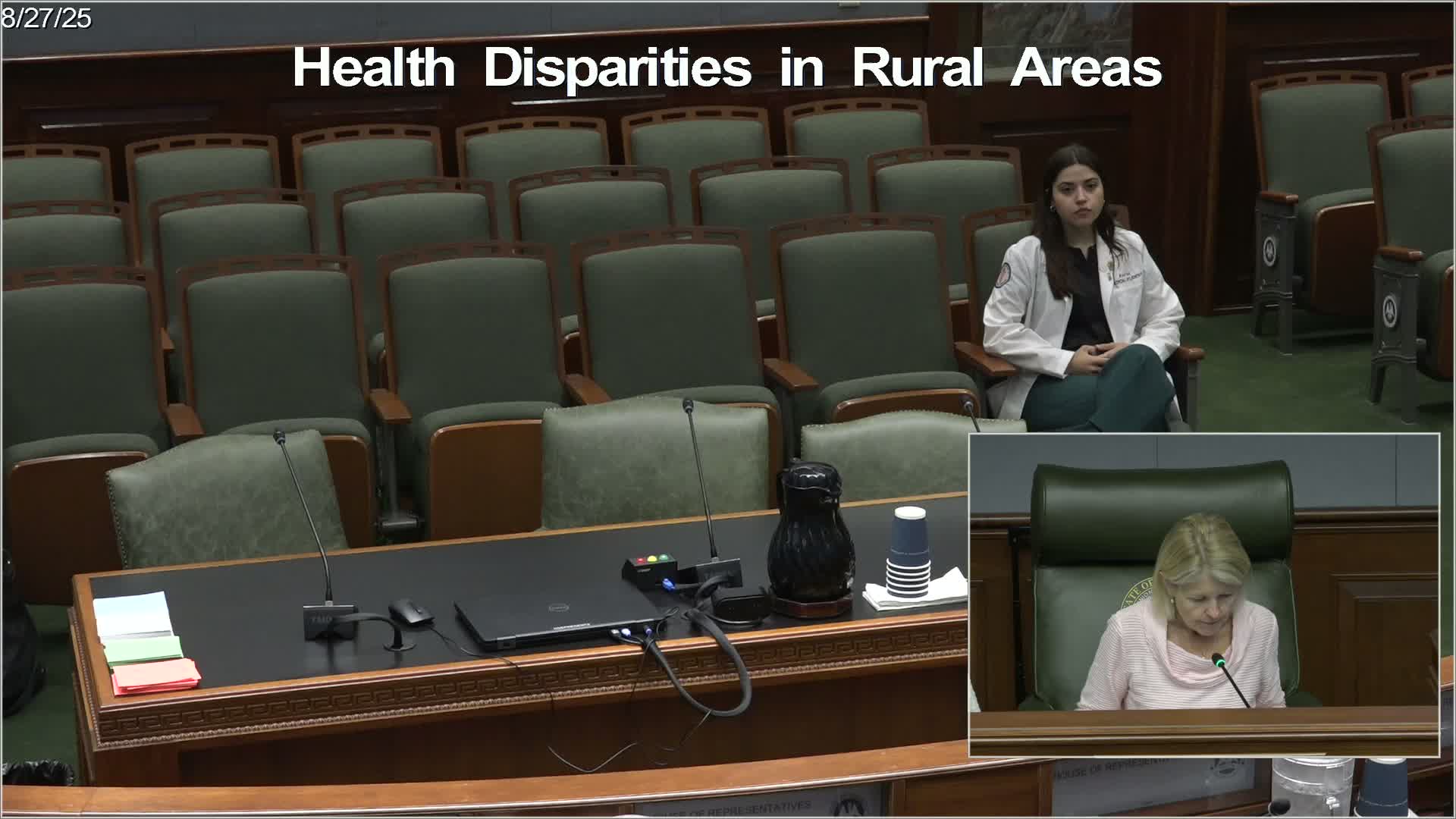
Rural health task force narrows 2025 agenda to behavioral health, rural delivery model and coverage gaps
Summary
At a meeting chaired by Karen Weibel, Louisiana—s ACR 55 task force on rural health identified behavioral health and addiction, a rural-focused delivery care model and gaps in insurance coverage as its top three priorities for the year and agreed to form subcommittees and schedule meetings to prepare recommendations for the legislature.
NEW ORLEANS (not specified) — The state task force created under ACR 55 said Wednesday it will focus this year on behavioral health and addiction, designing a delivery-care model tailored to rural Louisiana, and identifying gaps in insurance coverage that limit access to care.
The decision came during a meeting chaired by Karen Weibel, who said the group must "stay on track" to deliver recommendations to the legislature before Feb. 1 and that the task force—s work has already informed prior legislative efforts. "We have to think differently about how we want to give the same level of care" in rural areas, Weibel said.
Why it matters: Louisiana ranks 50th in many statewide health measures, and members said improving outcomes in rural parishes could move the state's overall standing. The task force framed social determinants of health—including poverty, transportation and access to healthy food—as the major drivers behind poor outcomes and said a rural delivery model must address those nonmedical factors as well as expand clinical access.
Most important facts: The group agreed the subcommittees should concentrate on (1) behavioral health and addiction services; (2) a rural delivery-care model that uses community health workers, mobile clinics and parish health-unit partnerships; and (3) chronic-disease management and insurance coverage gaps, including Medicaid-related issues. The chair said federal rural transformation funds—which she described as a $50 billion national allocation, half of which will be distributed across states and half through competitive grants—create a tight application timeline and an opportunity for state proposals.
Discussion details: Members and guests stressed that rural medicine must differ from metropolitan models because of workforce limits and payer mix. "Primary payer mix? Medicaid," one task force member asked and answered; participants noted many rural clinics rely heavily on Medicaid and on underinsured or uninsured patients, which complicates clinic sustainability. Task force members also discussed broadband as a necessary but insufficient tool for telehealth: high-speed service to parish facilities helps, they said, but household affordability and in-home connectivity remain barriers.
Staff direction and next steps: The chair said she will convene subcommittee meetings focused on the three priorities and will share membership with the group. Morgan, a Louisiana Department of Health (LDH) designee, said LDH will align the task force—s work with the department—s Louisiana Health Equity Consortium and assist with Region 4 planning. No formal vote was recorded; members reached a working consensus to proceed with subcommittees and meeting dates.
Other actions under discussion included exploring mobile health clinics, expanded roles for community health workers (CHWs), partnerships with parish health units for telehealth access, and pilot projects that tie social services (food, housing navigation) to clinical care. Members repeatedly emphasized collaboration with existing state efforts such as maternal health initiatives and local pilot programs rather than duplicating work.
Agency limits and cautions: Speakers repeatedly noted the need to avoid assuming local or state agencies can unilaterally solve structural poverty or water/sanitation problems. The group emphasized practical, demonstrable pilot models that can be scaled with aligned funding and partnerships.
What to watch next: The task force will publish subcommittee membership and meeting dates and intends to prepare specific, legislatively actionable recommendations this session. The chair said the group—s goal remains improving rural outcomes so Louisiana moves off the bottom of national rankings.