Get Full Government Meeting Transcripts, Videos, & Alerts Forever!
Get email alerts on the Pretrial Services topic
No spam. Unsubscribe anytime.
Committee previews pretrial services expansion, counsel‑at‑first‑appearance rollout
Summary
Legislative staff and agency leaders described North Dakota's pretrial services pilot history, current funding and a January 2026 rollout of counsel at first appearance; committee asked for third‑party evaluations and more program data.
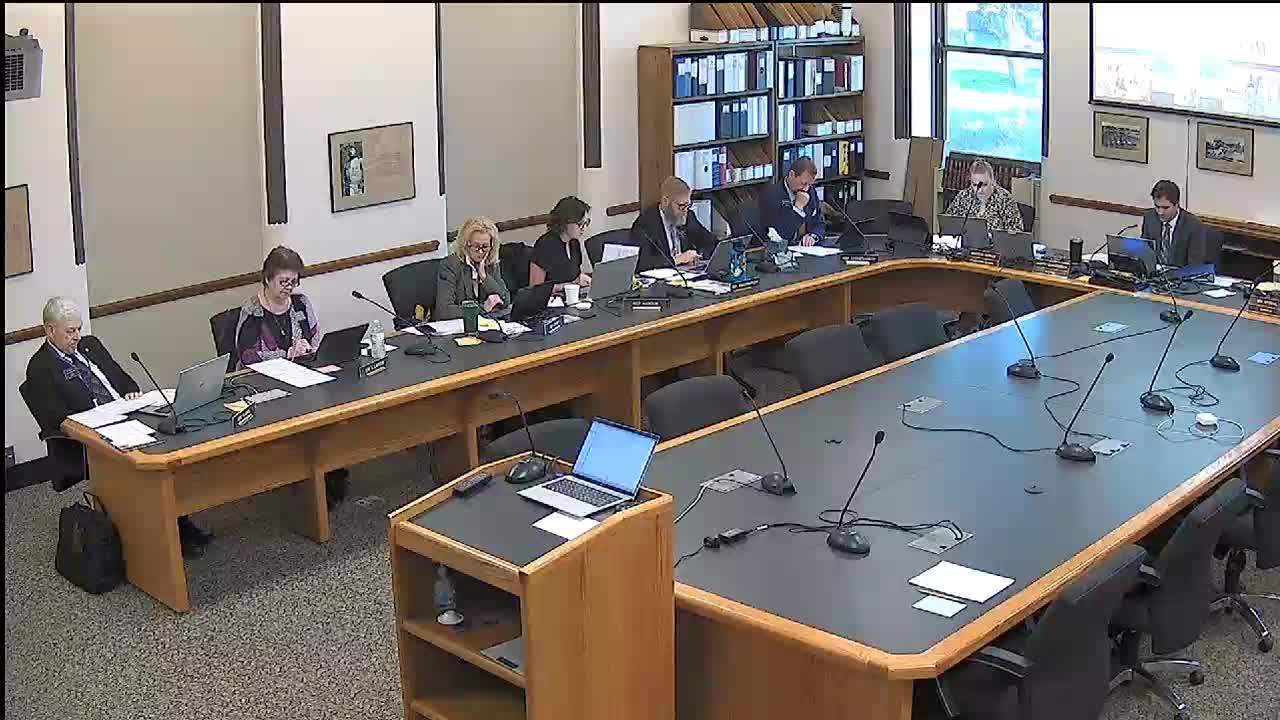
Austin (committee staff) and Tom Earhart, chief probation and parole officer for the Department of Corrections and Rehabilitation (DOCR), briefed the Interim Judiciary Committee on ongoing pretrial services operations and study directions. Austin summarized the legislative directives and funding history: the pretrial services pilot was created in 2017 (House Bill 1041), received ongoing funding in 2019 (about $755,000 and seven FTEs) and has expanded in subsequent sessions with additional full‑time positions and one‑time appropriations, including a $1,000,000 one‑time appropriation in 2023 for a prosecution‑led diversion supervision pilot. Tom Earhart outlined eligibility, purpose and process for pretrial services. “The goals of pretrial services was to reduce incarceration, criminal activity, and failure to appear at trial while connecting defendants with services in the community,” Earhart said. He told the committee pretrial programs collect defendant information, provide reports to judges and supervise defendants when courts condition release on supervision. Travis Fink, executive director of the North Dakota Commission on Legal Counsel for Indigence, framed legal and equity issues. Fink summarized U.S. Supreme Court precedent that requires courts to consider ability to pay before jailing people for nonpayment (Bearden v. Georgia) and referenced recent litigation and guidance in other circuits concerning counsel at initial appearances. He described Senate Bill 2226 (passed by the Legislature) as creating a presumption of indigence on initial appearance and said the Commission and courts are preparing an operational rollout for January 2026. Committee members asked for a third‑party analysis of the pretrial pilot’s effectiveness; Representative Hansen noted the 2019 contractor report and asked whether a new contract is completing the five‑year check‑in. Austin confirmed Tom Erhard (DOCR director of parole and probation) and others will present more detailed data, and Travis Fink confirmed he will coordinate with presenters and requested the committee track outcomes including jail bed days, failures to appear, recidivism and program costs. Austin also mentioned a recent presidential executive order referenced by some witnesses; he said the order directs federal agencies to identify jurisdictions that have eliminated cash bail and could affect federal grants, and he told the committee presenters would cover federal developments where relevant. No formal policy decisions were made. Committee members asked staff and agency presenters to return with a third‑party evaluation of the pretrial pilot, updated program metrics, and fiscal estimates connecting pretrial monitoring to jail‑bed‑day savings and county impacts.