Get Full Government Meeting Transcripts, Videos, & Alerts Forever!
Get email alerts on the Committee Scope And Timeline topic
No spam. Unsubscribe anytime.
Legislature convenes Higher Education Funding Review Committee to examine formula, capital and aid
Summary
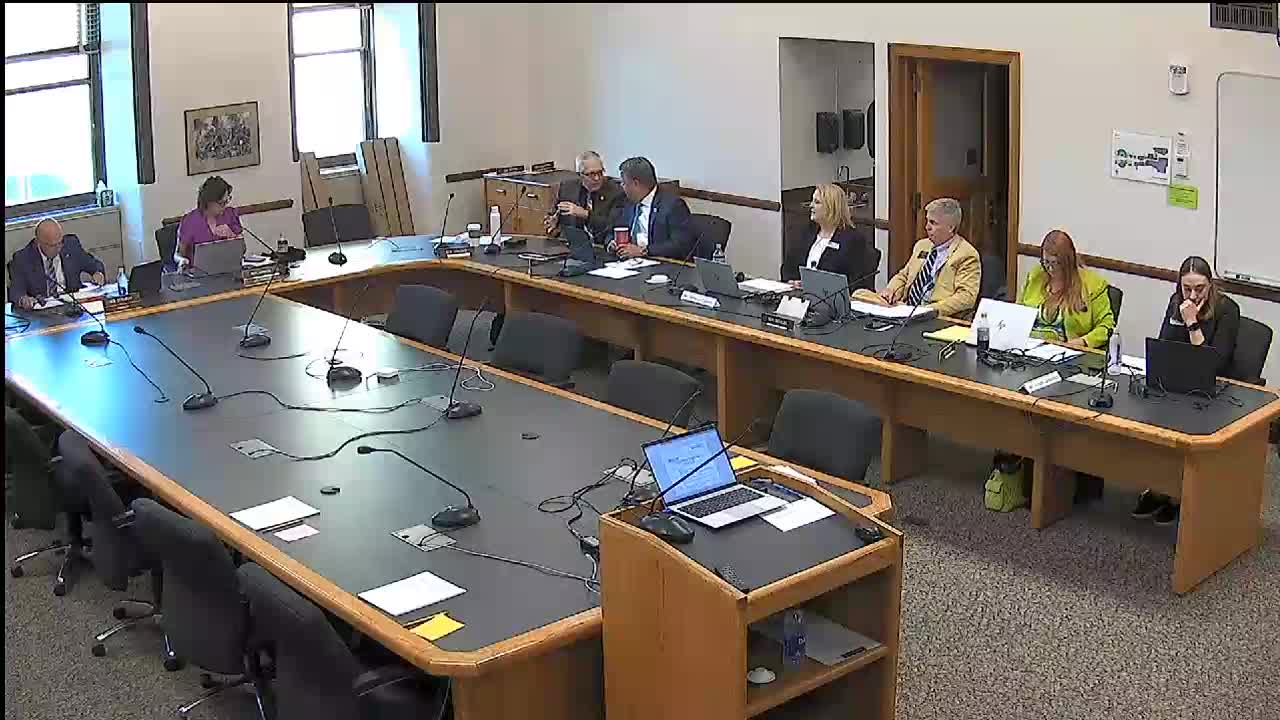
Senator Ron Sorvaugh convened the Higher Education Funding Review Committee to study how state dollars fund the university system, focusing on the funding formula, capital building funds and student aid, and told members to be prepared to work toward legislation by the committee's third meeting.
BISMARCK — Senator Ron Sorvaugh called the Higher Education Funding Review Committee to order and said the panel’s work will examine how state dollars flow to the state’s 11 public campuses, starting with the funding formula and extending to capital, permanent funds and other state supports. The committee’s purpose, Sorvaugh told members, is to “see how our state dollars — what we fund and how we fund them” and to produce recommendations that could become legislation. He said the panel will not act as an appropriations body; appropriators will remain responsible for dollar amounts. Why it matters: The committee will touch the central method by which North Dakota distributes general fund support to its public colleges and universities. Any changes could reshape operations, capital plans and student costs across the system. Members heard a procedural briefing on the committee’s operating rules and quorum requirements and an outline of the interim schedule. Sorvaugh said he expects the group to develop possible bills and begin working on legislation at or before the committee’s third meeting in the interim, with the goal of producing consensus-based proposals rather than late-session “straw proposals.” Committee members and institutional finance officers were asked to focus their analysis on outcomes: whether the formula and related policies deliver the workforce, institutional stability and student results the state expects, and to bring concrete suggestions to the next meetings. Sorvaugh asked the institutions’ business officers to coordinate with each other and with the system office and board to prepare suggestions on technical issues (for example, weightings and capital prioritization) before the next meeting. The chair also emphasized inter-committee coordination with other legislative higher-education study groups and called for transparency and early engagement by the State Board of Higher Education and the university system staff. Next steps: The committee asked staff to circulate a proposed meeting date in early November and requested specific follow-up materials including a system-wide breakdown of institution reserves, tuition-waiver data, online-course revenues, and the deferred-maintenance share funded through capital building support.