Get Full Government Meeting Transcripts, Videos, & Alerts Forever!
Get email alerts on the Health Workforce topic
No spam. Unsubscribe anytime.
Board of Addiction Counseling Examiners proposes rule changes to expand supervisor pool, exam options and reciprocity
Summary
The board presented proposed rule rewrites to update ethics references, expand pathways to clinical supervision, allow an additional examination option and clarify training requirements to address workforce shortages.
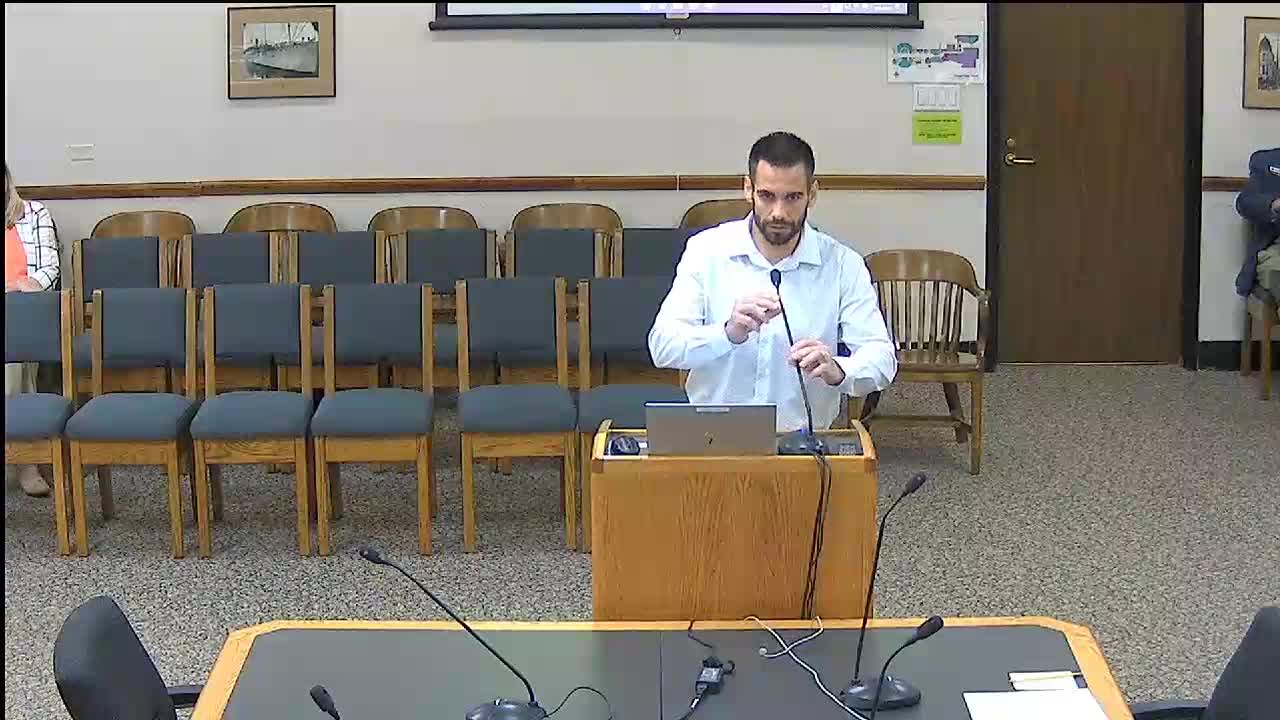
The North Dakota Board of Addiction Counseling Examiners told the Administrative Rules Committee on July 30 that it has proposed amendments to its rules to update ethical references, broaden supervision pathways and add flexibility in examination and reciprocity to address workforce shortages.
Jeremy Train, chair of the board, said the rewrite began in January 2024 with stakeholder input from licensees statewide and that ‘‘the board follows’’ the National Association for Alcoholism and Drug Abuse Counselors (NAADAC) code of ethics. He told the committee the board updated its rules to reference NAADAC’s most recent code of ethics and to revise curriculum and supervision requirements to maintain standards while increasing licensee numbers.
Train said the board proposes to move from references to training ‘‘sites’’ toward requirements by levels of care to reduce ambiguity about where trainees receive experience. He also outlined a change to expand who may serve as a clinical supervisor; the board cited the loss of some master’s‑level degree programs, including at the University of Mary, as a factor that created a supervision bottleneck. Train said the change would likely ‘‘double’’ the number of eligible supervisors in the state.
On examinations and reciprocity, Train said the board would allow an additional testing option — the IC&RC exam the state previously accepted before 2016 — alongside the NAADAC exam. That change, the board said, aligns North Dakota with 48 other states and would ease reciprocity for applicants from other jurisdictions. Train said the board has accepted Minnesota licensees and that Minnesota’s education and field‑work requirements are substantially similar to North Dakota’s; Minnesota uses IC&RC while North Dakota currently uses NADAC.
Terry Efforts, board administrator, explained a drafting change to the education‑related language: the draft replaces an earlier longer sentence requiring ‘‘content specific to counseling individuals of diverse backgrounds’’ with the term ‘‘multicultural diversity.’’ Efforts said that shift was intended to simplify transcript review and reduce inconsistent approvals by the board over time.
Why it matters: the proposed changes aim to increase the number of qualified addiction counselors by easing some pathway constraints while preserving minimum education and competency expectations; the board cited state workforce shortages and the retirement of supervisors with older credentials as the impetus.
The board did not present a formal motion to adopt rules at the committee meeting; the presentation was informational and staff described stakeholder outreach and the board’s proposed language.