Get Full Government Meeting Transcripts, Videos, & Alerts Forever!
Get email alerts on the Administrative Procedure topic
No spam. Unsubscribe anytime.
Administrative Rules Committee reviews rulemaking procedures, voiding standards and remote-attendance policy
Summary
Legislative council staff reviewed the committee's supplementary rules, statutory grounds and procedures for voiding or carrying over administrative rules, and a remote-attendance guideline for members.
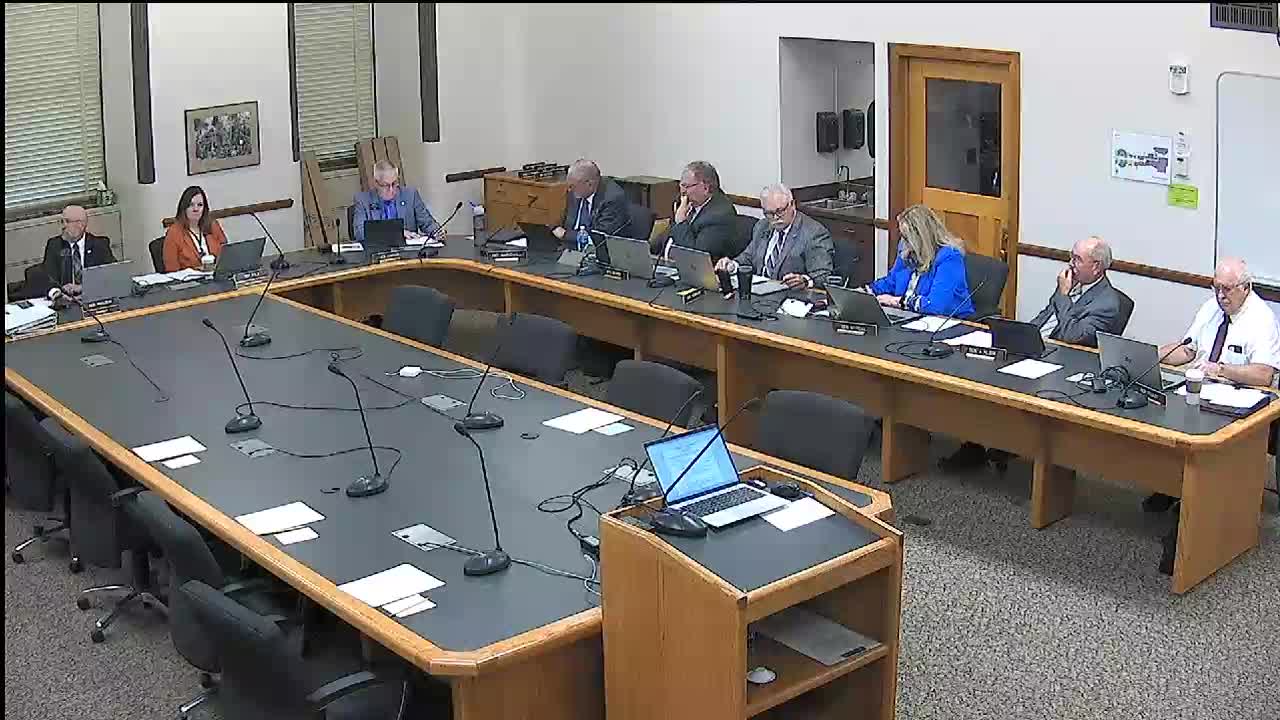
The Administrative Rules Committee on July 30, 2025 reviewed guidance on how it and administrative agencies must follow statutory rulemaking procedures, and the committee discussed its authority to void or carry over administrative rules and the criteria for members to attend remotely.
Legislative council staff member Liz Forsell told the committee that ‘‘the conduct of the meetings, the rules and customs of the legislative assembly govern the conduct of interim committee meetings. And when that's not applicable, Mason's Manual of Legislative Procedure will govern.’’ She also explained the committee’s statutory authority to carry over or void rules under state law.
The review covered several timing deadlines the committee follows: the committee must meet before Sept. 15 to review rules with an Oct. 1 effective date, and the filing deadline for rules that will appear in the October supplement was Aug. 1. Forsell summarized the objection and voiding process laid out in statute: if the committee initially considers a rule before the fifteenth day of the month before the supplement, it may find a rule void for reasons including an absence of statutory authority, a conflict with state law, arbitrariness, or substantial procedural failures. She explained the committee may carry consideration of a rule to one subsequent meeting; emergency rules may be declared void if an agency does not appear twice. Forsell said that if the committee finds a rule void, ‘‘the legislative council must provide written notice of the finding to the adopting agency and the chairman of legislative management’’ and described the adopting agency’s 14‑day window to petition for review and the 60‑day review period for legislative management.
Forsell also reviewed how an agency may respond: the statute allows an agency to amend, repeal, or create a related rule after committee consideration when both parties agree on changes, and an agreed change must be reopened for public comment if requested. The memorandum she presented reiterates that all non‑emergency rule records must include a written record of written and oral submissions and that the Attorney General reviews agency rules and may decline to approve a rule if it exceeds statutory authority or is not sufficiently clear.
Chairman Paulson reminded members that the committee has an internal guideline to permit remote attendance ‘‘for weather, health conditions, or accident’’ and that a member approved to attend remotely must keep their video on. Paulson said he would circulate Vice Chair Pyle’s prior guidance to new members.
Why it matters: the committee enforces statutory standards that determine whether agency rules become effective, are delayed, or are voided. The committee’s guidance on deadlines, petition windows and evidentiary records shapes how agencies prepare rulemaking records and how stakeholders can seek redress.
The committee noted it must meet in the first two weeks of December to review a later supplement and asked members to provide scheduling constraints to staff.