Get Full Government Meeting Transcripts, Videos, & Alerts Forever!
Clallam Conservation District seeks $5-per-parcel charge; commissioners continue deliberation after extensive public comment
Summary
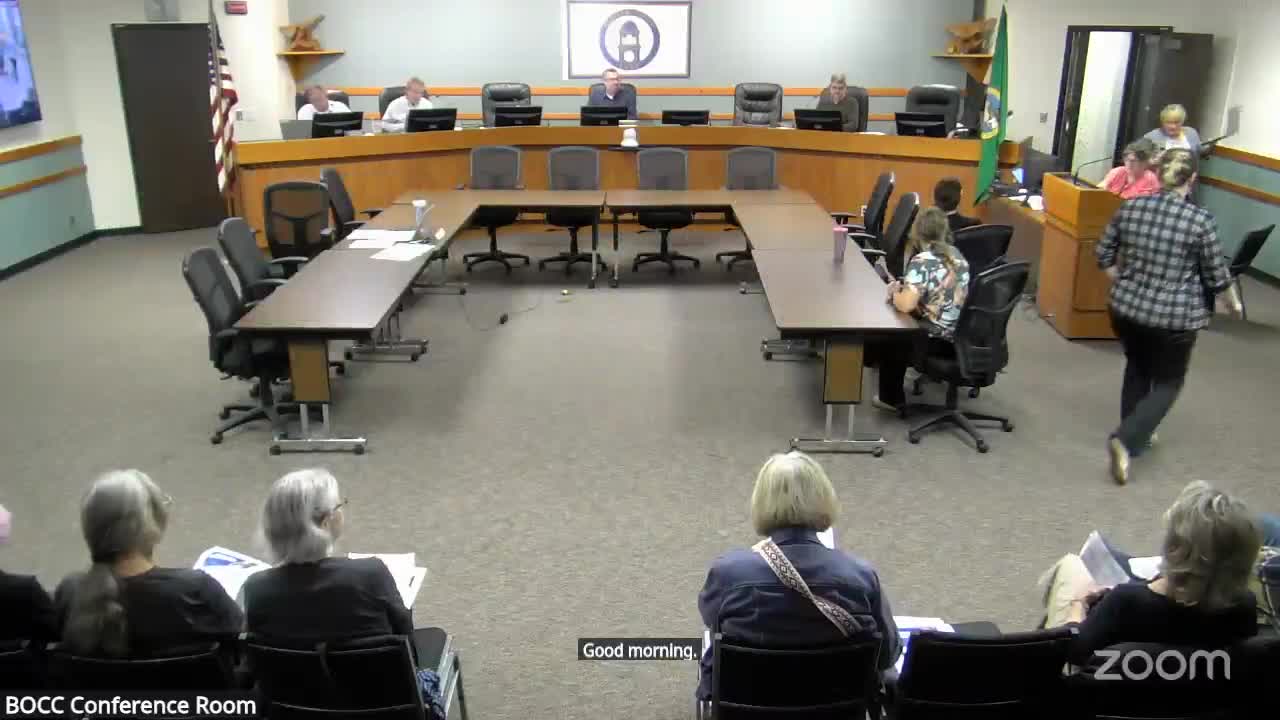
Clallam County commissioners on Sept. 2 heard a public hearing on a proposal to let the Clallam Conservation District place a $5‑per‑parcel rate‑and‑charge on county tax rolls for 10 years to fund operations and programs.
Clallam County commissioners on Sept. 2 heard a public hearing on a proposal to let the Clallam Conservation District place a $5-per-parcel rate-and-charge on county tax rolls for 10 years to fund conservation services and programs.
The proposal, presented by Clallam Conservation District District Manager Kim Williams and board chair Christy Cox, would generate roughly $194,600 a year after exemptions and a 1% county administrative fee, according to a financial model prepared for the district. Williams told the commissioners the district is a state subdivision governed by a five‑member volunteer board and that rates and charges are authorized under state law.
The hearing drew sustained public comment both opposing and supporting the measure. Opponents cited additional tax burdens, concerns about district governance and elections, and objections to placing any lien on parcels. Supporters said the district leverages state and federal grant dollars, hires local contractors and provides technical assistance on septic systems, irrigation efficiency and habitat projects.
Why it matters: The district says its programs bring roughly $870,000 in state and federal grants to Clallam County and about $404,000 in financial assistance to landowners. The district and its consultant argue that a modest parcel charge would stabilize funding for non‑grant operations—planning, elections, outreach and technical assistance—that grants do not consistently cover.
What presenters told the board
Kim Williams, the district manager, described the district’s proposal as a parcel fee (not a tax) authorized under RCW 89.08 and said the district proposed holding the per‑parcel charge at $5 a year for a 10‑year term. “We are a subdivision of state government,” Williams said. She outlined that the district receives many project grants that do not pay overhead such as elections, bookkeeping, governance and general operations.
Brooke, the district’s financial consultant, explained why the district recommended rates and charges rather than a special assessment. “A special assessment typically requires that the work being done shows improvement to the value of a property,” she said; she added that the rate‑and‑charge construct allows funding for direct and indirect public benefits the district provides.
Key provisions in the proposal
- Term: 10 years, with charges appearing on the 2026 parcel tax roll through 2035 if approved. (Commissioners discussed clarifying the term language.) - Rate: $5 per residential parcel is the typical sample; the district modeled many parcel types and exemptions. - Exemptions: federal and tribal trust parcels, low‑income seniors and the disabled identified through the county’s tax‑exemption program, and private parcels wholly under federal jurisdiction (the district added this exemption during…
Already have an account? Log in
Subscribe to keep reading
Unlock the rest of this article — and every article on Citizen Portal.
- Unlimited articles
- AI-powered breakdowns of topics, speakers, decisions, and budgets
- Instant alerts when your location has a new meeting
- Follow topics and more locations
- 1,000 AI Insights / month, plus AI Chat