Get Full Government Meeting Transcripts, Videos, & Alerts Forever!
Get email alerts on the Planning Process Training topic
No spam. Unsubscribe anytime.
Staff walks commissioners through planning application process, timelines and review paths
Summary
Staff delivered a training summarizing how applications move from completeness review to agency referrals, design-review and hearings; presenters emphasized the planning commission's quasi-judicial role and urged consistent findings and conditions of approval.
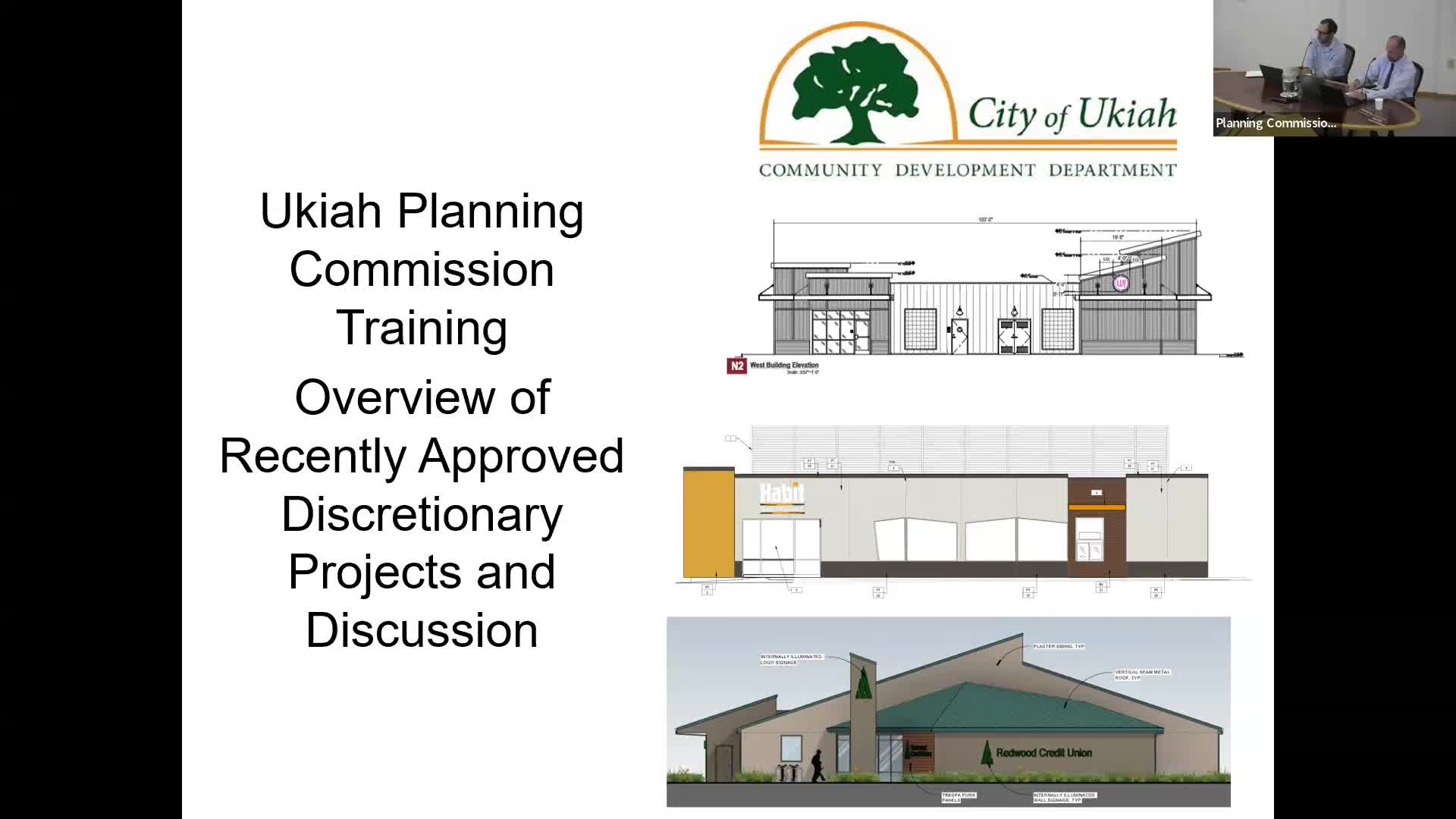
City planning staff gave a procedural training to the Planning Commission explaining how discretionary and ministerial applications move through completeness review, interagency referral, design review and public hearings. Jesse Davis, the city's chief planning manager, told commissioners their "role is to help us as staff balance and regulate the environment around us by identifying the community values, the compromise and the negotiation that goes around land use development." He emphasized the quasi-judicial nature of the commission's review. Why it matters: Commissioners asked for background on procedures; staff said understanding completeness determinations, referral comments and conditions of approval helps commissioners weigh whether projects are consistent with the general plan and applicable codes. Details of the process: Davis outlined the typical sequence: applicant submits materials; staff issues a completeness determination; staff refers the project to interested agencies (for example, fire, public works, Caltrans); agencies return requested conditions; staff drafts findings and conditions; public notice is posted and the project is scheduled for hearing with either the zoning administrator or planning commission depending on the permit required. Davis said typical timelines are three to six months for many projects but zoning-administrator-level matters can be completed in about two months when applications are complete. Conditions, design review and enforcement: Staff explained that many new technical requirements (for example, EV chargers, sprinklers, solar) are now enforced through the California building code, reducing the need for some discretionary conditions. They also noted that design-review board recommendations are advisory; staff may strongly recommend changes but cannot force private applicants to accept all design suggestions. Transparency and outreach: Staff said it tries to create public-facing project web pages (site plans, submissions, revisions) for high-visibility projects so commissioners and residents can track changes across iterations. Ending: Staff encouraged commissioners to contact planning staff with questions about project files and emphasized staff's goal to provide certainty and reduce delays in the development review process.